Search
Viewing 2820 to 2835 of 3052 news
-
InnoFund supports 10 S&T Incubation Projects
Huong TRANTHANH | 22/02/2017
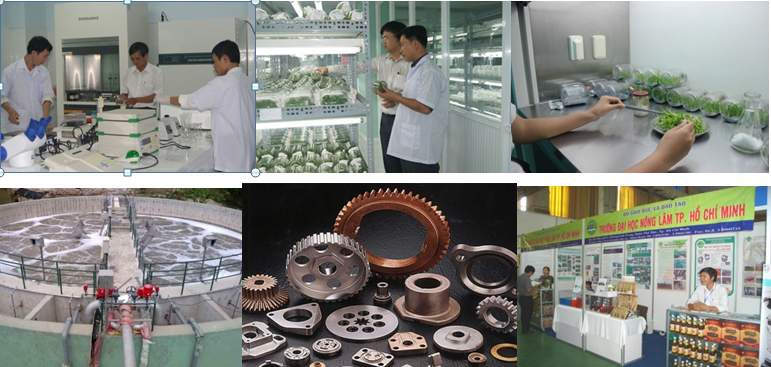
The BIPP Innovation Fund (InnoFund) is to increase the competitiveness of the Vietnamese economy through improved commercialization of national research and development. In this context it assists the Ministry of Science and Technology (MoST) in testing a functional tool through which valuable implementation feedback and lessons learnt that can be drawn for future policy formulation as well as future upscaling of such important support instrument. The InnoFund specifically aims to support two target groups: (i) Improved transfer of innovative concept of Vietnamese researchers and inventors into viable commercial products and enterprises; and (i) Strengthened capacity of technology business incubators in Vietnam thus enabling to deliver the full range of incubation support services. The BIPP InnoFund is implemented by the State Agency ‘Designing, Pilot Manufacturing and Testing Center (SATI-TECH)’, an agency under MoSTand technically supported by BIPP. Early 2017, a total of 10 Science and Technology projects were selected through anagreed/approved transparent selection mechanism. 5 R&D projects received funding to assist in prototyping and commercializing their research/invention products. The innovations are in the field of Food Production Nano-Technology, Spine-related diseases prevention, improved Fabrication Technologies and improved Waste Water treatment. Additional 5 S&T business incubators received funding with the aim to strengthen their incubation support services. The supported projects are based in Hanoi and Ho Chi Minh City. The average project amount is approx. EURO 30,000. The supporting period is for 12 months. All projects received the full endorsement of the Ministry of Science and Technology.
-

Le stage professionnel, David et Christian racontent
Julie CLAASSENS | 21/02/2017
Depuis plus d’une décennie, la RDC et plus particulièrement l’ex-province du Katanga, connaît un essor économique, drainé principalement par les entreprises du secteur minier. Malgré ces conditions favorables, les populations locales n’en profitent pas assez en termes d’emploi, car les entreprises recourent facilement à de la main d’œuvre étrangère pour assurer leur rentabilité.Le gouvernement de la RDC a pris l’engagement de développer le capital humain indispensable à la croissance et au développement économique en soutenant la promotion de l’Enseignement Technique et la Formation Professionnelle.En mars 2011, une « Convention de Partenariat Adéquation Formation Emploi » entre le Ministère de l’Enseignement Primaire, Secondaire et Professionnel et les associations des entreprises a été signée. Cette convention a pour objet le renforcement de la coopération entre les établissements de formation technique et professionnelle et les différents partenaires de l’économie nationale, en vue d’une meilleure adéquation entre la formation dispensée et l’emploi dans les secteurs économiques de la vie nationale.Les parties s’engagent entre autres à organiser des stages professionnels. Ces stages de pré-emploi sont préalablement négociés et conventionnés avec un entrepreneur proposant des postes de travail vacants. Le stage vise à valider la capacité du lauréat à assumer les exigences de l’entreprise. A l’issue du stage, certains lauréats seront engagés et salariés dans la mesure où l’évaluation du stage s’est avérée probante.Le projet EDUKAT axe ses efforts notamment autour de la collaboration avec les entreprises pour assurer l’adéquation entre formation et emploi et la mise en œuvre de cette convention de partenariat public-privé.
-
Renforcer la formation dans le domaine de l’environnement en Algérie
Lynda KHELIFI | 19/02/2017
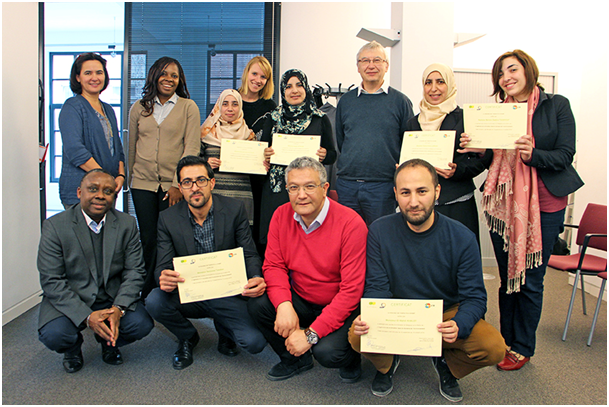
En octobre 2016, six collaborateurs du Conservatoire National des Formations à l'Environnement ont participé à la séance de restitution et d’évaluation d’une formation de trois semaines en « Ingénierie de la formation dans le domaine de l’environnement ».Développée dans le cadre du Fonds d'études et d'expertise belgo-algérien, cette formation a été organisée par l’Institut Eco-Conseil et le Bureau d’Ingénierie en Education et en Formation. Elle s’est tenue du 18 septembre au 14 octobre à Namur. La journée a été clôturée par une remise de certificats aux participants.
-
Formulation du projet de partenariat entre le Centre National des Formations sur les métiers de l’eau (CNFME) et la Société Wallone des Eaux (SWDE)
Lynda KHELIFI | 17/02/2017
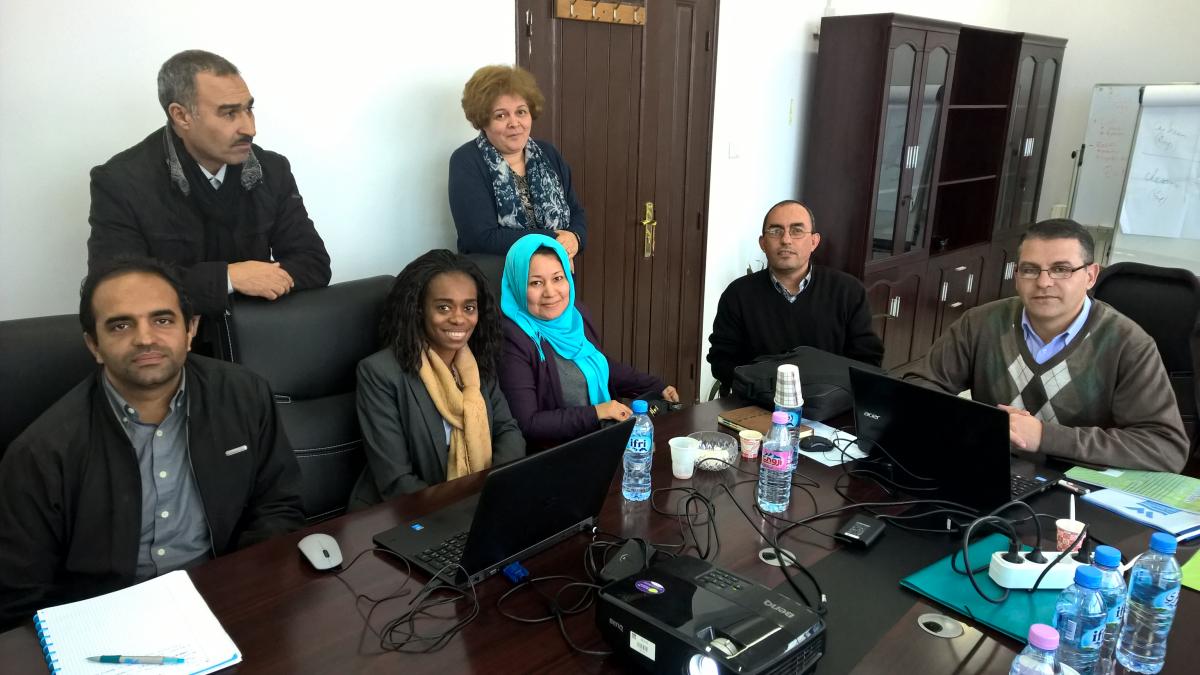
Une délégation du CNFME s’est rendu à Verviers, au siège de la SWDE, du 9 au 15 octobre 2016 afin de découvrir ses installations et de préparer le projet. Une mission « retour » de la SWDE a été mise en place du 27 novembre au 2 décembre 2016 afin de finaliser le projet de partenariat qui sera financé par le PRCDE.
-
Voyage d’étude sur l’incinération des déchets
Lynda KHELIFI | 17/02/2017
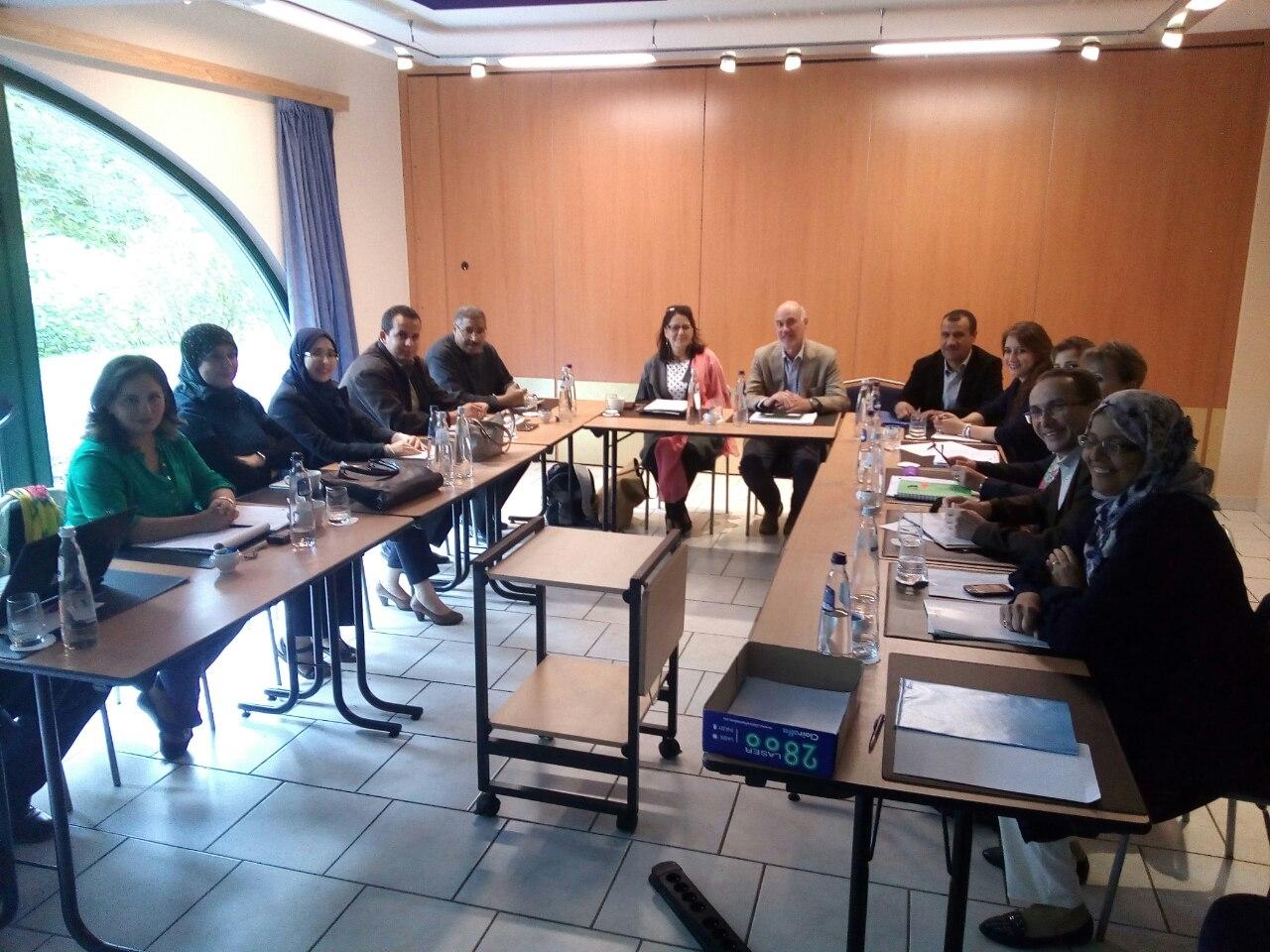
Dans le cadre du projet PRCDE, un voyage d’étude a été organisé sur « la maîtrise de l’incinération des déchets ménagers et assimilés » au profit de Douze (12) cadres du Secteur de l’environnement. Les bénéficiaires sont issus des directions de l’Environnement des wilayas de Tlemcen, Mascara, Bordj Bou Arerij, Ghardaia, Saida, Mostaganem et Ain Defla ainsi que l’Agence Nationale des Déchets (AND) et le Conservatoire National des Formations en Environnement (CNFE). Cette formation a été organisée par le bureau ALMADIUS. Elle s’est tenue du 11 septembre au 25 octobre 2016 à Namur.
-
BTC Mozambique leading the way in water development in rural areas
Stephan CLAES | 17/02/2017
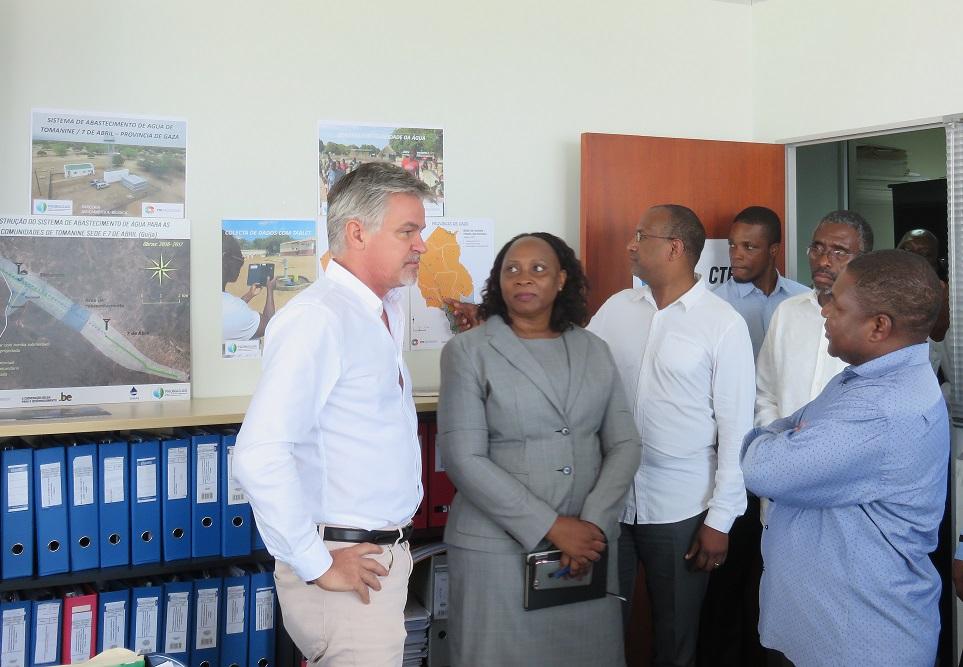
Since October 2013, BTC’s Water Supply Gaza project has been successfully improving access to drinkable water in rural areas of the Gaza Province, Mozambique. This relatively dry region is characterized by remote and widely dispersed communities, that rely on few and often salty water sources. Despite these challenges, the project has installed and updated many water and sanitation facilities in the region, improving the lives of over 15.000 local residents and their livestock. For 2017-2018, the project aims to reach another 40.000. Thanks to its expertise in this field, BTC is considered one of the leading organisations active in water development in Mozambique. In this light, BTC Mozambique recently participated in an experience sharing event (PRONASAR) which was organised by the Mozambican National Water Directorate to lay out the roadmap for the country’s water program 2017-2030. The event was attended by around 160 participants, consisting of other donors, local government officials from the provinces, private sector actors, ministers, civil society actors, university staff, and press. During this event, BTC presented the problems it has encountered, and the “lessons learned” of working in the Gaza region for past few years. In particular, BTC proposed its solutions to provide access to water in remote areas where most water sources are too salty to drink safely. To overcome this challenge, BTC focuses on a variety of possible solutions: Firstly, it is important to move away from manual pumps, since these can only be installed directly above drinkable water sources. In the Gaza province, fresh water sources are often located outside of communities, and not easily accessible to people living in the area. Therefore, BTC often relies on electric pumps: the project has successfully installed multiple electric solar pumps at boreholes containing drinkable water, which then pump water into reservoirs of nearby communities from a distance. Pumping the drinkable water directly into the communities greatly improves easy access to water. Secondly, it is important to invest in new water detection techniques to assess the quality and saltiness of the water in boreholes. In the Gaza region, many pockets of groundwater consist of different layers of water – some drinkable, and some not drinkable. After digging a borehole, this simple technology detects which layers of water could be tapped into in order to provide the population with fresh, drinkable water, and which water layers should be avoided. This technique ensures the most efficient exploitation of fresh water from a borehole, even if it contains both salty and drinkable water. Thirdly, in case no fresh water can be found within the groundwater in a particular area, investment in desalination installations should be made. BTC already has plans to construct several desalination installations in 2017-2018 in the region. Lastly, BTC is digitizing the rural water sector in the Gaza Province by providing local technicians with Akvo Flow Database software. This digital monitoring tool is easy to use, and gives ownership to the local population as it enables them to monitor their water installations and the water quality in the region independently. Thanks to the Akvo Flow Database, Mozambique's National Water Directorate can efficiently monitor the water situation in Gaza province. This is essential for planning effective, long-term development strategies. Indeed, the Belgian Cooperation’s extensive experience in improving access to water in rural Mozambique has not gone unnoticed. During and after the PRONASAR event, Belgium was praised for its innovative approach, and contacted by other donors and international organisations to obtain more information about BTC’s work. Also the Akvo Flow Database received quite a bit of attention, as the Gaza province is now recognised as the first province in the whole of Mozambique with a complete and reliable database on water infrastructures. Impressed by this result, different stakeholders have reached out to BTC with the idea to apply the same methodology in the other Provinces. In addition, BTC’s successes are greatly appreciated by the local population of the Gaza province and by the national Mozambican partners, including President Filipe Nyusi, who paid a special visit to the projects’ offices to learn more about BTC’s work. For 2017-2018, the BTC Water Supply Gaza project will continue its efforts to improve access to water in rural areas, and will continue to use its expertise to lead the way in water development in Mozambique.
-
Inauguration of teachers college in Northern Uganda: a next step in the fight for quality education
Guido COUCK | 17/02/2017
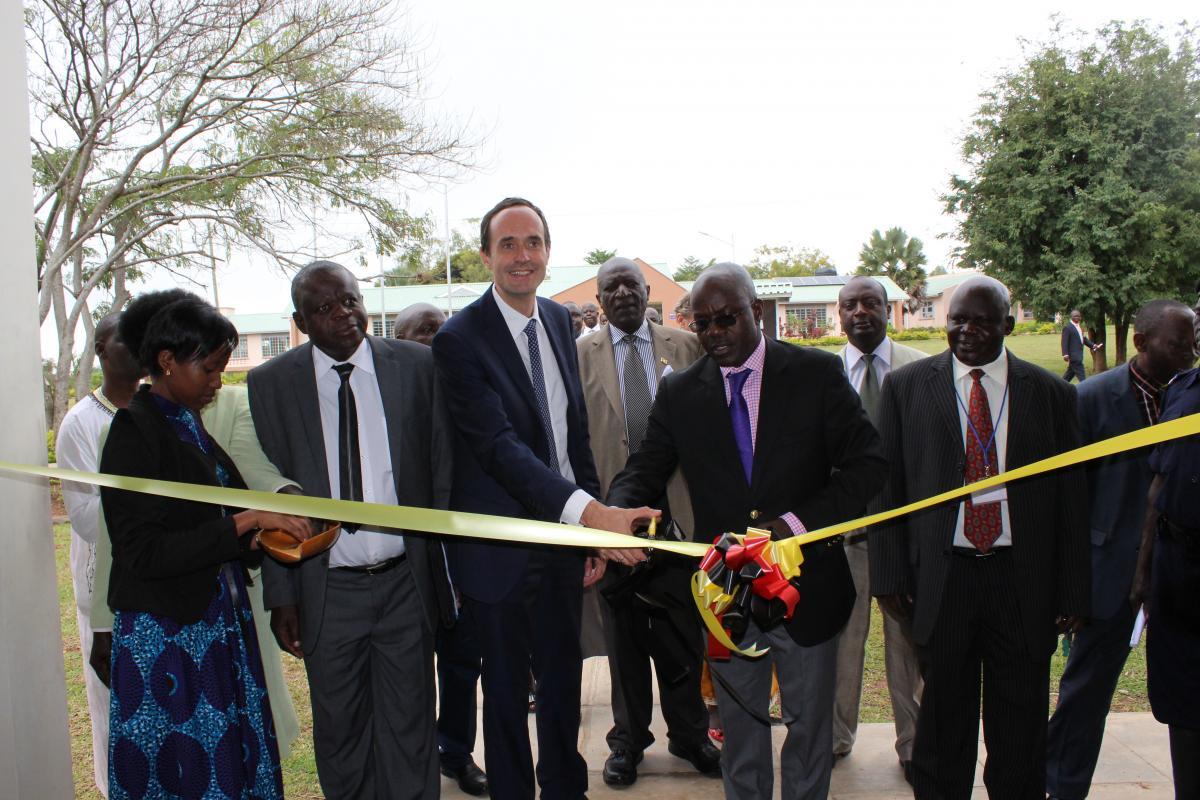
The Ministry of Education and Sports (MoES) in partnership with the Belgian Development Agency officially commissioned the first phase of rehabilitated and constructed facilities at NTC Muni worth 9.2 billion under the Teacher Training Education (TTE) project.To officially commission this project was the Ambassador of Belgium, His Excellency Hugo Verbist and the, the Minister of State for Higher Education, represented by the Permanent Secretary of Ministry Education, Alex Kakooza at a colorful event that took place at the National Teachers College, Muni, Arua district. The TTE project is jointly implemented by the Ministry of Education of Sports (MoES) - Teacher Instructor Education and Training (TIET) Department and the Belgian Development Agency (BTC) to provide an improved student-centered and practice-oriented learning environment in 4 teacher training institutions (NTC Muni; NTC Kaliro; National Instructors College Abilonino; Health Tutors College Mulago). In his remarks at the commissioning, the Ambassador noted “the emphasis on infrastructure and creating a stimulating work environment is certainly no coincidence. Some would say that the Belgians like to build and are therefore ‘born with a brick in our stomach’. However, this is not why we are supporting the rehabilitation of these facilities. Together with our focus on training and management, this is a wider approach”. The results of the five-year commissioned TTE project that started in 2012 include; strengthening support supervision by central level (TIET department; Kyambogo University), strengthening the college management, strengthening pedagogy to improve the quality of teaching and learning, and rehabilitation, extension and equipment of the college facilities. The Permanent Secretary, Ministry of Education and Sports, Alex Kakooza, said that rehabilitation of National Teacher’s Colleges is one way through which the Government of Uganda is improving education standards. He further commended BTC and the Belgian Government for the great work done and the partnership.In terms of infrastructure, NTC Muni has been equipped with lecture rooms, offices, multipurpose hall, a user-friendly library as well as ICT facilities, laboratory equipment and easily movable furniture for active teaching and learning. The college design also incorporated construction of climate-smart approaches that factored in renewable energy and sustainable architecture with elements of solar energy & biogas and water harvesting for the college sustainability. In terms of pedagogy, all the academic staff (52 lecturers) of the college underwent training in student-centred Active Teaching and Learning (ATL) methodology. This was supplemented with distribution of ATL Manuals to all teaching staff and to the college Library for students’ access. Pedagogic projects such as green environment, chicken rearing as well as microteaching sessions were also incorporated with the aim of improving lecturers and students practice. In the past three years, frequent support supervision visits facilitated by the project were conducted by national experts from Kyambogo University and from MoES/TIET department to provide pedagogic support to the college Lecturers, Mentor Teachers, Librarians and Heads of Departments. To enhance the college management, the globally certified “Franklin Covey 7-Habits of Highly Effective People” training was delivered to management staff and execution grants were disbursed for the college to implement priority activities of their strategic plan. Management and support staff also received a series of training in assets and maintenance management as well as on Behavioral Change. It is with the above pedagogic, management and infrastructure support that the Ministry of Education in partnership with BTC is commissioning this project and launching the second phase of construction and institutional development works in NTC Muni. Mr. Alija Alaamvea, the Principal of NTC Muni said that the overall performance of students has significantly contributed to the improvement of student grades due to implementation of the Active Teaching and Learning (ATL) that was introduced to the college by the Teacher Training Education Project that is implemented with BTC Support. He thanked the Belgian Government for the support. Written by: Josephine Omunyidde
-
Upskilling the master crafts
Hanna DEKERK | 17/02/2017
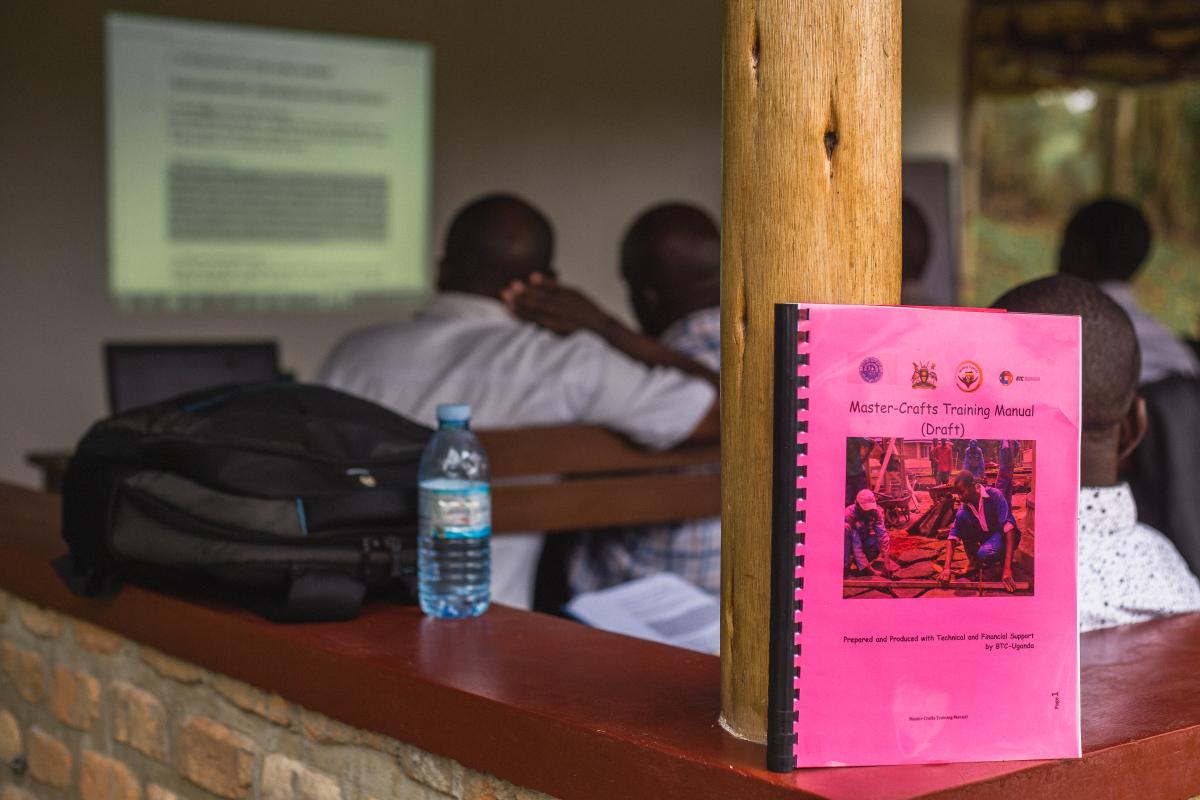
“Public- Private partnerships start with getting master crafts persons on board” Godfrey Wabwire, National Field Manager Support To Skilling Uganda With the aim of upskilling master crafts persons as key partners in work-based learning, BTC’s Support to Skilling Uganda organised a training for master crafts persons of the 5 partner Vocational Training Institutes in Masindi, Hoima, Kabarole and Kasese.From the 14th to 17th of February in Fort Portal, education sector experts tested training manuals and piloted trainings for 21 master crafts persons from the private sector, all with the support of BTC staff. This kick-start activity focuses on upgrading training instructors and master craft persons as well as improving the quality of apprenticeships. The long-term vision behind mastercrafts persons involvement is to improve their technical as well as pedagogical skills in guiding students during apprenticeships. Besides, the idea is to get instructors of the schools inspired by the teachings of these mastercrafts persons.After piloting, trainings are conducted in February and March for 115 master crafts persons collaborating with our 5 partner Vocational Training Institutes. Each training targets 20 master crafts persons and 3 instructors from the priority sectors of the partner schools. Firstly, trainings are given to the Construction Trades of Uganda Technical College Kyema and Motor Vehicle Technology and Welding of St. Simon Peter College. Next up, Hotel and Catering from Millennium Business School receive a master crafts training, followed by Electrical and Renewable Energy of Kasese Youth Polytechnic and Motor Vehicle Technology and Welding of St. Joseph’s Virika College. Training master crafts persons brings on board the relevant private sector players in the technical and vocational training process, which is key for the Skilling Uganda Strategic Plan 2012-2022. This strategy emphasizes work-based learning and exposure of trainees to the world of work.
-
Preparing Palestinian youth for their first World Skills ever
Eva MORRE | 16/02/2017
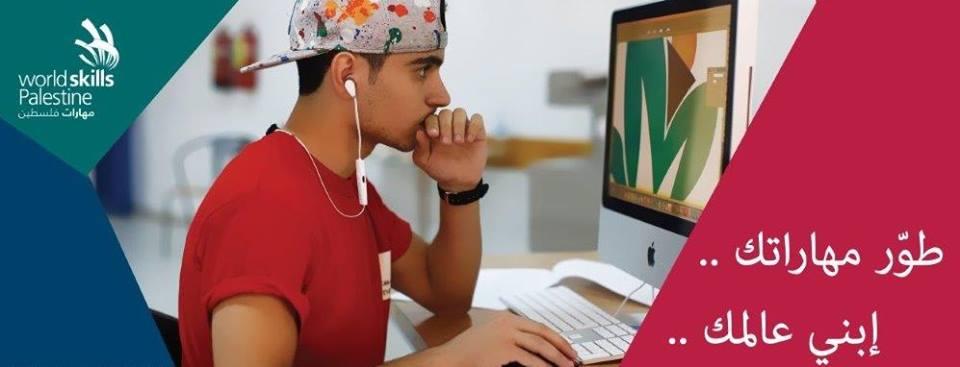
On the 4th of October 2016 the final of the first National ‘PalestineSkills’ Competition took place in Ramallah. Young craftsmen and women were encouraged to take part in this competition and show their skills. During these finals, the best craftsmen in tiling, painting, graphic design and confectionary were preselected. The preselected students will be further trained and prepared according to WorldSkills standards. In April the names of the three Palestinian students attending the international World Skills competition in Abu Dhabi shall be announced. World Skills is the largest vocational skills competition in the world. This year it will take place in Abu Dhabi from 14-19 October 2017. Young people from more than 70 member countries and regions will come to Abu Dhabi to compete in around 50 skill competitions. For the Palestinian youth it is the first time they have the occasion to participate. More than 300 delegates travelled to Abu Dhabi to prepare for what promises to be an unforgettable WorldSkills Competition. In the meantime, the students are getting very intensive training courses in English, as well as in their own field, in order to improve their skills even further. The Palestinian participants will all receive a perfection training from national experts, as well as international experts. The students and their experts preparing for the graphic design competition will, thanks to the Belgian Development Cooperation, receive a training in Belgium, and will also compete in the Belgian Startech’s days, the Belgian WorldSkills Competition. You can follow the journey of the students and their experts on Facebook: www.facebook.com/palestineskills
-
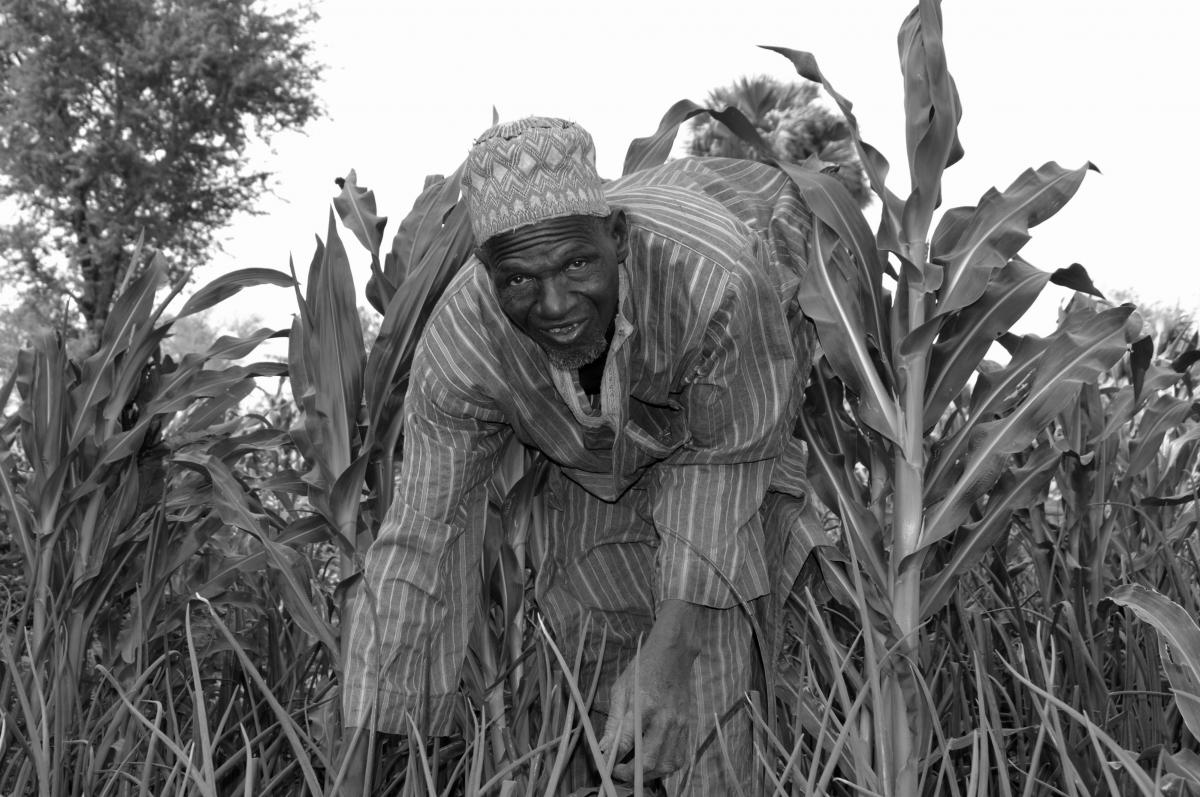
La période de soudure fait place à une récolte d'abondance
Stephanie EECKMAN | 10/02/2017
Grâce à l'amélioration de l'irrigation sur son terrain grâce au programme PAMEDII de CTB Niger, Mahaman Bachar produit plus et fournit la sécurité alimentaire pour sa famille. Mahaman travaille sur ses terres dans la commune de Dosso depuis plus de trois décennies. Année après année, sa famille menait une vie difficile: ils cultivaient du mil, et les pluies - avec un peu de bonne chance - déterminaient combien de nourriture ils pouvaient manger chaque année.Il y a trois ans, grâce à la CTB Niger, un périmètre maraîcher irrigué a été mis en place sur ses terres. Ce périmètre est avant tout communautaire. Tout le monde s’affaire pour que le projet soit un succès. L’intérêt pour la communauté est manifeste : « le maraîchage nous apporte des revenus supplémentaires, de quoi augmenter et diversifier notre nourriture, et crée une dynamique positive dans le village qui donne envie d’entreprendre de nouvelles choses. » « Dans ma parcelle, j’ai commencé à planter du maïs, des oignons et des tomates. Une partie de ma récolte est destinée à la vente, une autre à la cuisine quotidienne pour ma famille. » La saison de faim de sa famille a été remplacée par une récolte d'abondance. « Vous savez, il y a tout juste deux ans, je n’avais pas assez pour nourrir ma famille », déclare Mahaman, qui vit dans un complexe familial qui compte 16 enfants. « Maintenant tout le monde mange et nous pouvons vendre le supplément. » « La vie », dit-il, « est maintenant beaucoup mieux. »
-
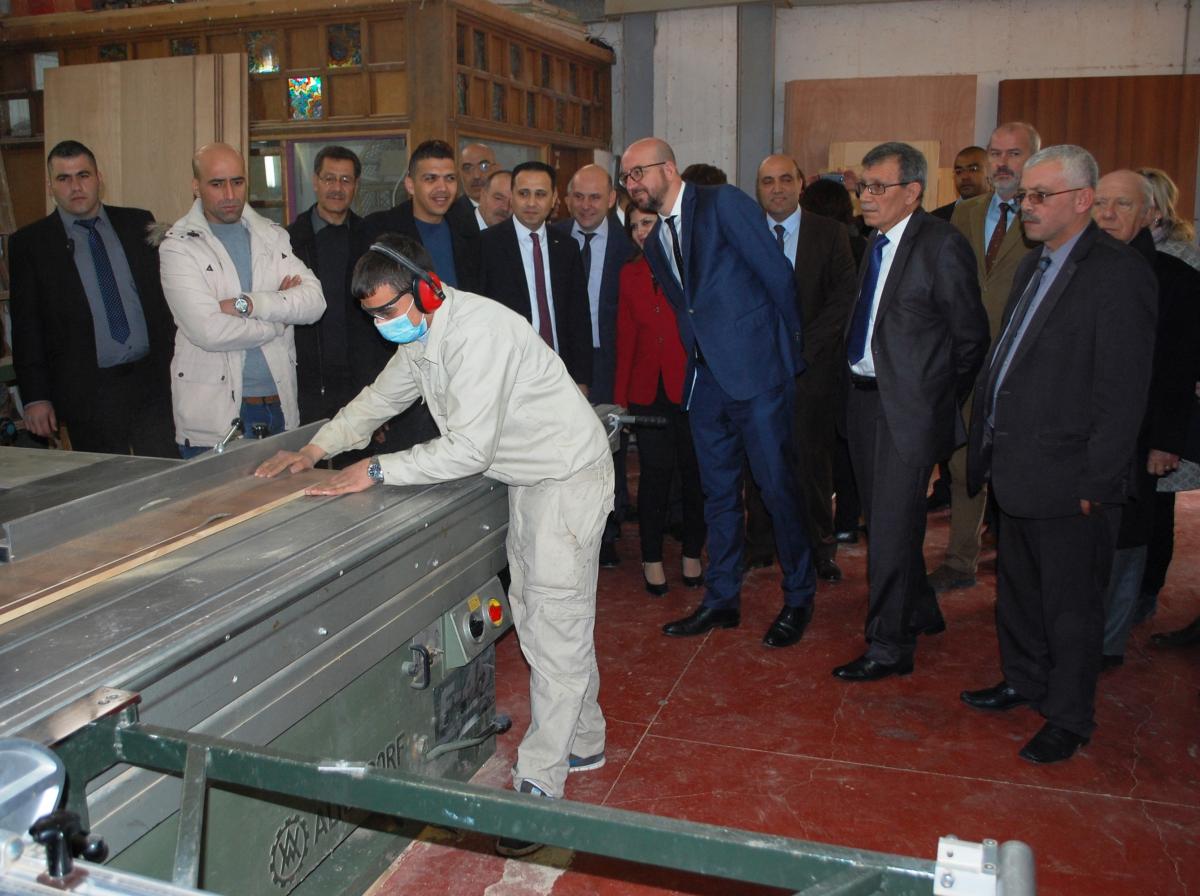
Prime Minister of Belgium visits YMCA Jericho
Eva MORRE | 08/02/2017
The first week of February, the prime minister of Belgium – Charles Michel – made an official visit to the Palestinian Territory. As part of his trip, he has visited the Work Based Learning project of the Belgian Development Cooperation in the YMCA in Jericho. The YMCA in Jericho has been founded in 1952, as a branch of the YMCA in Jerusalem. It is a training centre that especially focuses on marginalised youth from the refugee camps and other disadvantaged areas in the West Bank. The scope of the centre is to offer a vocational training to these young people – providing them with enough skills to find a job afterwards. The centre focuses specifically on orphans, youth coming from disadvantaged families and backgrounds, traumatized children or people with special needs. Currently the centre counts 35 teachers and 300 students, among which around 50 girls. The centre offers a wide range of professional training courses, including accounting, cooking, ICT, construction works etc. The courses consist of two parts, for a total of two years. The theoretical part of the training takes place in the YMCA and lasts for 11 months. The second part, the practical training takes place inside the private sector, and lasts for 7 months. The Belgian Development Cooperation has supported the YMCA since 2008. A first project helped the centre to acquire 80 beds, as to allow the students coming from remote areas to sleep inside the training centre. Furthermore, thanks to the Belgian Development Cooperation, the centre could acquire 15 new computers, now in use as an ICT classroom for the students. More recently, the centre has been selected for the Work Based Learning Fund in order to optimise their system of training in the private sector. Research has shown that training in private companies drastically enhances their chances to find a job afterwards. Up to 80% of the students find a job within a year. Currently, the fund only supports the students who follow the cooking school, but in the future this fund can also cover other professions. The funds help the YMCA to cover the transportation fees of the students going back and forth to the private sector organisations, to buy uniforms for them, to give them a work insurance, buy the tools and raw materials they need during their training etc. Furthermore, a specific coaching mechanism has been put in place for the teachers and trainers that accompany the students during their time in the private sector and do the follow-up of their training period.
-
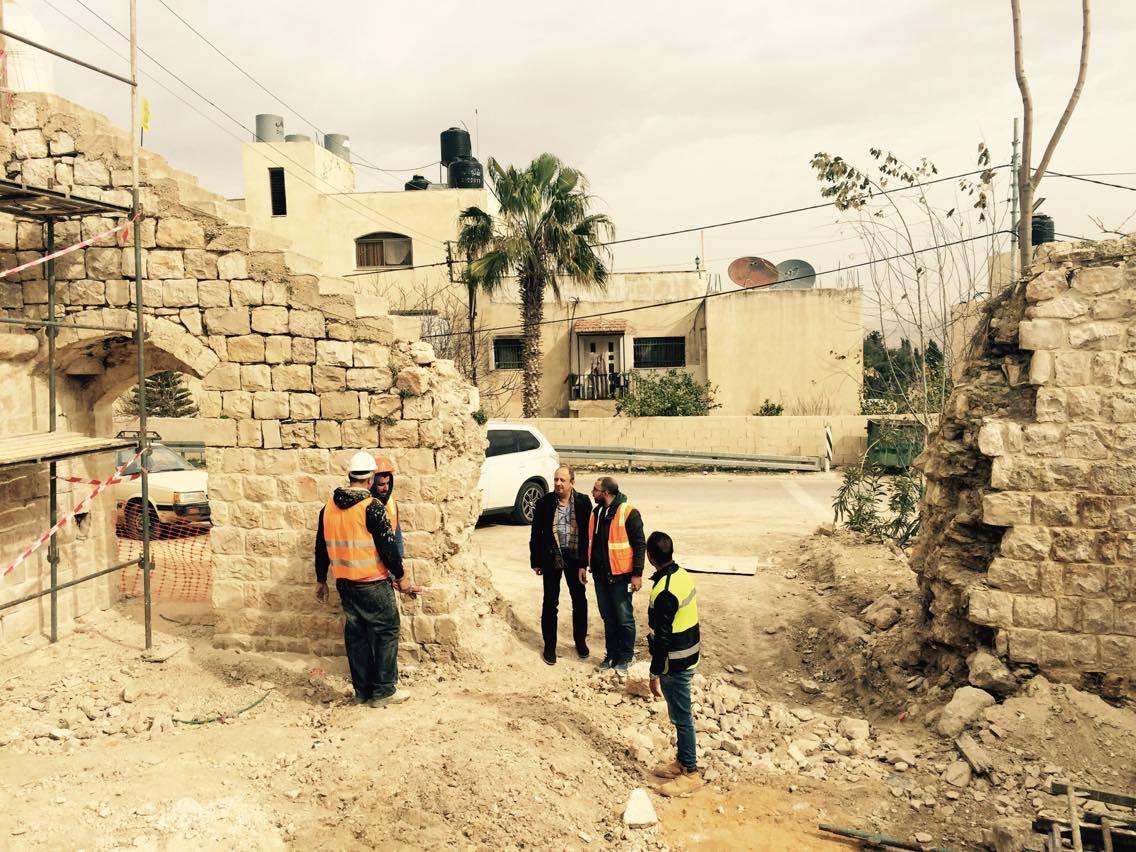
Rehabilitation works started in Bani Zeid, Deir Ghassaneh
Eva MORRE | 07/02/2017
Bani Zeid is located 25 km northwest of Ramallah. Historically Bani Zeid was a ‘Throne Village’, a village that served as a sheikhdom with administrative capacity (tax collection) during Ottoman rule. As a Throne Village, Bani Zeid enjoyed certain financial privileges which are now still visible in the Sheikh Saleh Palace and rich architectural historic center. In the Regeneration of Historic Centers program, the historic center of Deir Ghassaneh (Bani Zeid) is chosen as a Quick Fruit Project (next to Assira, Deir Istiya, ‘Abud and Bani Na’im) and as a pilot for the seven remaining (and more valuable) localities. Quick Fruit Projects are characterized by their quick return on investment; they are try-outs where a small(er) amount of money is invested and where one can easily and quickly see the output, results and impact. Moreover they provide lessons learnt for the remaining projects in other localities. The Center for Cultural Heritage Preservation (Bethlehem) has been contracted to design and technically supervise the implementation of those quick fruit rehabilitation projects. Their work focusses on preserving the authenticity of the building and maintaining the integrity of the urban fabric where it is located, while at the same time transforming it to host socio-economic functions or services. These new functions were defined through a participatory approach and meet the needs of the local community as well as potential local and international visitors. The project in Bani Zeid, Deir Ghassaneh, includes the rehabilitation of a traditional abandoned building (Dar Khatab) composed of two floors with a total surface area of 190 m² for the adaptive reuse as a multipurpose building. The main activities, which will be exploited by the local Women Association, include milling, drying and storing of local agricultural products (such as thyme, etc). Therefore, a new mill will be installed in the building. Furthermore, the 210 m² courtyard that connects the traditional building with its surroundings will be rehabilitated.The proposed project will contain physical restoration of the building including consolidation works, cleaning works, roof isolation works, maintenance of stone tiling, treatment of cracks in the existing walls, pointing, re-plastering and painting of existing walls and ceilings, installation of electrical and mechanical networks and supply of furniture.The construction works have started at the end of January and should be finished by May 2017. Already during the construction works, the LED expert will work together with the Women Association to raise their business capacities and to develop a sustainable business plan.
-
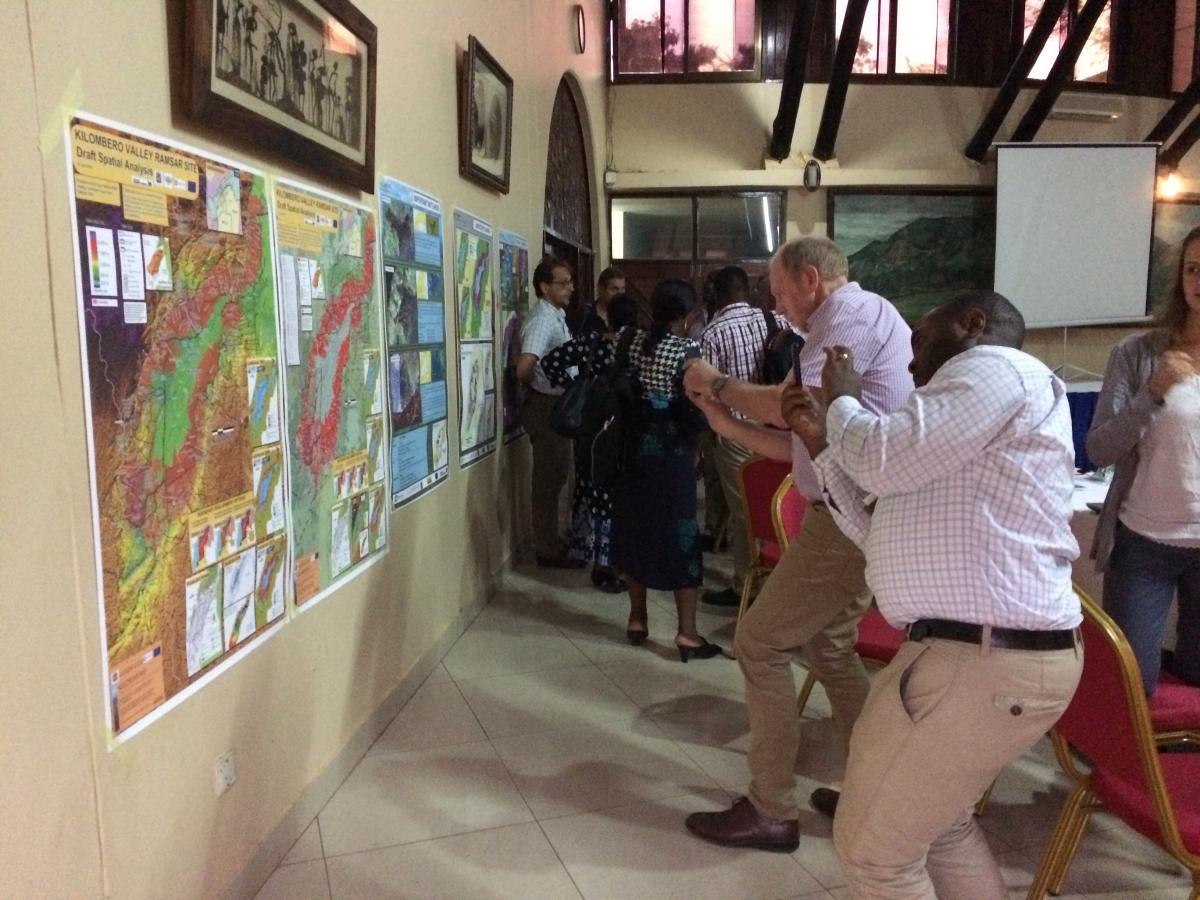
Workshop on the results of diagnostic studies in the Kilombero Valley
Jennifer SWERTVAEGHER | 02/02/2017
The Kilombero Valley is East Africa's largest wetland with a floodplain area of approximately 6,000 km2. In 2002 a significant part of the valley and parts of the surrounding areas was declared a Ramsar* site (7,900 km2). At the same time, a large part of the valley is designated as a Game Controlled Area (GCA) since 1974 (the boundaries of which were revised in 2011). The KILORWEMP project supports the Ministry of Natural Resources and Tourism and other stakeholders to confirm the boundary of the GCA, and to develop a dual management system for biodiversity and wetland management: a General Management Plan for the Kilombero Game Controlled Area (KGCA/GMP) and an Integrated Management Plan for the Kilombero Valley Ramsar Site (KVRS/IMP). A team of specialists was hired to assist these tasks.To support the management plans with hard data, the consultancy team carried out diagnostic studies on (1) land use, (2) fisheries resources, and (3) pastoralism. The findings were presented last 31st of January, during a stakeholders workshop in Morogoro. Participants discussed the findings of the diagnostic studies and looked for a way forward on how to manage the key natural resources in the most optimal way. A way that will ensure biodiversity conservation, while sustaining livelihoods of the surrounding communities. *For more information: http://www.ramsar.org/about-the-ramsar-convention
-
Introducing result-based financing in the public health sector
Thea MATHUES | 30/01/2017
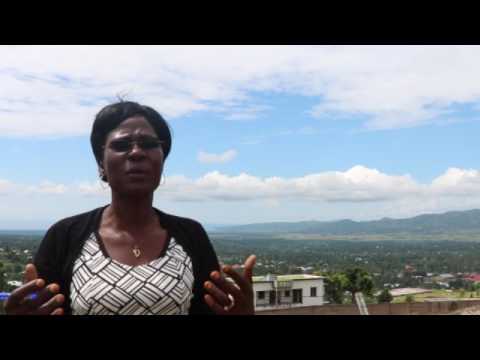
To bring Uganda one step closer to universal healthcare coverage a new system of result-based financing is being introduced. This system looks at results instead of inputs. Hospitals and health centers that perform well will receive financial support to be spent with more autonomy and according to local needs. For many public health facilities in the Rwenzori region of Uganda this makes a big difference. Find out more through the video.
-
Lessons learned workshop
Jennifer SWERTVAEGHER | 26/01/2017
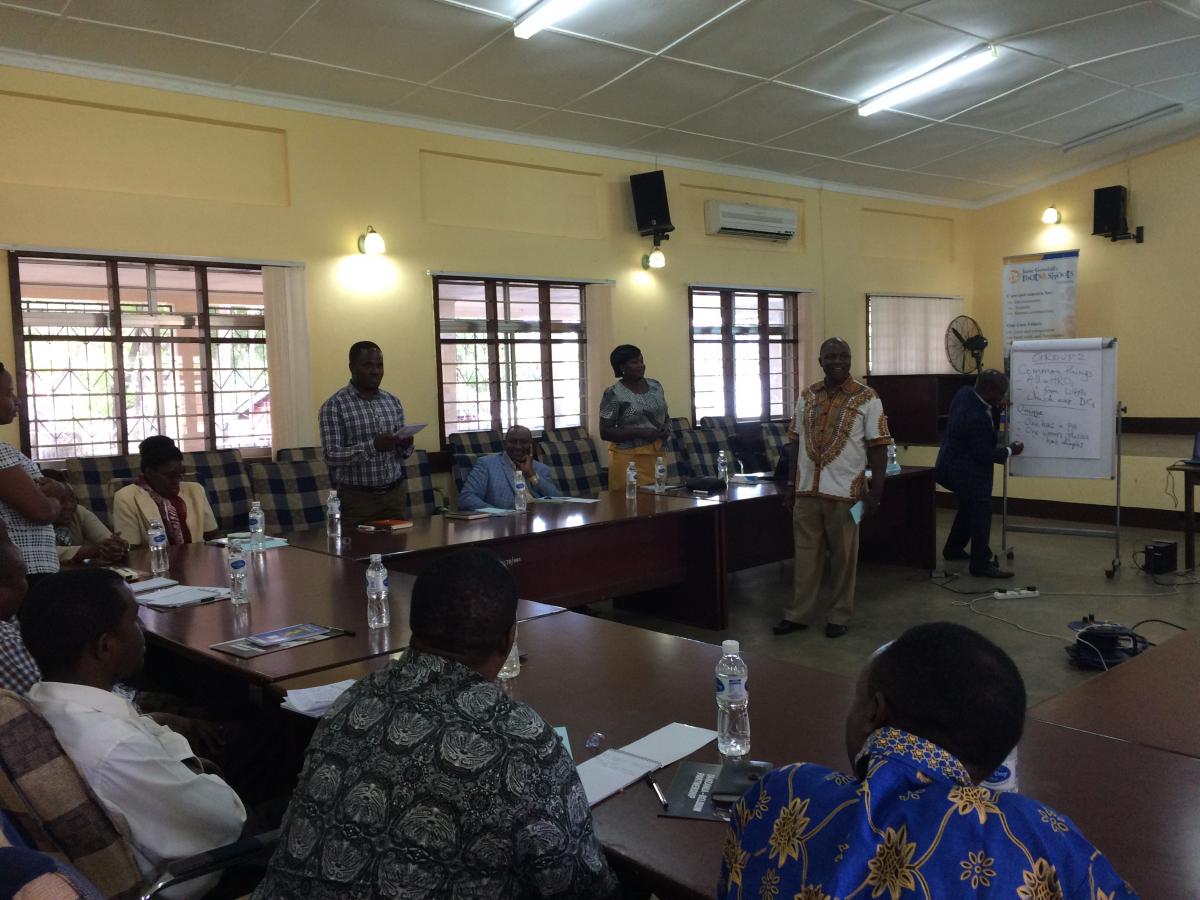
The Scholarship Programme is coming to an end in April 2017. After 4 years of implementation, there are a lot of experiences to collect and to learn from. To jointly analyse what lessons have been learned during the past years, 3 stakeholders workshops are being organised to bring together all people who have been involved in the project. In Dar es Salaam, in Kigoma, and in Morogoro, stakeholders are given the chance to voice their opinions on what went well, what didn’t go well, and why. These experiences are of great value to repeat best practices, and avoid past mistakes when BTC engages in any future capacity building efforts in Tanzania.