Opzoeken
2835 - 2850 van 3045 nieuws bekijken
-
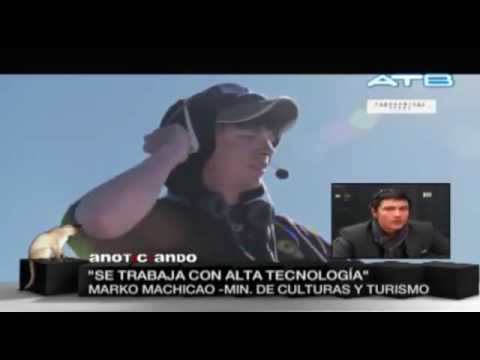
Proyecto del Lago y hallazgos obtenidos a la fecha
Agar TAMAYO | 12/01/2017
El ministro de Culturas y Turismo habla en el Programa Anoticiando de la RED ATB a nivel nacional acerca del Proyecto del Lago y sus características, además de algunos hallazgos obtenidos hasta la fecha.
-
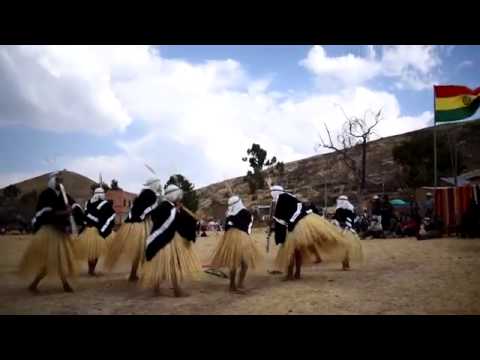
Proyecto del Lago: ARUSKIPIRI
Agar TAMAYO | 12/01/2017
Se trata de un vídeo que narra en imágenes el proceso de Socialización del Proyecto del Lago, un proyecto arqueológico-turístico que busca contribuir a mejorar la gestión comunitaria del patrimonio cultural de la cuenca del Lago Titicaca boliviano y promover el desarrollo del turismo cultural comunitario. Esta socialización fue realizada en 13 municipios priorizados en el Proyecto del Lago, en este proceso se llegó a capacitar a alcaldes, concejales, directores de desarrollo humano, de cultura y turismo. Alrededor de 180 autoridades municipales fueron sensibilizados acerca del Proyecto del Lago y sus alcances. Asimismo se encuentra en plena conclusión la segunda etapa de socialización con autoridades originarias, representantes de emprendimientos de turismo comunitario y artesanal de los 13 municipios. La socialización se realizó en idioma aymara y español utilizando diferentes materiales de información como apoyo didáctico. Franz LaimeProyecto del Lago
-
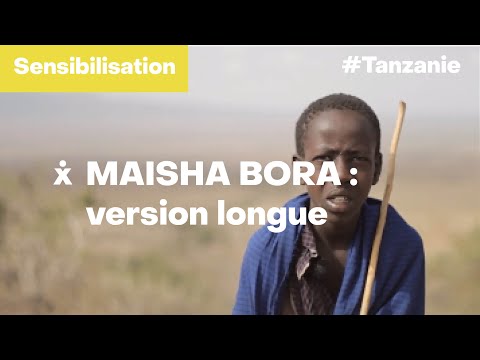
Programme update: Maisha Bora video to raise awareness of pastoral livelihoods & food insecurity
Toon DRIESEN | 21/12/2016
Iles de Paix made an eye-catching video on the Maisha Bora programme. The video will be used to inform and sensitize school children in Belgium on pastoral livelihoods and the work of our Maisha Bora partners to improve food security in Northern Tanzania.
-
Focus on coordination: BTC introduces a mobile monitoring system in the Maisha Bora programme
Toon DRIESEN | 21/12/2016
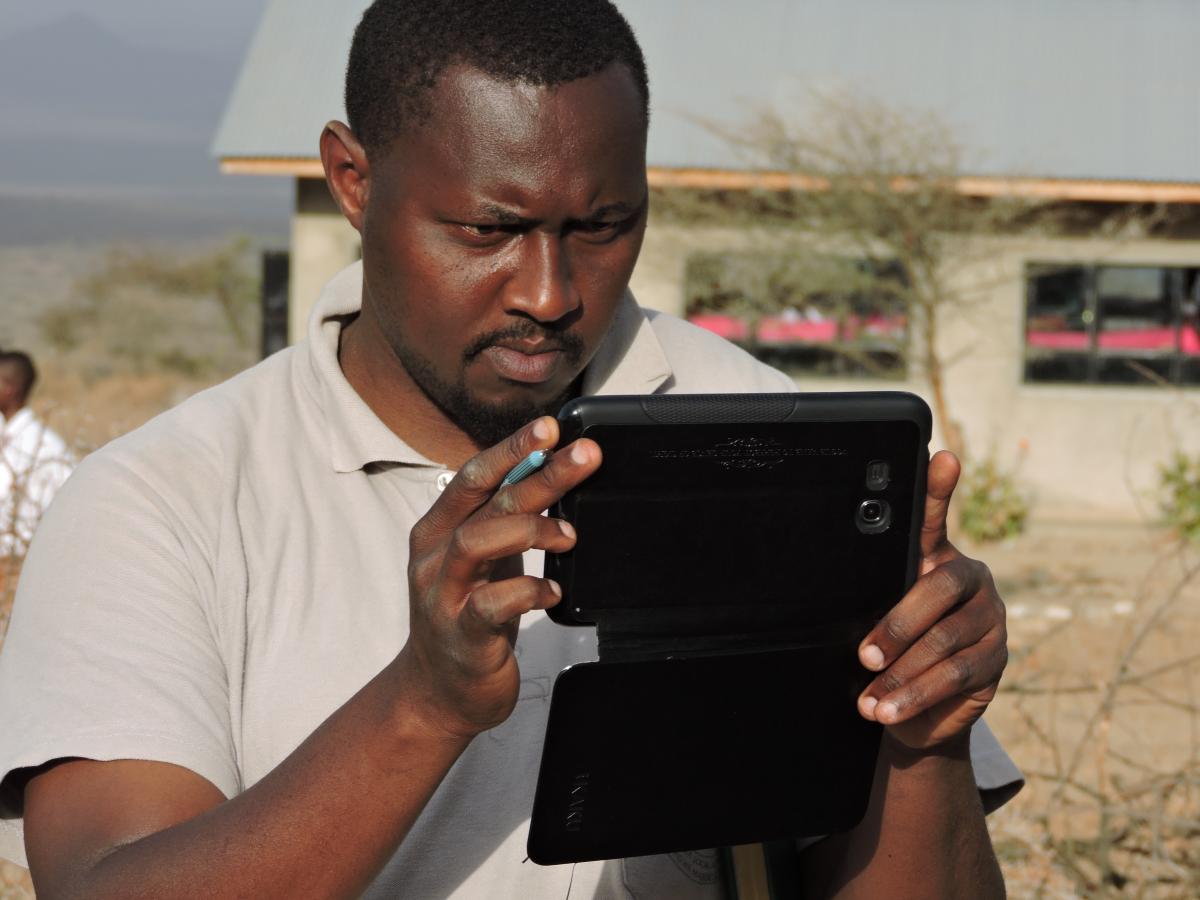
Reginald Lyakurwa from Longido District taking pictures with the tablet during one of his coordination visits to the Maisha Bora programme activities. You can read the full article on: https://social.shorthand.com/MaishaBoraTZA/ngE04c6yrf/the-wows-and-woes-of-mande-technology In June 2016 BTC launched a mobile monitoring system based on the free and open source solutions offered by Kobo Toolbox. The tools allow BTC and their local government partners to collect monitoring data using an application on their tablets, aggregate all the data on the Kobo Toolbox server and export them directly to any of their preferred analysis tools: Excel, QGIS or Tableau Public. The first results look promising. Mathias Lardinois, programme coordinator explains: “We are collecting rich and reliable data, we limit the time spent on data collection and analysis, minimize data entry errors and we ensure a fast flow of information from the field to the office. Basically these tools help us to take better decisions based on reliable information from the field.” “Putting in place the technology is the relatively easy part. We are investing a lot of time in training our partners in the use of the tablets and making sure they can all keep up with the technology” says Toon Driesen, junior assistant for BTC . By setting up data collection campaigns together with their programme partners and sharing knowledge and experiences with organizations outside the Maisha Bora programme, BTC also contributes to a local community of practice. Mathias & Toon finally give some advice to other development actors who want to set-up their own M&E system: Think about an integrated ICT4D approach. Make sure you can integrate and preferable synchronize your M&E system with your other (existing) tools for e.g. communication and programme management.The success and adoption of your tools depend on your primary users. Invest sufficient time in training and include your partners and users in every step of the design and implementation process.Don’t get too focused on data. It’s not about the amount of data you collect, but the ability of your organization to take meaningful decisions based on reliable data. Don’t ignore the stories behind the figures. BTC’s efforts didn’t go unnoticed. On 28 February 2017 Mathias Lardinois is invited to represent Maisha Bora at the 2nd Aid & Development Africa Summit in Nairobi, Kenya in a panel discussion on mobile innovations to support community resilience. Find out more on the conference: http://africa.aidforum.org/ Some useful links: http://digitalprinciples.org/ : 9 principles that will guide you for integrating best practices in technology-enabled programmes http://www.kobotoolbox.org/ : create your free hosted account at Kobo Toolbox and start collecting data using mobile phones or tablets.
-
Launch of the regional health and education office in Fort Portal
Hanna DEKERK | 21/12/2016
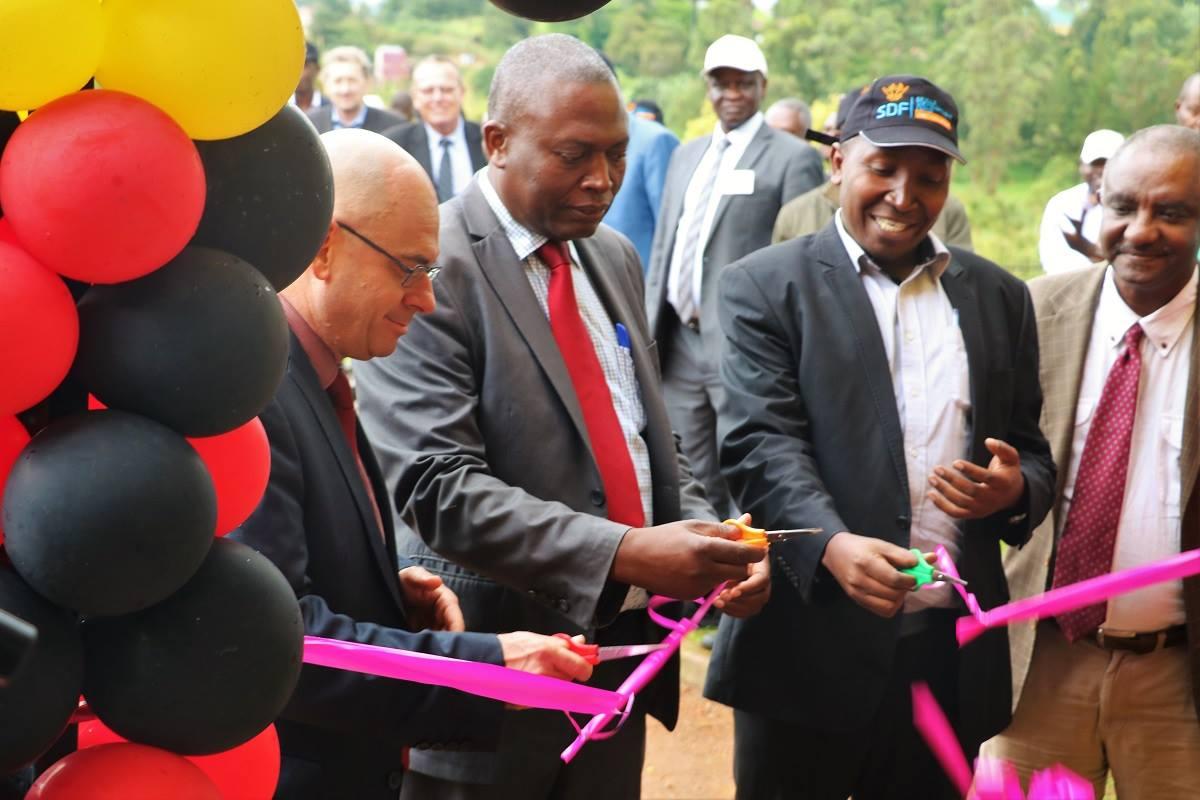
On December 13th 2016 BTC Uganda officially launched the new Health and Education regional office in Fort Portal. BTC has been operating in the Rwenzori and Albertine region for years but since June 2016, a regional office has been established in Fort Portal for the Health and Education projects. The new office will improve access to the beneficiaries of these two departments, while increasing the collaboration with key stakeholders and local district leaders. In short, it will enhance the response and integration of local issues.Dr. Fedjo Galbert, International Technical Assistant at the BTC Uganda Health department kicked off the launch with some insights on their recent focal point: Results Based Financing. The aim of this approach is to make districts and health service providers more accountable by regularly verifying the quantity and quality of delivered health services, while at the same time reducing the patients bill. Jan Bijnens, the Education programme manager for BTC Uganda highlighted the importance of the new office for the implementation of the Support to Skilling Uganda (SSU) project. At the grassroots level, SSU focuses on improving the quality of training and qualification processes, while enhancing access to BTVET. The project can now collaborate more closely with local BTVET institutions, which increases its efficiency and effectiveness. Finally, Erwin De Wandel, Head of Development Cooperation for the Belgian Embassy, officially cut the ribbon at the door and concluded that “The opening of the regional project office is a logical step and a demonstration of the committed development support towards Uganda’s local development agenda.” He is convinced that the regional office in Fort Portal will evolve towards a center of reference for all development partners, especially all Belgian partners and NGOs, in view of exchanges of experiences and synergies of activities.
-
From the world of training to the world of work: Launch of the Skills Development Fund and the business plans of 5 partner institutions
Hanna DEKERK | 20/12/2016
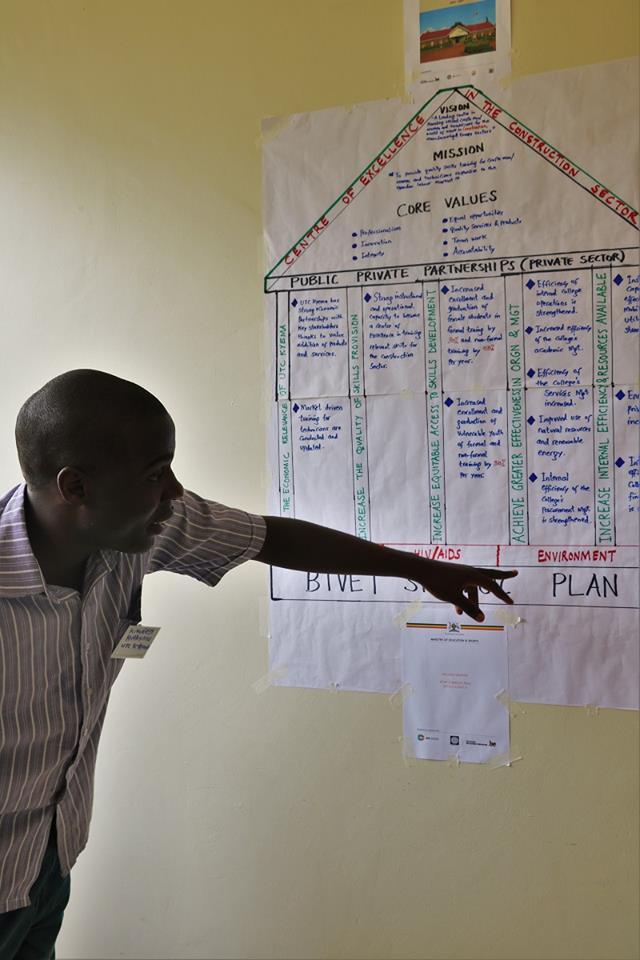
On the 13th of December, the Support to Skilling Uganda (SSU) project piloted the Skills Development Fund (SDF) and launched the business plans of 5 partner institutions in the Albertine-Rwenzori region. At an event in Fort Portal, partners from the local and national level gathered to learn about the funding possibilities of the pilot SDF and to admire the newly edited business plans. Skills for competitivenessIn order to create awareness among the targeted applicants, the pilot SDF was officially presented to training providers and the private sector in the Albertine-Rwenzori region. Business Membership Organisations at regional level were targeted, as well as training providers that were reached during the mapping exercise. As the SDF expert, Christine Karungi, puts it “This launch marks the first step in the pilot SDF roll-out strategy for Albertine-Rwenzori.” By enhancing skills development, the pilot SDF aims to improve local productivity and competitiveness. Its goal is to stimulate bottom-up initiatives between training providers and the private sector through competitive calls for proposals. By linking BTVET institutions with private sector organisations, the fund will facilitate the transition from the world of training to the world of work. Options for financing of Skills Development will first be tested in Albertine-Rwenzori, and later replicated in West-Nile and Karamoja. At the launch, Robert Odok Oceng, Director of Higher Education of the Ministry of Education, requested eligible stakeholders “to take up this opportunity to design innovative and relevant skills development programs that will contribute to increased employability of the youth.” From the classroom to the workshop The event also launched the newly edited business plans of 5 partner training providers in Albertine-Rwenzori, which were proudly presented to partner organisations and economic actors in the region. The SSU project supports St. Joseph Technical Institute in Fort Portal, St. Simon Peter Vocational Training Centre & Millennium Business School in Hoima; Kasese Youth Polytechnic Institute in Kasese and UTC Kyema in Masindi to become modern, relevant, demand driven and qualitative Skills Development Centres and eventually Centres of Excellence for particular trades. The first step in this process is the development of business plans which will provide road maps in the transformation process. Through internal self-assessments and external BTVET management coaching, each of the technical Institutes created its own business plan. They worked out their own performance indicators, based on the Skilling Uganda Strategic Plan, to set realistic targets and follow up on achievement of the set objectives. LCV Chairperson of Kabarole Mr.Rwabuhinga encouraged the 5 partner institutions to be up for the task to become centers of excellence in the region and to be accountable for the support they had received. Based on the business plans, the SSU will plan its future support including infrastructure, relevant equipment and coaching in terms of improving work-based learning practices, assessing market relevance of training programs, career guidance, tracing of graduates, etc. According to Erwin De Wandel, Head of Development Cooperation for the Belgian Embassy “The launch of the Business plans marks the end of the project inception phase but yet the beginning of the project support at the field level.”
-
Focus on Business: Saving groups are sharing out
Toon DRIESEN | 19/12/2016
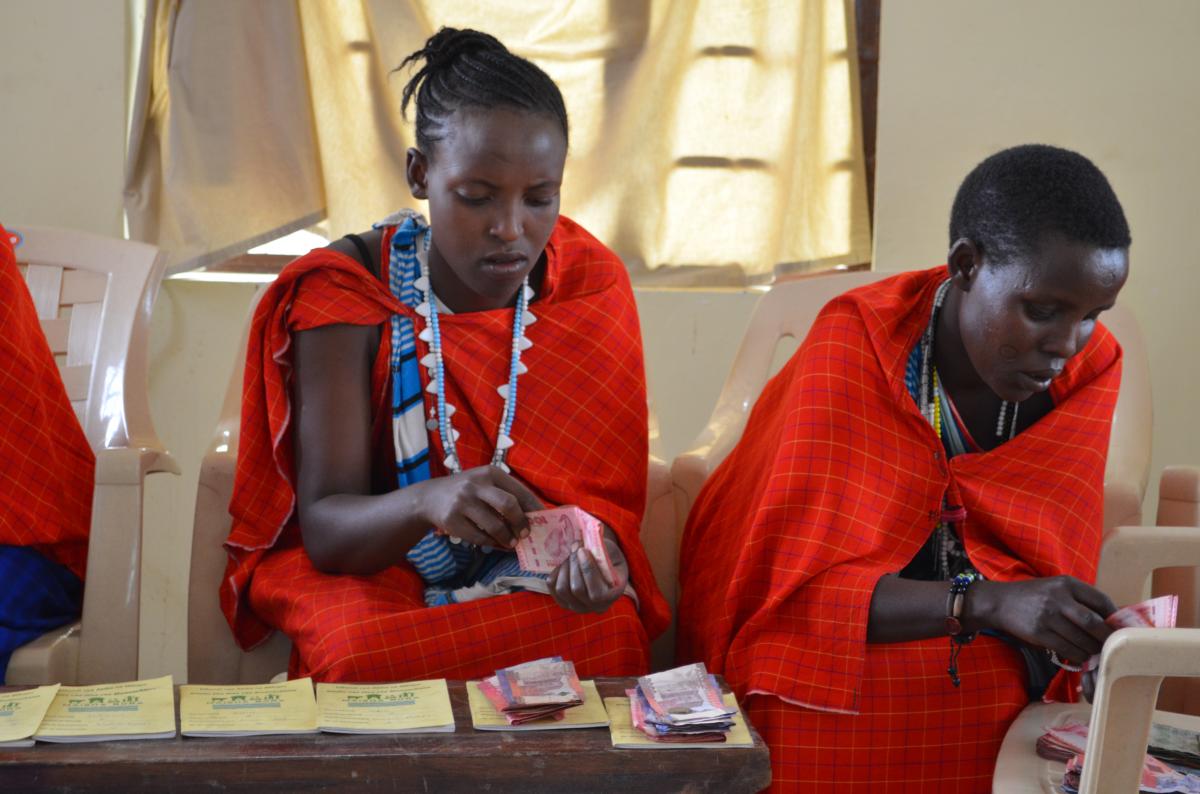
Saving groups are sharing outPicture: Sharing out of Ebeneza group in Orkejuloongishu. They accumulated 3,200,000 Tsh during their first cycle and generated a profit of around 20% (The price of a share was 500 Tsh and they received 603 Tsh per share during the share-out meeting). Trias and its local partners PWC, Mwedo and Mviwata Arusha have been training around 30 community trainers in 2016 in the VICOBA (Village Community Banks) methodology. Those trainers have trained 140 VICOBAs up to now (+- 3300 members, 80% female members). A VICOBA is a saving and credit group of people who save together and take small loans from those savings. The group activities run in cycles of around one year, after which the accumulated savings and the loan profits are shared out back to members according to the amount of savings of a member. The annual share-out resolves any outstanding issues and builds member confidence. It provides an instant verification to all members that their money has been safe and that the process is profitable. A healthy return on savings is between 5 and 25% per year. Since the first VICOBA trainings within Maisha Bora programme started last January, groups are now starting to share out. Some groups organize a big event with a celebration and a fundraiser. After the share-out, members who do not wish to continue may leave the group and new members may be invited to join. Our advice to the groups is that members who plan to continue to the next cycle will agree to use some of the shared out savings to make a contribution to the loan fund for the next cycle (starting capital). This means the groups do not start with an empty credit box in the next cycle and can give bigger loans faster. When a new cycle begins, members will conduct new elections for the committee, review their constitution and may make changes to the amount of social fund contributions, price of a share, interest rate etc. We look forward to follow-up on our groups in the next cycles!
-

GLAZZA – Belgian Glass art comes to Gaza
Eva MORRE | 16/12/2016
In February 2016, Belgian glass artist Michèle Vanvlasselaer had the opportunity to visit Gaza for the first time and to present her work to the students of the University of Palestine. The trip to Gaza was a revelation and she returned buzzing with ideas. Inspired, Michèle decided to create, with a group of friends, a new initiative called GLAZZA: an association to support artistic and educational projects in the visual arts. The aim is to re-intoduce the art of stained glass windows into Gazan architecture and construction. After various other visits to Gaza, a successful workshop for children was organised together with UNRWA in the summer of 2016 as part of the Summer Fun Weeks. The results of this workshop have been shown to the public during an exhibition, first in Brussels, and early 2017 also in Gaza. During the summer, Michèle has also given a workshop on glass art during the TVET Summer Camps, organised by Islamic Relief Palestine, in cooperation with the Belgian Development Agency. The idea behind the summer camps is to try and change the negative attitude towards TVET in the Gaza Strip and increase the enrolment of TVET students, which is at the moment very low notwithstanding the high number of job opportinuties in this field. The summer camps gave the students of general education the chance to practice different technical vocations and understand better what TVET is all about. Michèle is now planning to take the lead in a course on glass windows at the University College of Applied Sciences (UCAS) in Gaza. She will train a team of students and artists to work together on stained glass windows for the private sector in Gaza. GLAZZA is also researching the possibility to export stained glass windows globally. This pilot course will target graduates in Interior Design and Arts and Crafts from UCAS who will be able to attend an intensive course in stained glass, lasting for six months. After this pilot project, the project will be evaluated, but the long-term aim is to develop a fully functioning independent training department focussing on the art and craftsmanship of stained glass windows in Gaza. For updates, a video about the project and more information, take a look at the website of GLAZZA: http://glazza.eu/glazza-in-gaza/
-
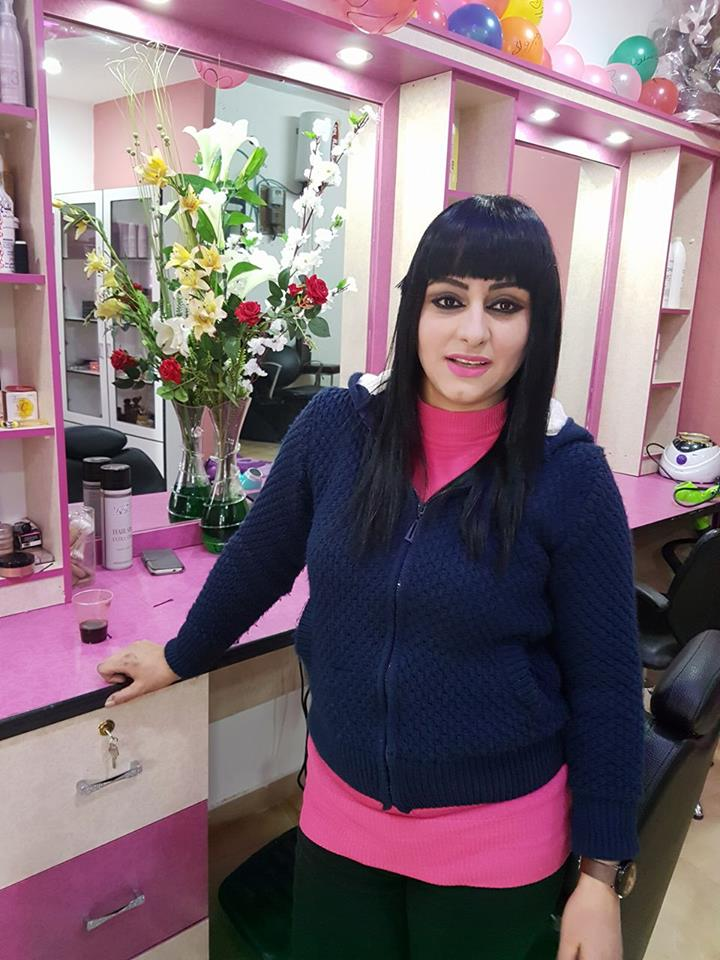
Amal’s big dream: a success story in Bethlehem
Eva MORRE | 16/12/2016
The big dream of Amal (28) was to study in order to open a Beauty salon and provide her family with a better living. However, she was never able to continue her education because her parents couldn’t afford it. Later on she got married and had three kids, but due to the illness of her partner and the fact that she needed to take care of the kids, she was still not able to continue studying. Finally, early this year, thanks to a scholarship programme from the Work Based Learning programme of the Belgian Development Agency (BTC) she was able to follow the Hairdressing and Beautification course in the Bethlehem Star Charitable Society. Together with 20 other people she was selected for the grant. Recently, she has opened her own Beauty salon. The other students who followed the same course as she did were also rather successful. In total, two more girls are now running their own salons, and almost 80% of the graduates are now employed in salons, or are working from home as a hairdresser. BTC has launched a Work Based Learning scheme that allows students of technical and vocational education and training (TVET) organizations to do an apprenticeship in the private sector as part of their studies. To facilitate the access of disadvantaged and vulnerable groups to this scheme, a matching Scholarship Fund was launched. This fund provides scholarships for underprivileged students who want to follow a training in the technical or vocational education and training sector, but would otherwise not have the means to cover tuition fees, transportation, insurance or other costs related to their training. The Work Based Learning programme has proven to be a huge success: more than 80% of students who graduate from the programme, find a job immediately after their studies.
-
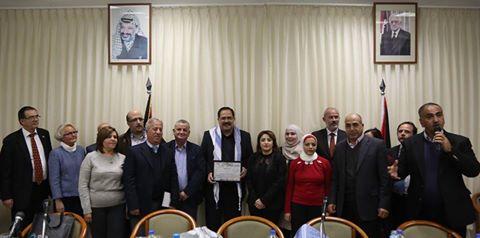
Belgium hands over co-chair to Finland during the Education Sector Working Group in Ramallah
Eva MORRE | 14/12/2016
Ramallah – On 12 December 2016 the last Education Sector Working Group of the year took place at the Ministry of Education and Higher Education. This meeting which gathers all education stakeholders in the Palestinian Territories, including officials of the MoEHE, national and international civil society, and development partners, takes place every three months at the MoEHE to discuss developments and challenges within the education sector in the Palestinian Territories. His Excellency, the Minister of Education and Higher Education Dr. Sabri Saidam, announced that the role of the co-chair of the ESWG, which is currently fulfilled by the Consulate General of Belgium, will be transferred to the Representation of Finland, as of 1st January 2017. His Excellency thanked the Belgian Delegation for their hard work for two and a half year. Mr. Bruno Jans, Consul General of Belgium, looked back at the many achievements of the education sector in the past two years, a sector that is seen as exemplary of the Sector Wide Approcach in the Palestinian Territories. He also stressed the continuation of collaboration with Belgium including through the Joint Financing Arrangement. Belgium will continue to play a pivotal role particularly in the areas of TVET, curriculum development, education in emergency, public finance management and digitalization, as well as in the Service Delivery Pillar on Education of the EU Joint Framework. During the Education Sector Working Group, key officials of the MoEHE presented the new framework of the Education Sector Strategy (2017-2022) and the Annual Work Plan and Budget for Financial Year 2017, followed by a group discussion with questions and answers. In her welcoming remarks at the meeting, Ms. Florence Duvieusart, Consul and Head of Development Cooperation at the Consulate General of Belgium commended the MoEHE for the hard work implemented in the sector under the dynamic leadership of the Minister, and in genuine partnership with Development Partners. She stressed the positive developments that took place in 2016 in the areas of Financial Management, Technical and Vocational Education & Training, Digitalisation, and Education in Emergency. She then acknowledged the need in 2017 to target investments in vulnerable areas like East Jerusalem, Gaza and Area C, and the need to enhance efforts to better coordinate development aid and humanitarian aid. She pledged continued support from international partners in these endeavours. In his welcoming remarks, UNESCO Representative to the Palestinian Territories, Dr. Lodovico Folin- Calabi, applauded the launch of the new National Policy Agenda and the achievements made in the education sector such as the introduction of the new Tawjihi system, TVET, curriculum reform and the developments made with early childhood education. Dr. Folin Calabi mentioned “these are big steps taken in a very short duration which will affect positively the learning outcomes of our children and help bridging the gap between the supply and demand in the Palestinian labour market”. At the end of the meeting, the Digitalization for Development Prize that the Palestinian Ministry of Education and Higher Education had won earlier this month in Belgium, was handed over to the Minister and the project team that had been responsible for the achievements.
-
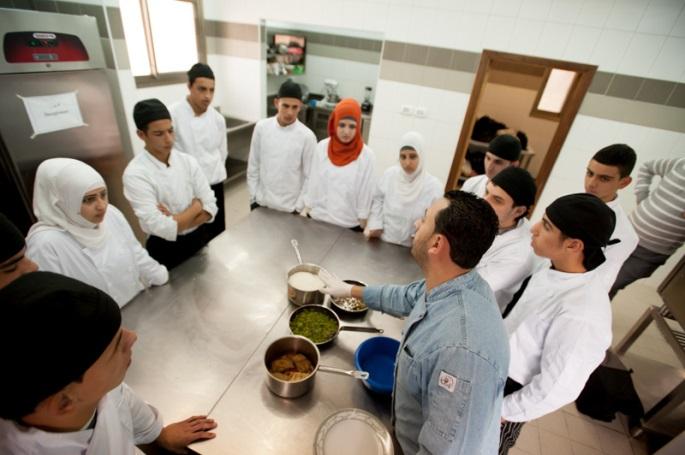
Flying High in Jerusalem
Eva MORRE | 08/12/2016
The Work Based Learning (WBL) scheme in which students combine a theoretical education in a technical or vocational institution with a practical internship in the private sector is already successfully implemented by BTC in various areas in the West Bank and Gaza. Last year, a first WBL-pilot project has taken place in the YMCA in East Jerusalem. More than 50 students have at that occasion completed a WBL course in Office Management. After this successful pilot project, more WBL initiatives are now coming to East Jerusalem, through joint projects between GIZ and BTC. One of these projects “Fly High” has been launched on November the 30th. It focusses on the tourism sector and will be implemented by Juhoud, in collaboration with Notre Dame of Jerusalem Hotel & Center and the Arab Hotels Association (AHA). The primary aim of the project is to bridge the gap between the technical and vocational education and training system (TVET) and the private sector. As the main source of economic development in East Jerusalem is the tourism and services sector, this pilot project will be limited to this sector. The Fly High project aims to: Build a strong and reliable consortium of Palestinian NGOs and Private Sector Organizations to provide training and employment services in E-JerusalemEstablish a multi-purpose employment service “One Stop Shop (OSS)” in E-Jerusalem and provide a continues employment serviceImprove the Technical and Life Competences of 200 youth (gender sensitive) in the field of Tourism and Services Engage 100 youth who received the training with the Work Base Learning program for 2 monthsOpen windows to 70-80 youth (Gender Sensitive) to achieve their aspiration (fly-high) by finding a decent work A second initiative in cooperation with the Palestine Education for Employment (PEFE) organisation has just started as well. In this project, PEFE will train 75 unemployed, underprivileged youth. Half of them graduated as a nurse, while the other half is a graduate in hospitality studies. Thanks to the WBL initiative, they will have training opportunities in cooperation with the Arab Hotels Association – for the hospitality students – and the Hospitals association – for the nurses.
-
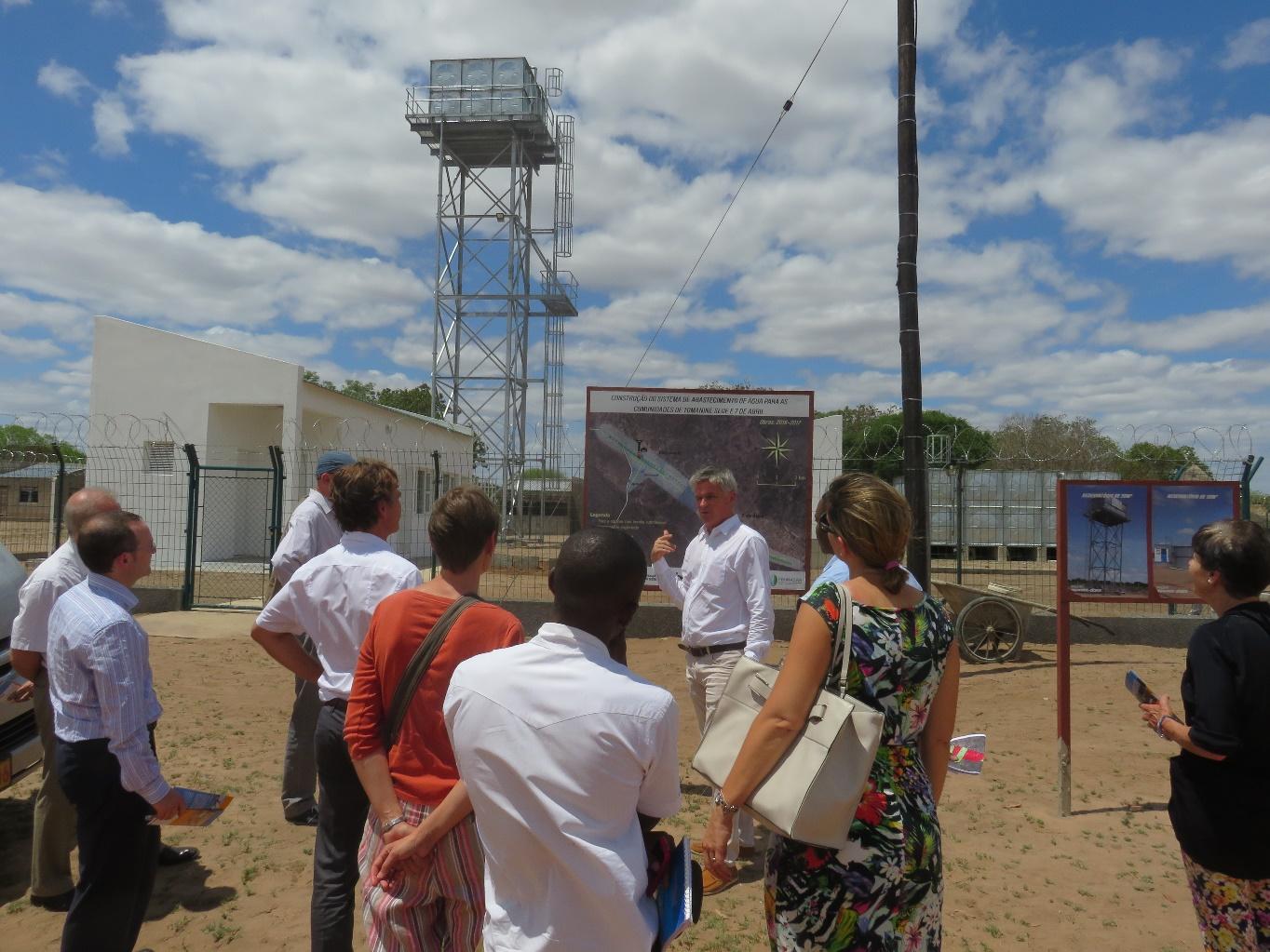
EU Heads of Missions visit to BTC Water Supply Project
Matilde PINAMONTI | 06/12/2016
During the EU joint mission to Gaza and Inhambane provinces, Mozambique, eight European Heads of Mission from Belgium, Finland, France, Germany, Spain, the UK and the EU visited the Tomanine pumping station, built within the framework of BTC Water Supply and Sanitation project.When the BTC first visited the communities of 7 de Abril and Tomanine, the 9000+ residents of the area only had access to water through 17 manual pumps. However, due to the saltiness of the groundwater in the area, the majority of it was not safe to drink. Therefore, the project decided to upgrade the existing water infrastructures and at the same time improve the access to drinkable water by constructing a new water plant and network. The project focuses on easy distribution of drinkable water: by installing the water systems on multiple locations in the communities and in proximity to the houses, access to water is made easy for the residents, and the systems are easier to maintain. In general, the quality of water is greatly improved, and drinkable water is now accessible 24/7. In addition, the project established a private/public partnership to maintain the system. When the project will be completed in 2017, the easy access to drinkable water will improve the quality of life of the around 9000 residents and will reduce health problems related to drinking saline water. Key data Location: Tomanine - 7 de Abril, Gaza Province Budget: 600 000 Euro Number of beneficiaries: +/- 9000 Estimated date of completion: April 2017
-
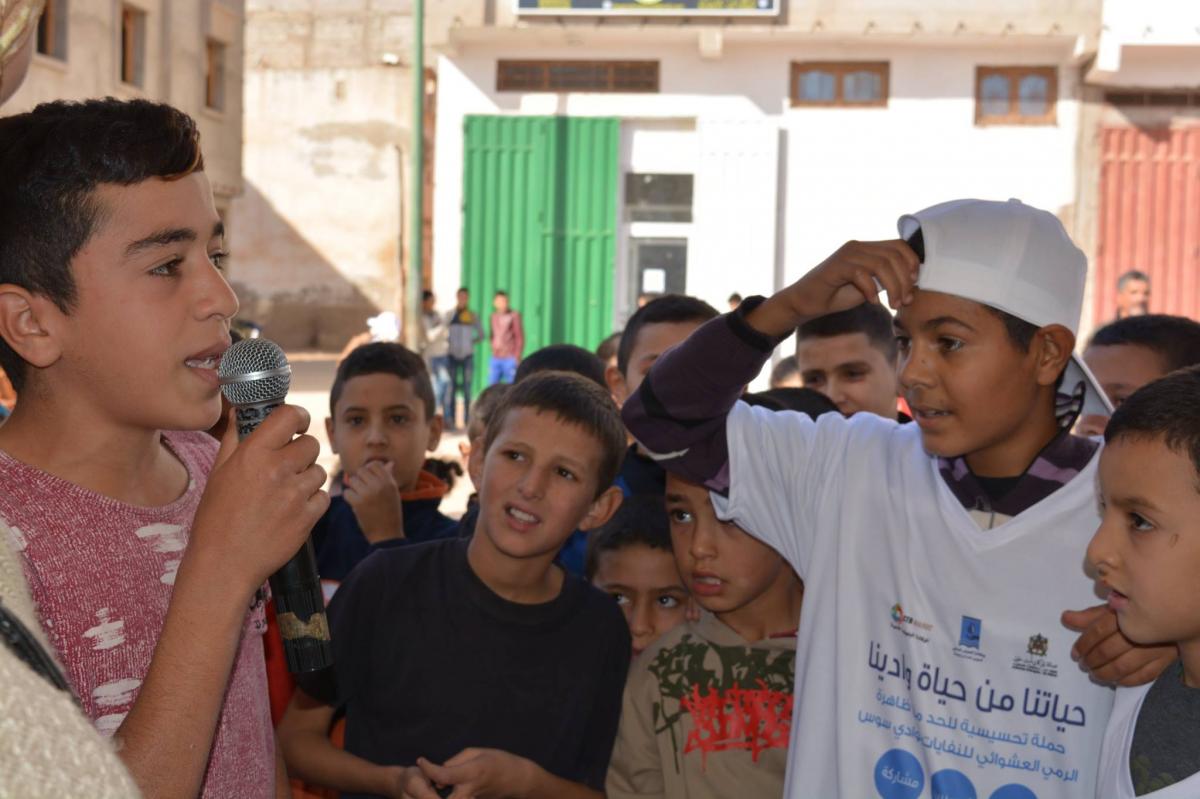
Notre vie est notre rivière
Meriem HILALI | 06/12/2016
« Notre vie dépend de celle de notre rivière » : tel fut le thème fédérateur de ces quatre jours de sensibilisation, sur quatre points d’animation tout au long de l’Oued Souss au sud du Maroc. Une caravane de l’eau organisée par l’Agence du Bassin Hydraulique de Souss Massa, en collaboration avec la Préfecture d’Inezgane-Ait Melloul et en partenariat avec la CTB Maroc. L'objectif de cette compagne est de Sensibiliser les populations riveraines pour mettre fin aux dépôts clandestins des déchets et rétablir l’équilibre naturel d'un éco-système fragilisé. Au programme tente pédagogique, jeux et animation pour les enfants, distribution de casquettes et t-shirt aux couleurs de la campagne.
-
Key aspects of a sustainable regeneration process
Eva MORRE | 05/12/2016
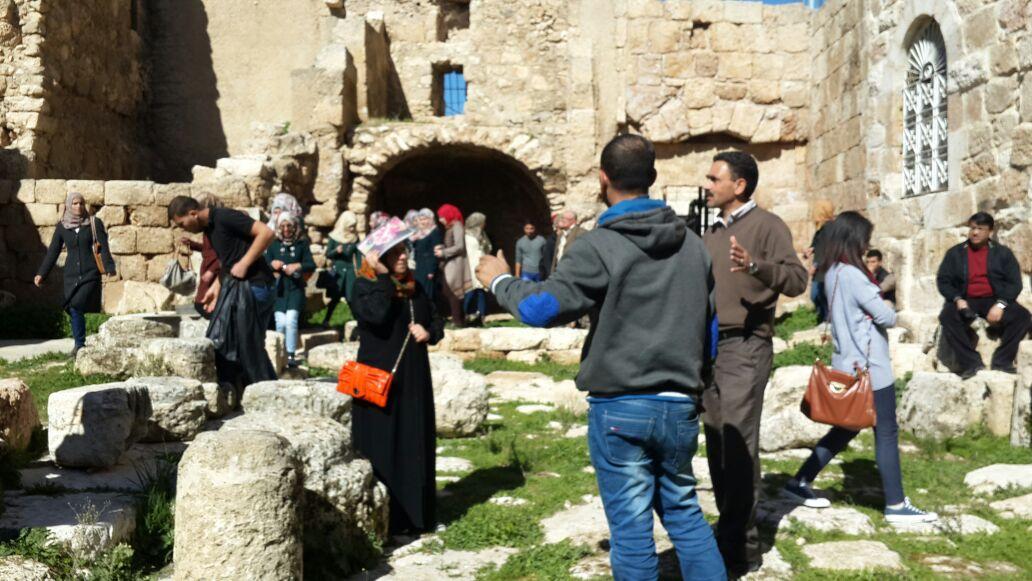
All over the world, people are migrating from the rural areas towards the cities. Economic reasons are often the base for this migration, but the city also attracts people for its social and cultural life. Also in Palestine people move out from the rural areas towards the bigger cities, leaving the often historic valuable centers abandoned. Most residents still living in the historic centers are poor. They are often tenants, perceived by the general public as those who don’t have the means to move to modern cities or urban extensions, reinforcing the idea that historic centers and people living in them are backward. The Regeneration of Historic Centers (RHC) program aims to change this perception and to bring life back to these historic centers by focusing on their social, cultural and economic development. Four key aspects distinguish the approach of the RHC program from other rehabilitation programs. The regeneration program goes beyond rehabilitation. Reviving, revitalizing, regenerating the historic centers needs more than stones and mortar. It is not by rehabilitating the historic buildings that people will be attracted to live or visit the historic center. When looking for a place to live, people are looking for affordable housing, job opportunities, social interaction, good public services, etc. A regeneration project takes into account all of those dimensions. Regeneration needs people. The presence of people (inhabitants) is crucial for an effective regeneration. Without people to use the rehabilitated spaces (buildings and open spaces), each and every regeneration project is doomed to fail. A good balance between the rehabilitation of historic buildings for socio-cultural or socio-economic use and the rehabilitation for housing purposes is as such fundamental. Regeneration projects don’t follow a linear trace, but are rather a multi-actor and multi-dimensional process that are characterized by having different linked processes running in parallel. While processes at the national level initiate policy making processes and encourage the development of laws and by-laws, processes at the local level focus on capacity building of the municipal staff to strengthen their heritage management skills. At the same time, participation from the community is ensured through community envisioning, memory mapping, community activation initiatives, etc. at different stages of the program. Meanwhile, socio-economic, spatial, and architectural analysis, pre-feasibility studies and business models are prepared to serve as a base for the rehabilitation designs. In a final stage, rehabilitation projects are designed and implemented. And finally, the program goes beyond the regeneration itself. Even after the functions are in place, the RHC program continues. The operators of the newly rehabilitated buildings are supported through on-job training, IT support and capacity training on marketing while local and national staff are continuously supported to fulfill their role and responsibilities.
-
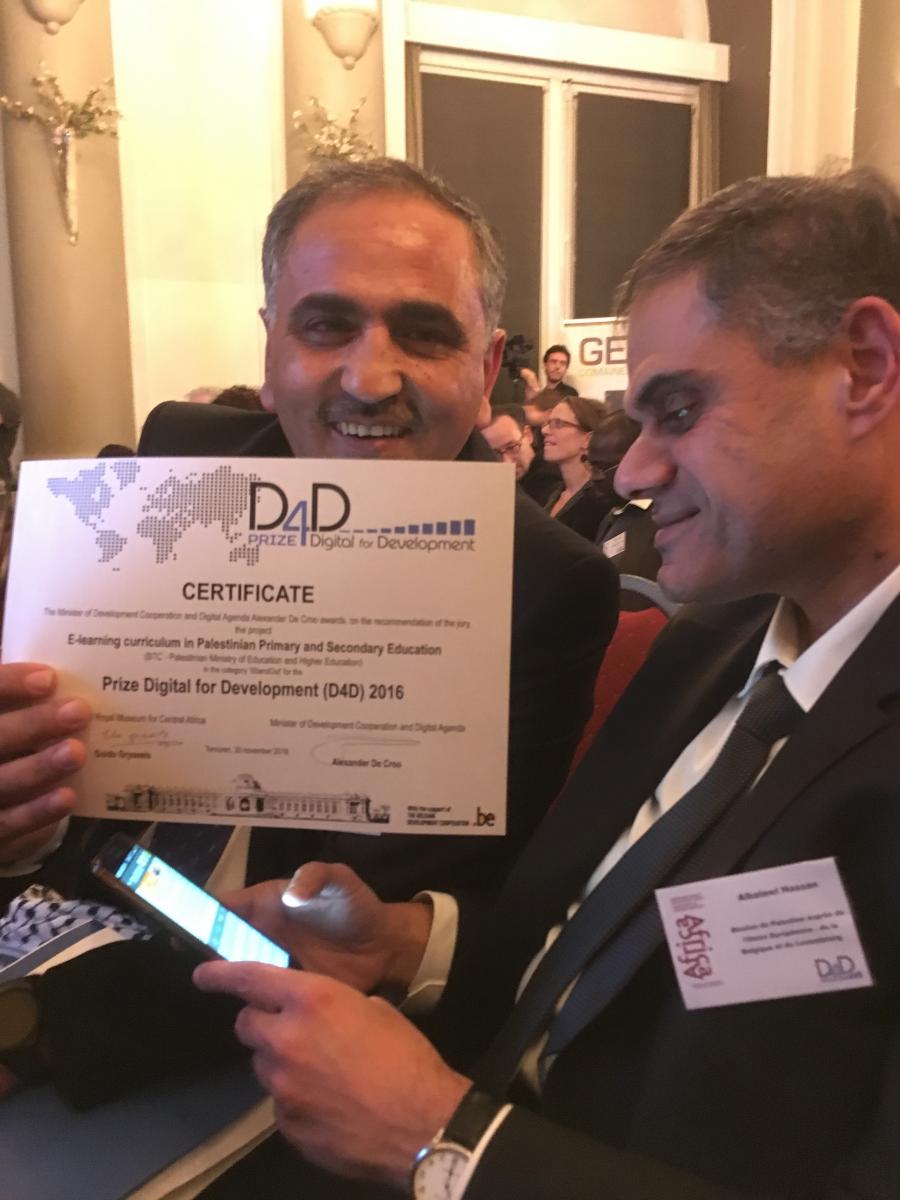
Palestinian e-learning project wins Belgian digitalisation prize
Eva MORRE | 01/12/2016
The Palestinian-Belgian project ‘e-learning curriculum in Palestinian Primary and Secondary Education’ has been rewarded with the Digitalisation for Development prize in Belgium. From 2011 until 2015, the Palestinian Ministry of Education and Higher Education (MoEHE) and the Belgian Development Agency (BTC) have jointly implemented the e-learning project to introduce the use of ICT in education to enhance student centered learning. The 4 million euro project was funded by Belgium and Palestine. After the official end of the project, the efforts have been continued and scaled up by the Ministry of Education. The project has introduced the use of ICT in 288 pilot schools in the West Bank and allowed the students to acquire 21st century skills. Thanks to this project, the focus has shifted away from mere technological solutions towards the use of ICT as an enabler for student-centered learning. The project has focused on 4 main pillars. First of all, the 288 pilot schools that were involved defined their own ICT-needs and were accordingly provided with ICT material. Furthermore, over 14.000 teachers have been trained on student-centered learning through the use of ICT. A digital teacher portal where teachers can share their learning objects with each other has been launched in 2015 and has already more than 2 million hits. And finally, the project was also a source for policy advice concerning the digitalisation policy in Palestine. The success of this project was already known in Palestine, but has now also been recognised worldwide, as the e-learning project has won the Digitalisation for Development (D4D) prize in Belgium, in the category ‘IStandOut’. The Prize ‘Digital for Development’ is a new initiative of the Royal Museum of Central Africa. The prize focuses on digital creativity and innovation in the Belgian development cooperation. The IStandOut category focusses on highlighting success stories and best practices in the field of ‘Digital for Development’. The award ceremony has taken place on the 30th of November and Dr. Basri Saleh, Deputy Minister of Education is now in Belgium to receive the prize.