Opzoeken
1 - 15 van 3053 nieuws bekijken
-
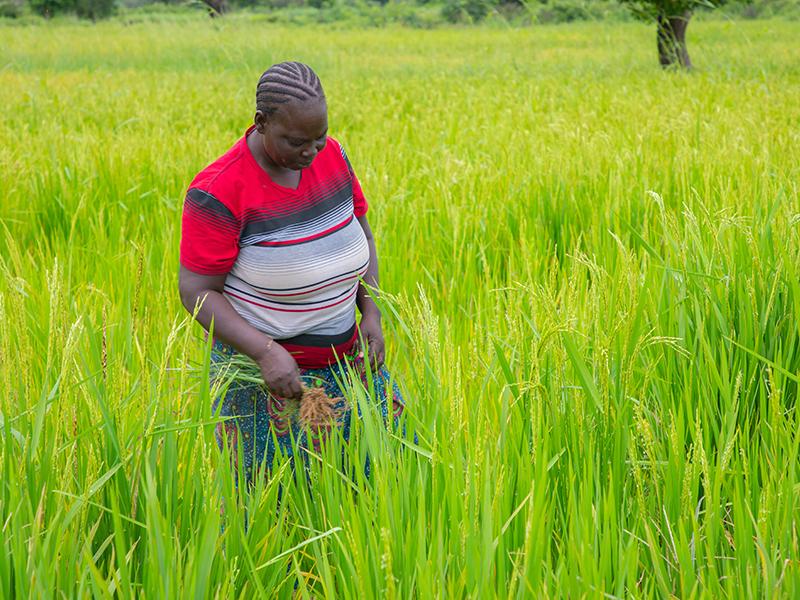
Du champ à la transformation : Enabel accompagne les filières agricoles pour renforcer la production.
Wendpouiré Julien NANA | 23/10/2026
Au Burkina Faso, Enabel accompagne 52 coopératives dans cinq chaînes de valeur agricoles à travers le Portefeuille thématique climat Sahel (PTCS) et son projet RILGRÉ. Des bio-intrants à la commercialisation, les appuis techniques et des subventions renforcent les liens entre producteurs et transformateurs. Une mission de suivi menée du 29 septembre au 1er octobre 2026 a permis d’échanger sur les cultures et les difficultés rencontrées, dans une démarche qui rejoint la priorité nationale d’autosuffisance alimentaire.« Souvent nous avions des difficultés avec nos clients du fait qu’on n’arrivait pas à satisfaire leur commande », raconte Sana Salmata, active dans l’étuvage du riz. Les petites quantités transformées et les difficultés de transport limitaient son activité. Avec les équipements reçus, elle indique désormais approcher une tonne de riz étuvé.Son témoignage illustre l’approche du projet RILGRÉ : accompagner les différentes étapes qui permettent de produire, transformer et vendre. Cinq chaînes de valeur sont concernées : le niébé, le sésame, l’arachide, le riz et les bio-intrants, avec notamment Solidar Suisse et Beo Néeré Agroécologie comme partenaires de mise en œuvre.Cet accompagnement rejoint la priorité donnée par l’État burkinabè à la production nationale pour soutenir l’autosuffisance alimentaire, notamment à travers l’Initiative présidentielle pour la production agricole et l’autosuffisance alimentaire. À l’échelle des organisations bénéficiaires, il vise à renforcer la production locale et la valorisation des récoltes pour répondre aux besoins alimentaires.Des intrants aux récoltesLa chaîne commence notamment dans les unités de production de bio-intrants, qui approvisionnent les exploitations agricoles en compost. Portées par des femmes et des jeunes, ces unités incluent également des personnes déplacées internes et des personnes vivant avec un handicap.Dambré Noélie fait état d’un financement de 800 000 FCFA pour améliorer les installations de son organisation, ainsi que de formations à la fabrication de bio-intrants. Une initiative d’épargne a alors accompagné l’activité : « Après la vente, sur chaque sac vendu nous épargnons 250 francs. ». Pour le riz, le PTCS a aménagé environ 43 hectares de bas-fonds dans les communes de Ziga, Boulsa, Méguet, Andemtenga et Kando, avec un taux d’accès des femmes supérieur à 40 %. Les appuis comprennent aussi les intrants, les formations et l’organisation des producteurs.« Avant, je ne savais pas faire de la culture du riz, je n’ai jamais cultivé du riz », témoigne Compaoré Assetou, responsable de la coopérative des exploitantes du bas-fond de Kiongo. Elle explique avoir appris cette culture grâce à l’accompagnement reçu. Diallo Sanaba, exploitant du même bas-fond souligne à son tour l’intérêt pour les familles : « Cela nous permet d’atteindre une certaine autosuffisance alimentaire. »Transformer davantage et valoriser les sous-produitsHuit coopératives féminines ont été soutenues pour transformer et commercialiser le riz, avec des sous-subventions pouvant atteindre 4,5 millions de FCFA. Selon le bilan du projet, après une année d’activité, elles avaient transformé 43,141 tonnes de riz et réalisé un chiffre d’affaires de 32 millions de FCFA.Kaboré Tibo cite notamment des marmites, des barriques, un tricycle et un magasin de stockage parmi les appuis reçus. Tiemtoré Rasmata, elle, relie les retombées de l’activité aux dépenses familiales, notamment à la scolarisation des enfants.Le son de riz est aussi vendu pour l’alimentation animale et le compostage. La paille alimente les unités de bio-intrants, don’t le compost retourne dans les bas-fonds. Les coopératives ont également été formées à la fabrication de biochar à partir de cette paille.Du matériel et des débouchés pour les autres filièresDans le sésame, Belemsebgo André rapporte un financement supérieur à 1,5 million de FCFA pour du matériel et un magasin. Il souligne aussi l’apport des formations : « Nous avons découvert le bokashi et avec cela nous constatons un réel changement dans nos productions de sésame. »Dans l’arachide, Rouamba Bernard rappelle le manque initial d’outils : « Imaginez 20 personnes travailler avec une ou deux dabas. ». Narré Jacqueline décrit l’acquisition d’équipements de transformation et d’un magasin. Kaboré Binta indique que les quantités transformées peuvent désormais atteindre vingt plats d’arachides par semaine, contre cinq auparavant.La vente reste déterminante. Oubda Augustine, de l’association Wend-Yam, explique que les recettes sont réinvesties dans la production. Ouedraogo Hamadou insiste quant à lui sur la qualité, la visibilité et la disponibilité : « Il faut que le produit soit disponible à tout moment pour le client. ».Ces acquis restent exposés aux aléas climatiques. Lors du suivi, Tougma Jonas, chef de zone dans la commune d’Andemtenga, signalait des pluies tardives et des poches de sécheresse. Pour poursuivre les activités, les organisations misent sur les cotisations, l’épargne et les compétences acquises. Comme le résume Soré Salif : « Même si le projet prenait fin, la formation reçue nous servira toujours. »
-
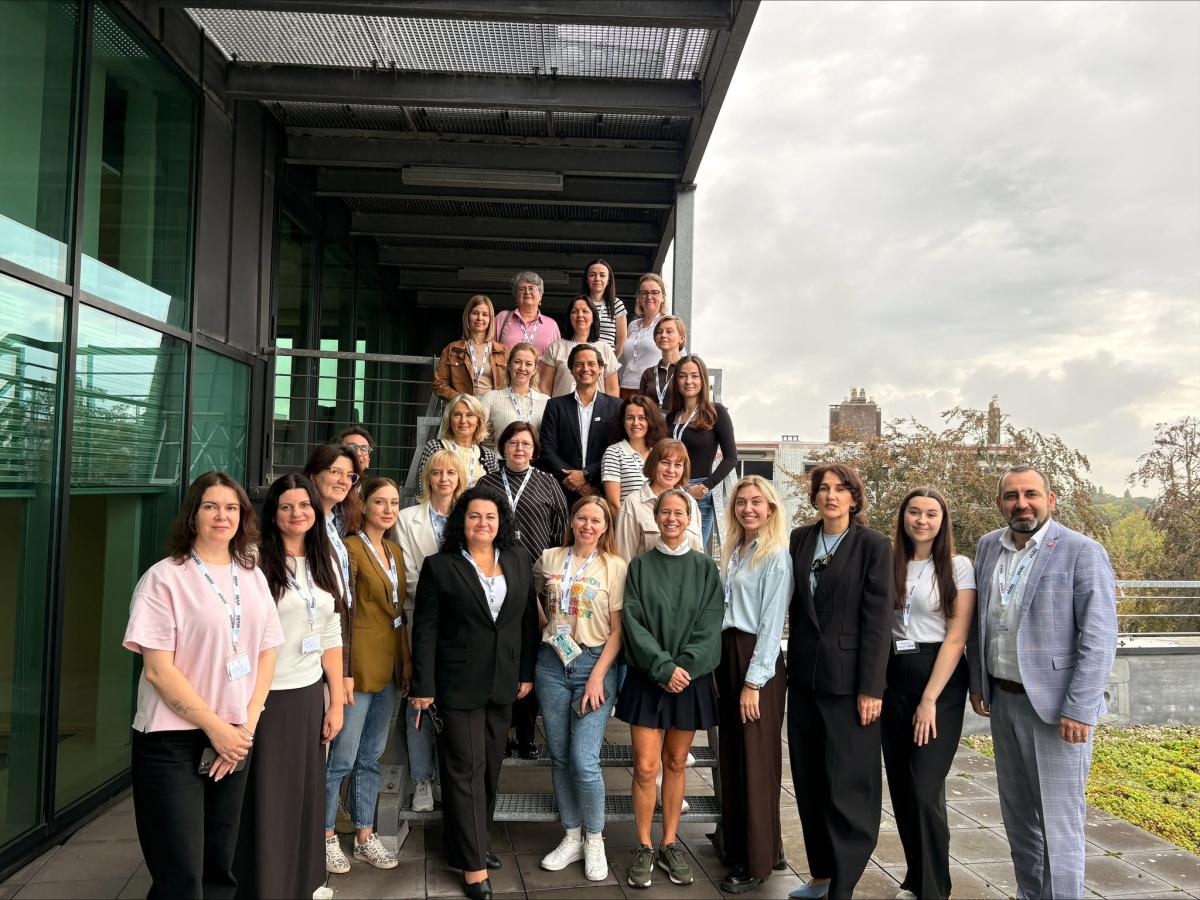
Ukraine: study visit to Bruges for rehabilitation professionals
Taisiia DRUZIUK | 23/10/2026
Enabel continues to invest in strengthening medical education in rehabiltation area in Ukraine. In October 2026, with the agency’s support, 14 speech and language therapists (SLTs) and 7 occupational therapists (OTs) took part in a study visit to Bruges.The programme, delivered by the VIVES University of Applied Sciences, covered topics relevant to both professions: teaching and assessment methods, clinical placement supervision, and the use of digital technologies. This reflects VIVES’ approach to training rehabilitation professionals: future members of multidisciplinary teams share a number of joint classes, where they work through clinical cases together.At Enabel’s request, occupational therapist Iryna Nyshcha and speech and language therapist Yuliia Ozarchuk share their reflections on the visit.Yuliia OzarchukSpeech and Language TherapistTeaching Assistant at the Department of Physical and Rehabilitation Medicineat Ivano-Frankivsk National Medical University For me, the real discovery was an approach built on student autonomy. VIVES places great emphasis on developing students’ self-reflection and their responsibility for their own learning process, while the lecturer’s role is to create the right conditions and support that process.I also found the discussions on the mindful use of technology and the critical appraisal of scientific literature with digital tools particularly interesting. One session of the visit focused on the role of AI in education and research.The CoCon Knowledge Centre left an unforgettable impression. It is a space that brings together professional literature, assessment tools for people with communication disorders, and even a podcast recording studio.The visit to Campus Spermalie gave us a chance to see how speech and language therapists work in an educational setting, and how the facilities are designed for children with visual and hearing impairments and developmental language disorders.Iryna NyshchaOccupational TherapistSenior Lecturer of the Department of Physical Therapy and Occupational Therapyat Lesi Ukrainki Volyn National UniversityWhat stayed with me most was the university environment, where accessibility is visible in practice, not just in theory. I was particularly impressed by the adapted kitchen and bathroom, because these everyday spaces are where independence takes practical shape.As an occupational therapist, I found it fascinating to see how the layout of an environment can make daily tasks easier. It was a powerful reminder that our goal is not simply to restore function, but to help people return to their everyday lives.In Belgium, students can spend a day or even a week with a family that includes a person with a disability or is raising a child with a disability. It would be valuable to see this kind of placement adopted in Ukraine. It would help students better understand the challenges these households face, how they adapt their home routines, what barriers arise during ordinary daily tasks, and which solutions are still missing to support greater independence and comfort, or communication itself. This kind of experience gives future practitioners a window into real needs and challenges that cannot be recreated in a rehabilitation setting. It would help them develop practical thinking and apply a person-centred approach in their work.
-
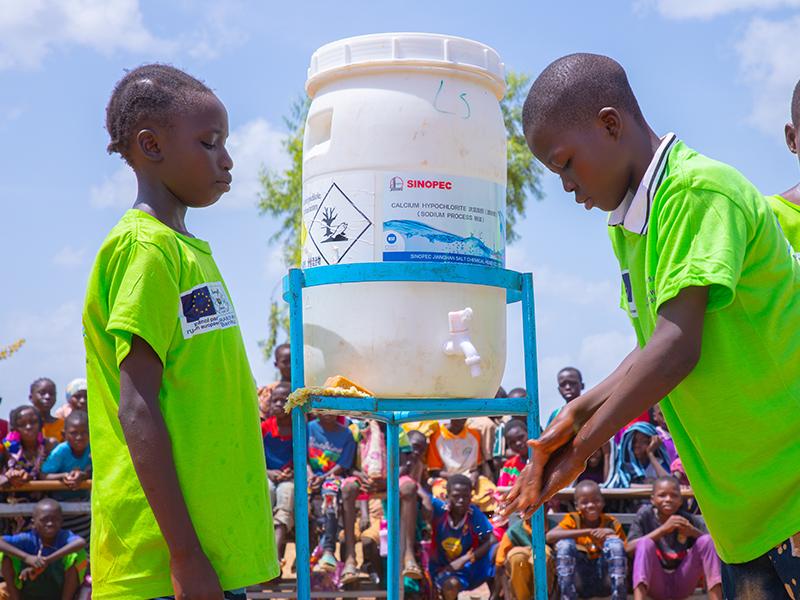
Journée mondiale du lavage des mains : à Tchériba, valoriser les bonnes pratiques pour faire durer les acquis au-delà de la célébration
Wendpouiré Julien NANA | 22/10/2026
À Tchériba, dans la région du Bankui, la Journée mondiale du lavage des mains, célébré le 15 octobre 2026, a réuni élèves, enseignants, autorités et partenaires autour d’un objectif commun : promouvoir le lavage des mains au savon et à l’eau propre et inscrire cette pratique dans les habitudes quotidiennes. Organisée par la Direction régionale de l’agriculture, de l’eau, des ressources animales et halieutiques du Bankui, en partenariat avec le projet Lasso WASH d’Enabel, la célébration a combiné sensibilisation, démonstrations pratiques et visites d’ouvrages d’eau, d’hygiène et d’assainissement.L’enjeu allait au-delà de la transmission des messages d’hygiène. Cette journée s’inscrivait également dans une dynamique de valorisation des initiatives locales et d’émulation entre les communes, afin de mettre en lumière les bonnes pratiques, encourager les efforts accomplis et susciter un engagement durable des acteurs locaux.Des enfants acteurs du changementÀ l’école primaire publique de Tchériba B, qui a accueilli la cérémonie, les élèves ont participé activement à la sensibilisation à travers des sketchs et des démonstrations pratiques. Sous le thème « Sois un héros du lavage des mains ! », leurs prestations ont rappelé l’importance de se laver les mains avec de l’eau propre et du savon aux moments essentiels de la journée.« J’ai retenu que les élèves doivent chaque fois se laver les mains avec de l’eau propre et du savon. Ils doivent respecter les règles du lavage des mains. ». Explique Bintou Sanogo, élève à Tchériba. Lorsqu’elle décrit les pratiques enseignées à l’école, ses mots sont tout aussi concrets : « Tous les élèves doivent s’aligner pour laver les mains en frottant bien pour que ça soit propre. ». Son témoignage illustre l’importance de l’apprentissage par la pratique. En répétant les bons gestes à l’école, les enfants peuvent progressivement les intégrer dans leur quotidien et les transmettre à leur entourage.De l’école aux familles, transmettre les bonnes pratiquesPour Mamadou Diakité, chef du projet Lasso WASH à Enabel, les élèves peuvent jouer un rôle dans la diffusion des pratiques apprises : « Si les élèves arrivent à maîtriser ces bonnes pratiques d’hygiène au niveau des écoles, ils pourront les disséminer au sein de nos communautés. ».Son intervention insiste sur la continuité de cet apprentissage. La célébration doit contribuer à installer durablement des gestes simples dans la vie quotidienne. « Ce sont des gestes qui sont simples mais qui nous protègent de beaucoup de maladies », rappelle-t-il.Bintou cite, pour sa part, plusieurs moments auxquels elle associe le lavage des mains : « Avant de manger, après les jeux, avant de rentrer en classe. ». Son témoignage traduit la place que cette pratique peut prendre dans la journée d’un enfant lorsque les consignes sont répétées et accompagnées.Cette transmission repose également sur les enseignants et les parents. Le directeur de l’école Tchériba B, Savadogo Mahamadi, interrogé entend poursuivre le travail engagé : « Nous allons continuer la sensibilisation dans nos différentes classes et même lors des assemblées générales avec les parents d’élèves. ». Pour lui, les bonnes habitudes doivent être entretenues aussi bien à l’école qu’à la maison.Mettre les communes en concurrence pour valoriser, récompenser et capitaliser les bonnes pratiquesLa particularité de cette dynamique a été de ne pas réduire la Journée mondiale du lavage des mains à une simple activité de sensibilisation. Elle a constitué aussi une occasion de reconnaître les efforts des acteurs locaux et de donner davantage de visibilité aux initiatives qui produisent des changements concrets.La mise en concurrence des communes autour de leurs réalisations, de leurs innovations et des effets observés poursuit un triple objectif à savoir de valoriser les bonnes pratiques, récompenser les efforts et encourager l’émulation et susciter l’intérêt des communes pour la capitalisation et la pérennisation des acquis.L’objectif n’est donc pas uniquement de désigner des gagnants, mais de faire de la compétition un levier d’apprentissage collectif, de responsabilisation et d’amélioration continue. La valorisation des initiatives locales peut ainsi contribuer à renforcer l’appropriation des actions d’hygiène et à inscrire les acquis dans la durée.Des messages soutenus par des réalisations concrètesLa promotion du lavage des mains ne peut produire des changements durables sans un accès effectif à l’eau et à des équipements fonctionnels. C’est dans cette perspective que la célébration a également été marquée par des visites de réalisations dans des établissements scolaires et une formation sanitaire de Tchériba.Les latrines, les installations d’approvisionnement en eau et les équipements du centre médical illustrent les interventions complémentaires des projets Lasso WASH et Lasso Santé dans la commune.À l’école Tchériba B, le directeur, Savadogo Mahamadi, rappelle les difficultés rencontrées avant l’installation du château d’eau : « Souvent, pour avoir l’eau, c’est difficile [...] les enfants sillonnaient les puits pour puiser de l’eau. ». Il souligne ensuite le changement apporté par l’ouvrage : « Avec l’arrivée du château que vous voyez, ça nous a permis en tout cas d’avoir de l’eau potable. ». L’établissement bénéficie également de robinets, de dispositifs de lavage des mains et d’actions de sensibilisation. Les élèves disposent ainsi de moyens concrets pour appliquer les gestes appris en classe, notamment après être allés aux toilettes et avant de prendre leur repas.Ces réalisations rappellent qu’un changement de comportement repose sur deux conditions complémentaires : la connaissance des bonnes pratiques et la disponibilité d’infrastructures adaptées permettant de les mettre en œuvre.Préserver les ouvrages et prolonger les acquisAu terme des activités, le Haut-commissaire de la province du Mouhoun, Souleymane Ouattara, a invité les bénéficiaires à prendre soin des infrastructures mises à leur disposition : « Nous invitons les élèves, les enseignants, le personnel à en faire un bon usage. ».Revenant sur les sketchs présentés par les élèves, il a également insisté sur la nécessité de prolonger les apprentissages au-delà de la cérémonie : « Certes, c’est un exercice présenté au cours d’une cérémonie, mais nous souhaitons que la pratique soit la même dans les familles, auprès des parents, auprès des communautés. ».Cet appel souligne une exigence essentielle : les effets d’une journée de sensibilisation se mesurent moins à la tenue de l’événement qu’à la capacité des acteurs à maintenir les bonnes pratiques dans le temps. Le suivi des comportements, l’entretien des équipements, la mobilisation des familles et le partage des expériences entre communes sont autant de leviers pour consolider les acquis.À Tchériba, le message est clair : le lavage des mains ne doit pas rester un geste appris à l’occasion d’une célébration. Il doit devenir une pratique quotidienne, soutenue par des infrastructures fonctionnelles, des acteurs engagés et des collectivités capables de valoriser leurs expériences et d’en tirer des enseignements.En faisant de la Journée mondiale du lavage des mains un espace de sensibilisation, de reconnaissance et de partage des bonnes pratiques, l’ambition est de transformer les initiatives locales en acquis durables, au bénéfice des écoles, des familles et de l’ensemble des communautés.
-
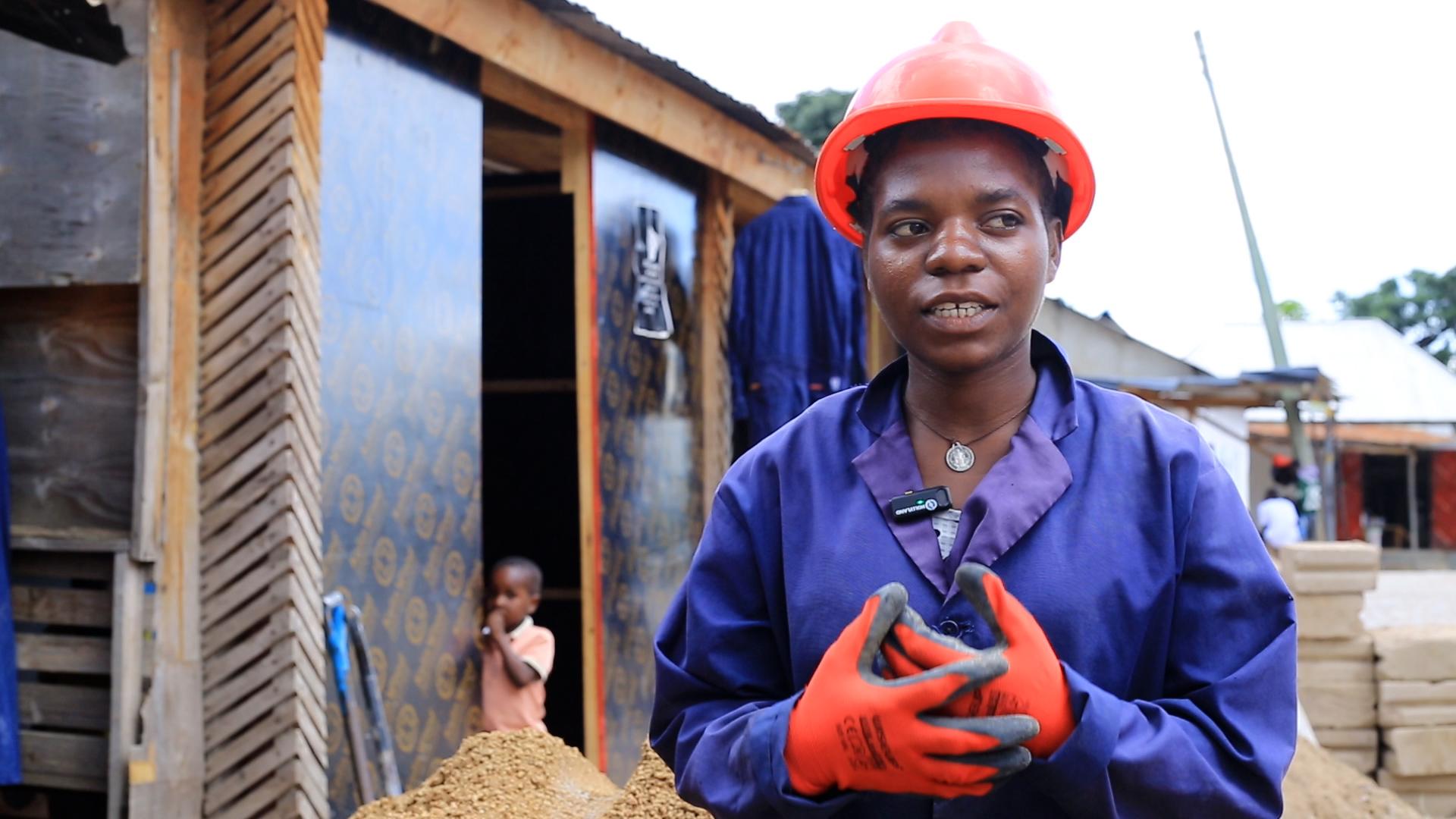
Inclu-cities Support Equip Youths with Job Ready Skills
Mkama MWIJARUBI | 22/10/2026
While the economy in Tanzania, as in many other Africa countries, is dominated by the informal sector, many youths are not well equipped with skills to contribute and earn their living. Formal education provides academic knowledge. When someone ejects from the formal education pipeline, as Agnes Fundisha did in 2021 after lower secondary education, their chances are limited in the labour market. She joined a family member who was making soap and home detergents and started learning about the trade. But she always thought she wanted to do more in the same line or something different. Her expectations met an open door when she heard an announcement of courses in plumbing and other skilled trades at Vocational Education Training Authority (VETA) Mwanza. Under TeamEurope funded Inclu-cities project, Enabel Tanzania partnered with VETA to offer job readiness skills trainings in phone repair, gas welding, motorcycle repair, electrical installation and plumbing. Agnes chose plumbing. “We participated in classroom and workshop sessions for three months at VETA Mwanza campus. I had my doubts about the course I chose but as days passed came to affirm by resolve and choice,” The skilling program under INCLU-CITIES emphasizes practical training of learners with private and public institutions and master crafts to equip them with technical and non-technical skills that make them ready for jobs. Agness says the practical training attachment with the Mwanza City Water and Sewerage Authority— a parastatal organization— helped to equip her with technical skills and confidence. “Things we learned in the college workshop have been repeated and we practiced them. I also learned new things during practical training,” she said. More importantly, Agnes says that the practical training erased any doubt she had about whether she could get employment in plumbing. ends
-
From Despair to Hope: The Value of Skilling a Girl
Mkama MWIJARUBI | 22/10/2026
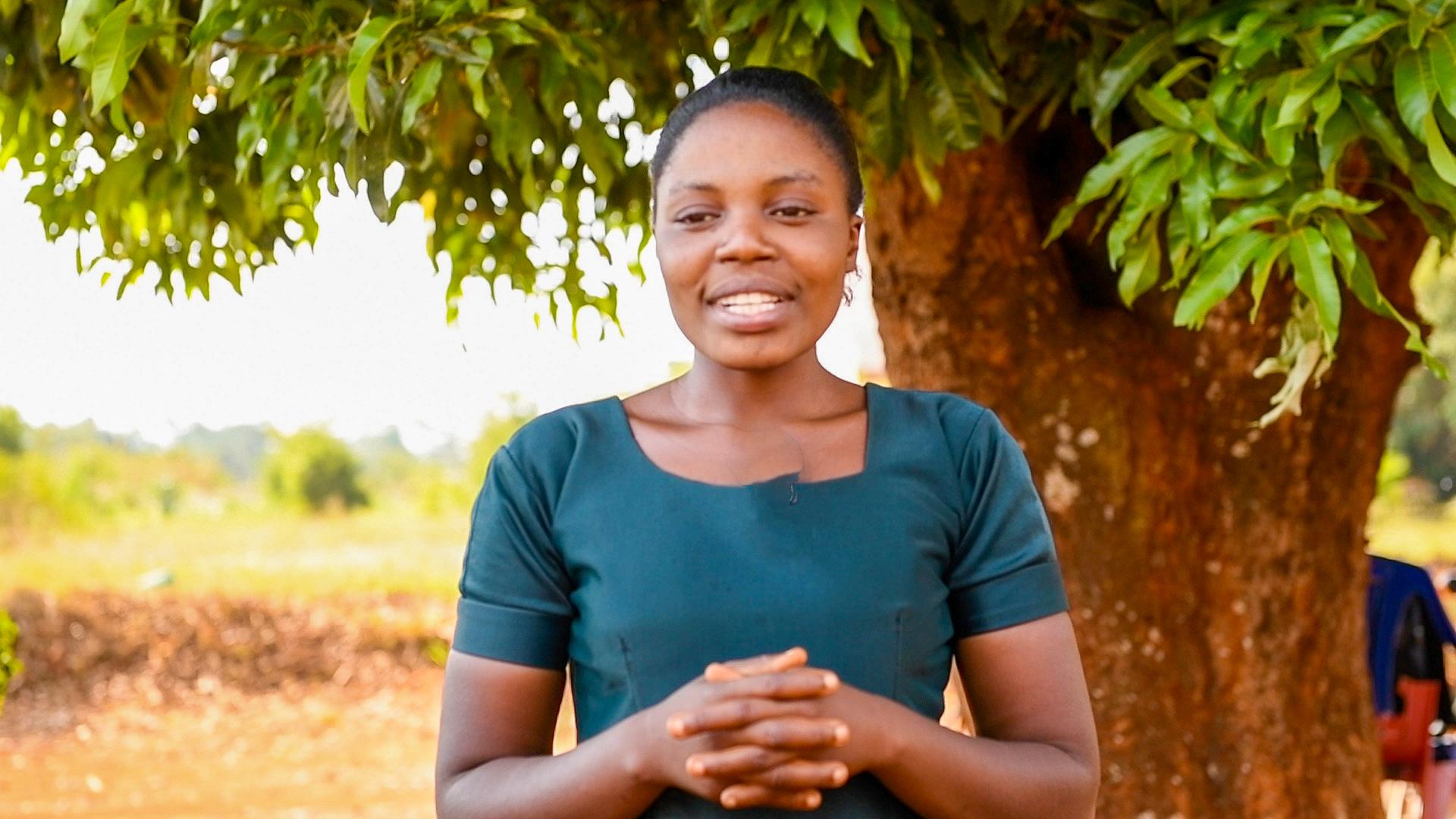
Many youths struggle to find jobs or profitable trade because they lack the necessary skills to fit in with available jobs or develop products and services that the market is willing to pay for. For young girls, the situation could be worsened with gendered traditions that confine their pathways by limiting jobs they can choose or learn. “After failing my lower secondary education in 2021, I stayed at home and dependent entirely on my parents,” that is how Matrida, a resident of Kidyama village in Kasulu summarized her life from 2021 to 2025. Her perspective changed when the Ministry of Agriculture Training Institute (MATI)-Mubondo worked with local leaders to invite youth, particularly girls, to apply for courses in bee keeping and value addition to agricultural crops. Organized with technical and financial support from Enabel Tanzania’s Wezesha Binti project the work readiness training sought to enable girls to take advantage of the economic opportunities available in Kasulu district in Kigoma region, an area richly endowed with fertile soils and extensive forest resources. Matrida and 269 other learners from different villages of Kasulu and other districts of Kigoma participated in a three-month training programme. The three months transformed Matrida perspective on her future. A girl that was unemployed and confined to her home became motivated to pursue entrepreneurship opportunities. At MATI-Mubondo, she learned modern techniques for establishing and managing an apiary, as well as processing honey into a range of value-added products. Although she was aware of the medicinal value of beeswax oil, she had not known how to extract it before attending the training at MATI-Mubondo. “I have learned how to get wax oil, and I have therefore started my own small operation of extracting oil from wax and packing it for sale,” says Matrida. In addition, Matrida, serves as the chairperson of Young Beekeepers Group, a 16-member association formed with fellow trainees from Kidyama Village. News of a group of 15 young girls and one young man engaged in bee keeping and honey processing business raised eyebrows in their village. Culturally bee keeping and honey selling is done by aged men in Kidyama and in Kigoma generally. During the training, participants also learned about gender equality, which broadened their understanding of the economic, social, and cultural opportunities available to both women and men. With Young Beekeepers Group, gender is no longer a block. Wezesha Binti project provided the group with start-up support, including 30 beehives, protective gear and other bee keeping equipment. In addition, MATI-Mubondo allocated land to the group for the establishment of an apiary for a period of five years. Now, after putting her skills to work, Matrida is no longer dependent on her parents. While she has five hives on her own, her wax oil business, she is working with her group towards increasing their production capacity to 500 hives and moving their apiary to their own piece of land by 2030. ends
-
A Skill to Employment Pathway Connects Hadija to Her Coveted Job
Mkama MWIJARUBI | 22/10/2026
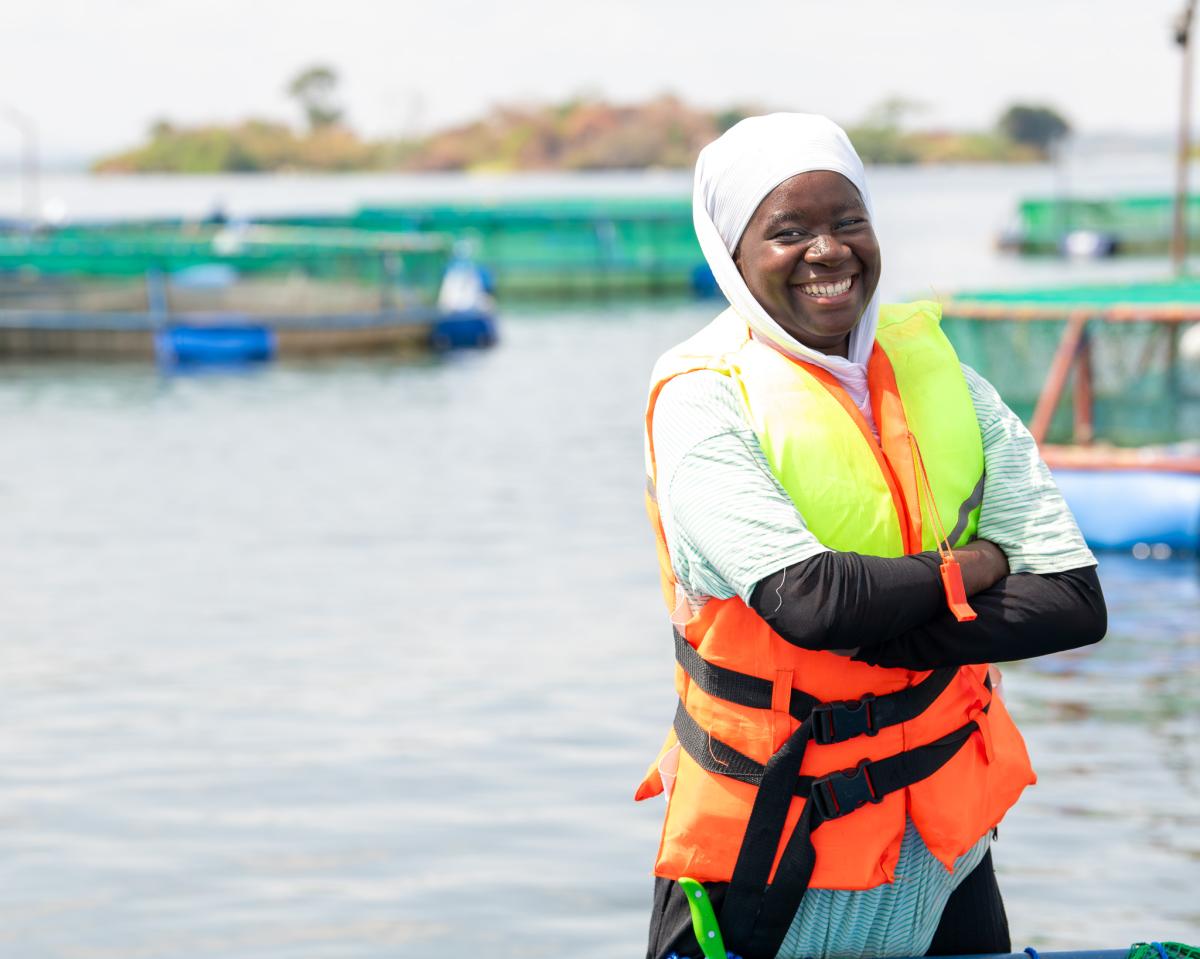
Hadija Fulano, loved to engage herself in fishing. After her lower secondary school in 2021, she joined the Fisheries Education Training Authority (FETA) training centre in Mwanza for a diploma in aquaculture. Despite her hopes of landing a job, she had to go back home and start searching. Her situation was like many youths that complete academic and professional training. Often employers decry lack of soft skills. A systematic approach to facilitate transition from training to decent jobs or self-employment is what can make the difference. Through EU-funded Inclu-cities project, Enabel Tanzania collaborated with FETA to implement Work Readiness Program that invited youth in Mwanza to participate in a three-month training in fish farming. Under work readiness program FETA Mwanza registered 150 youths in the fish farming program. “I heard about a program at my former college that provided training in fish farming and linkage to private sector companies to gain experience,” says, Hadija. Despite staying without a job related to her training for several months after graduation she had not given up on her ambition for a career in the value fishing chain. During their three months of training WRP trainees learned about management of fish cages, making the cages, setting up in the lake, fish processing and, more importantly, their tutors spend time exploring different possibilities of jobs, self-employment and business opportunities in fish farming. The project also invested in training FETA tutors, equipped the training facility with necessary equipment to support the training and supported career counseling for trainees. Another key node on the pathway is linkages with employers--which informed FETA about skills required in the market and committed to host learners for practical experience.Fish farming has gained popularity in Tanzania’s portion of the Lake Victoria in the past five years. Approved fish farming sites are teamed with caged fish farms. The Government has supported input loans that increased fish farmers. Additionally related businesses are flourishing, from production of fish feed, cage fabrication, sales of nets, to breeding fingerlings, and more. Hadija never stirred from her desire to manage a fish cage. Through the WRP she was assigned for practical experience, at Acquacom, a private fish farm on the outskirts of Mwanza. According to Emmanuel Shija, Acquacom branch manager in Mwanza, after the scheduled practical attachment of three months, his company retained six youths as temporary employees. Then, when ASOBO, an E-mobility company, started investing in fish farming, they approached Acquacom to recommend a hardworking, trustworthy farm manager. Hadija was recommended. In October 2026, Hadija successfully delivered her first harvest, completing 7 months of breeding, feeding and treating the stock of tilapia in the fish cage of her employer. “She has been very good, in the management of the cage,” says, Desdeus Clavery the Director of ASOBO. A new stock has just been introduced in the cage for the next round. “I have always wanted to work in fishing and, I’m grateful that the WRP program enabled me to reach my goal. I will work to perfect my skills and experience, ultimately, my goal is managing a big farm and, starting small, running my own fish farm in the future.” The fact that Hadija, got a job at ASOBO, that has also benefited from Inclu-cities financial support to grow their venture that provides environment friendly engines for mobility for Lake Victoria fishers, emphasizes the value of linkages the Enabel promotes. Growing businesses need a labour force with the right skills. Ends
-
Kindia : 250 jeunes entrent dans la phase pratique du parcours auto-emploi
Jacques LENO | 22/10/2026
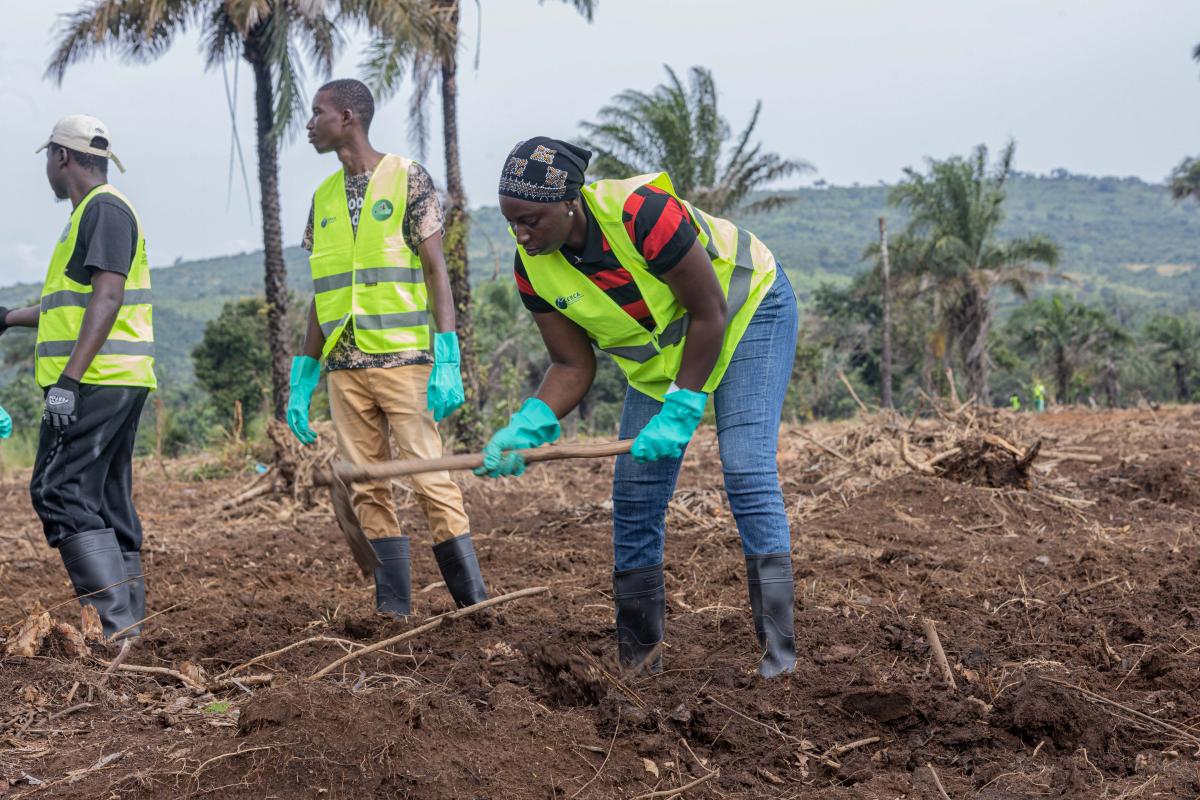
À Kindia, la première cohorte des jeunes engagés dans le parcours auto-emploi vient de franchir une étape importante avec le démarrage de sa formation pratique sur le terrain. Au total, 250 jeunes, répartis en 10 groupes de 25 chacun, bénéficient de l’accompagnement de la Fédération des Producteurs d’Ananas et Fruits de la Basse Guinée (FEPAF-BG). Les activités se déroulent sur un domaine agricole de 15 hectares situé à Soumbourou, dans le district de Foulaya. Sur ce site, les bénéficiaires sont formés aux techniques de production d’ananas, de papaye et de banane, dans une approche qui combine apprentissage pratique et préparation à l’entrepreneuriat agricole. Alors que certains groupes procèdent au nivellement et au piquetage des parcelles après le passage du tracteur, d’autres apprennent les techniques d’enfouissement des souches d’ananas et de bananiers. Cette dernière activité permettra de produire des rejets dont une partie sera destinée à la vente auprès d’autres producteurs, et l’autre pour développer leurs propres exploitations. Cette phase s’accompagne d’un processus progressif de structuration des groupements de bénéficiaires. L’objectif est de renforcer leurs capacités organisationnelles afin qu’ils puissent évoluer de manière autonome après les premières récoltes et développer des initiatives économiques viables. Cette initiative s’inscrit dans le cadre du projet AMIS (Accompagnement, Mobilité, Insertion et Sensibilisation), mis en œuvre conjointement par Enabel et Expertise France, avec le financement de l’Union européenne.
-
SAFEB 2026 : à Parakou, les femmes entrepreneures rurales font valoir leur savoir-faire et leurs produits
Reece-hermine ADANWENON | 20/10/2026
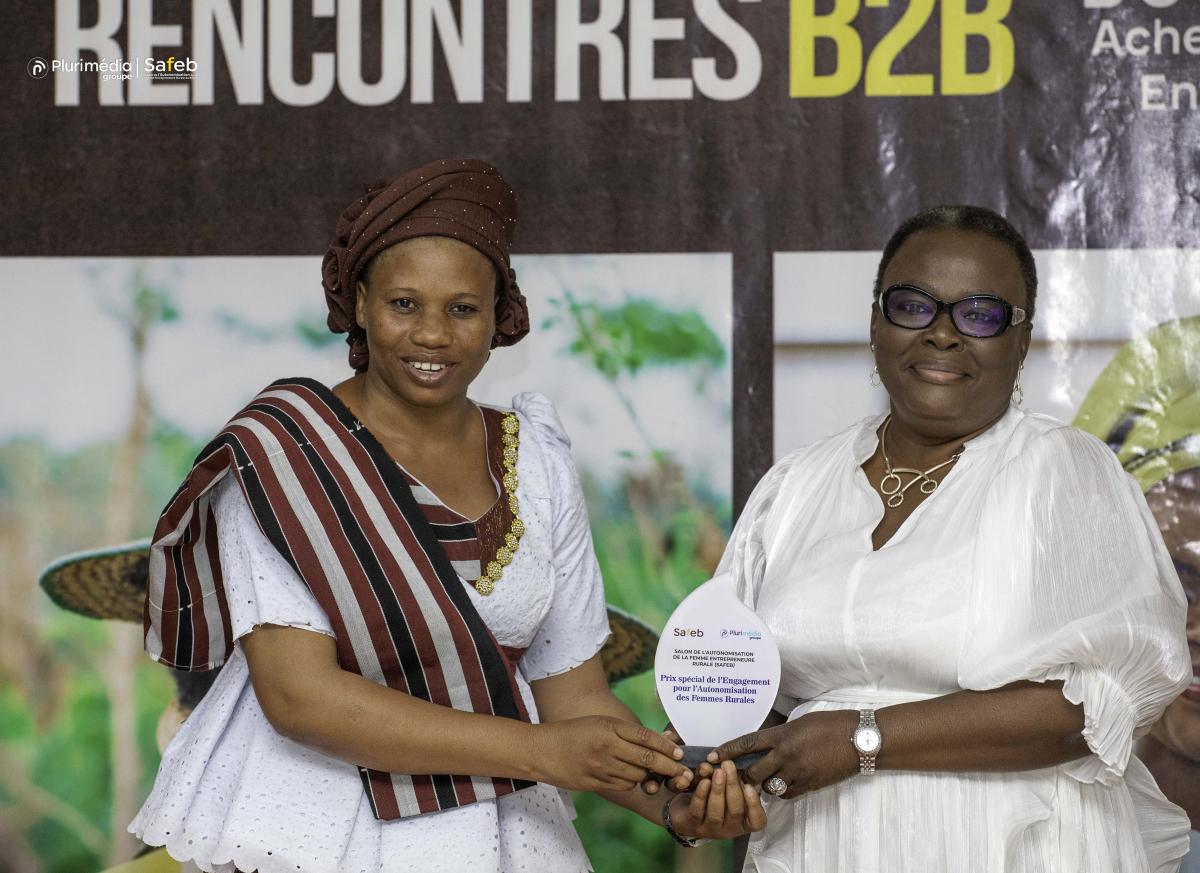
Du 15 au 17 octobre 2026, le Salon de l'autonomisation de la femme entrepreneure rurale du Bénin (SAFEB) offre aux femmes entrepreneures un espace de promotion commerciale, de partage d'expériences et de mise en relation. À l'issue de cette première édition, les ventes réalisées par plusieurs exposantes et les distinctions obtenues par des bénéficiaires de projets d'Enabel illustrent l'importance de renforcer les opportunités économiques des femmes rurales. Des produits locaux qui trouvent leur marché EIles sont venus à Parakou avec leurs produits et sont reparties avec des cartons presque vides. Pour une dizaine de femmes entrepreneures actives dans l'agroécologie et la transformation agroalimentaire, le SAFEB 2026 a été une occasion de faire découvrir leurs produits, de rencontrer de nouveaux clients et d'écouler, pour la majorité, l'essentiel de leurs marchandises. Du 15 au 17 octobre, l'esplanade située en face du marché de Zongo, à Parakou, a accueilli des exposants de différentes régions du Bénin. À travers leurs produits et leurs savoir-faire, ces femmes ont mis en lumière la diversité des initiatives entrepreneuriales rurales et leur contribution à la valorisation des productions locales. Organisé par PLURI MÉDIA GROUPE, avec l'accompagnement d'Enabel, le SAFEB s'inscrit dans la dynamique de commémoration de la Journée internationale des femmes rurales et de promotion des consommations locales au Bénin. Placée sous le thème « Femmes rurales, innovations et transformation locale : moteurs d'une économie béninoise résiliente et inclusive », cette édition a mis en lumière les conditions nécessaires pour transformer le potentiel entrepreneurial des femmes rurales en activités économiques durables et créatrices de valeur. Leur contribution à la production agricole, à la transformation et à la commercialisation des produits locaux, les femmes rurales restent confrontées à plusieurs contraintes : accès limité au financement, difficultés d'accès à la terre et aux marchés, insuffisance des opportunités de formation et poids des normes sociales. Durant les trois jours du salon, neuf panels ont permis d'aborder ces enjeux, notamment les politiques publiques en faveur de l'autonomisation des femmes, les mécanismes de financement des entreprises féminines rurales, l'innovation agricole, la transformation agroalimentaire, l'intelligence artificielle et le numérique. Les échanges ont également porté sur les partenariats public-privé, l'économie verte et bleue, la résilience climatique ainsi que la santé des femmes rurales, notamment la santé sexuelle et reproductive, l'accès aux soins et la prévention des cancers féminins. Au-delà de la promotion commerciale, le SAFEB a ainsi contribué à mettre en discussion les leviers nécessaires pour améliorer la compétitivité des entreprises féminines et renforcer leur accès aux opportunités économiques. Trois lauréates bénéficiaires de projets d'Enabel La soirée de gala a constitué un autre temps fort de cette première édition, avec la distinction de plusieurs personnalités et femmes entrepreneures dans différentes catégories. Trois des huit lauréats sont bénéficiaires de projets mis en œuvre par Enabel. Elles ont notamment remporté le Grand Prix du SAFEB, le Prix de l'excellence dans les filières agricoles et le Prix de l'innovation en agroalimentaire. Enabel a également été distinguée pour son engagement en faveur de l'autonomisation des femmes entrepreneures rurales. Cette reconnaissance souligne l'importance des partenariats qui accompagnent les femmes dans leurs activités, depuis la production agricole jusqu'à la transformation et la commercialisation. À travers ses interventions, notamment dans le cadre du projet PARSAD financé par la Coopération belge, Enabel contribue au renforcement des capacités, à la création d'opportunités économiques et à la promotion de pratiques plus inclusives. Faire de l'autonomisation économique une responsabilité collective Les résultats observés au SAFEB 2026 rappellent que l'entrepreneuriat féminin rural ne peut reposer uniquement sur la détermination individuelle des femmes. Son développement exige un environnement favorable, des mécanismes de financement adaptés, des débouchés commerciaux et des partenariats capables de soutenir durablement les initiatives locales. Les pouvoirs publics, les institutions financières, le secteur privé, les structures d'accompagnement et les partenaires techniques et financiers ont un rôle déterminant à jouer pour faciliter l'accès aux ressources, aux marchés et aux opportunités d'investissement. Investir dans les femmes entrepreneures rurales, c'est soutenir la création de richesse, valoriser les produits locaux et contribuer à une économie béninoise plus résiliente et inclusive.
-
Express your Interest – Training of Trainers programme West Africa
Nicoletta FAVARETTO | 19/10/2026
Calling West African Business Support Organisations! Applications are open for the second cohort of the EU CERC Training of Trainers Programme. Are you a Business Support Organisation (BSO) working in WestAfrica, particularly in Ghana or Nigeria? The EU Circular Economy Resource Centre (EU CERC) in collaboration with Circle Economy Foundation is inviting BSOs to join its Circular Economy Training of Trainers Programme, designed to help organisations move from awareness to action and strengthen their capacity to support businesses in adopting circular economy approaches. The circular economy ToT programme will focus on electronics and ICT, batteries and related value chains The programme includes:An orientation session A two-day online Training of Trainers 4–6 months of follow-up support Practical tools, case studies, and peer exchange Support to apply circular economy approaches within your organisation and networks Space to work through real-world implementation challenges Practical tools, case studies, and peer exchange Support to apply circular economy approaches within your organisation and networks Space to work through real-world implementation challenges Practical tools, case studies, and peer exchange Support to apply circular economy approaches within your organisation and networks Space to work through real-world implementation challengesThe programme will run until 2028, with cohorts taking place across different regions. The second cohort is dedicated to West African BSOs and starts in November 2026. APPLY NOW:Express your interest by 5th November 2026: https://forms.cloud.microsoft/e/V6byvGMDF1 INFORMATION SESSION:Want to find out more before applying? Join our online information session: 27 October 2026 13:00–14:00 CET (UTC+1)Register: https://us02web.zoom.us/meeting/register/9z9NPB5hQGqlkUj2_rumgwFore more information, please visit the dedicated ToT page here: The Circular Economy Training of Trainers (ToT) Programme - Sitra
-
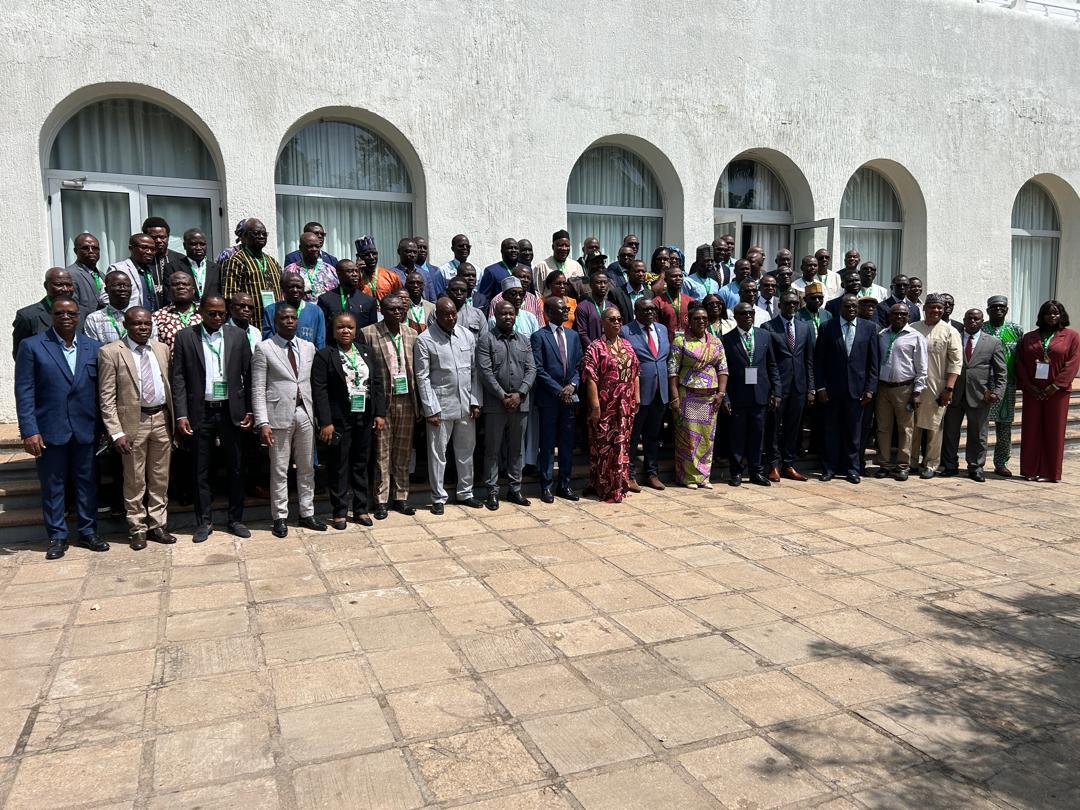
Santé animale : le PRADEP-AOS présent à la réunion régionale des réseaux de la CEDEAO à Lomé
Aminata KANE | 15/10/2026
Du 6 au 8 octobre 2026, le Dr Mamadou Lamine Dia, Expert en santé animale du PRADEP-AOS Couloir Ouest, a participé à Lomé à la 11e réunion annuelle des Réseaux de santé animale de la CEDEAO (RAHN11). Cette rencontre, organisée par le Centre Régional de Santé Animale de la CEDEAO, a réuni les services vétérinaires de plusieurs pays, ainsi que la FAO, l’OMSA, l’UA-BIRA, la GIZ et d’autres partenaires.Ce qui a été discutéSurveillance : les participants ont fait le point sur la situation de l’influenza aviaire et de la fièvre de la Vallée du Rift, et insisté sur le partage d’informations et l’approche « Une seule santé ».Commerce du bétail : une étude comparative a montré que les réglementations nationales sont parfois vétustes et très différentes d’un pays à l’autre, ce qui freine les échanges. Une directive CEDEAO sur le commerce du bétail est recommandée.Information sanitaire : les États ont été invités à désigner leurs points focaux pour le Système régional d’information en santé animale (RAHIS). Une feuille de route de déploiement court de novembre 2026 à juin 2027.La contribution du PRADEP-AOSLe Dr Dia a présenté les priorités du programme en santé animale : surveillance et alerte précoce, contrôle vétérinaire aux frontières, vaccination transfrontalière, lutte contre les faux médicaments et coordination « Une seule santé ». En marge de la réunion, il a échangé avec les services vétérinaires du Sénégal et du Mali sur l’harmonisation des campagnes de vaccination et les mandataires sanitaires.
-
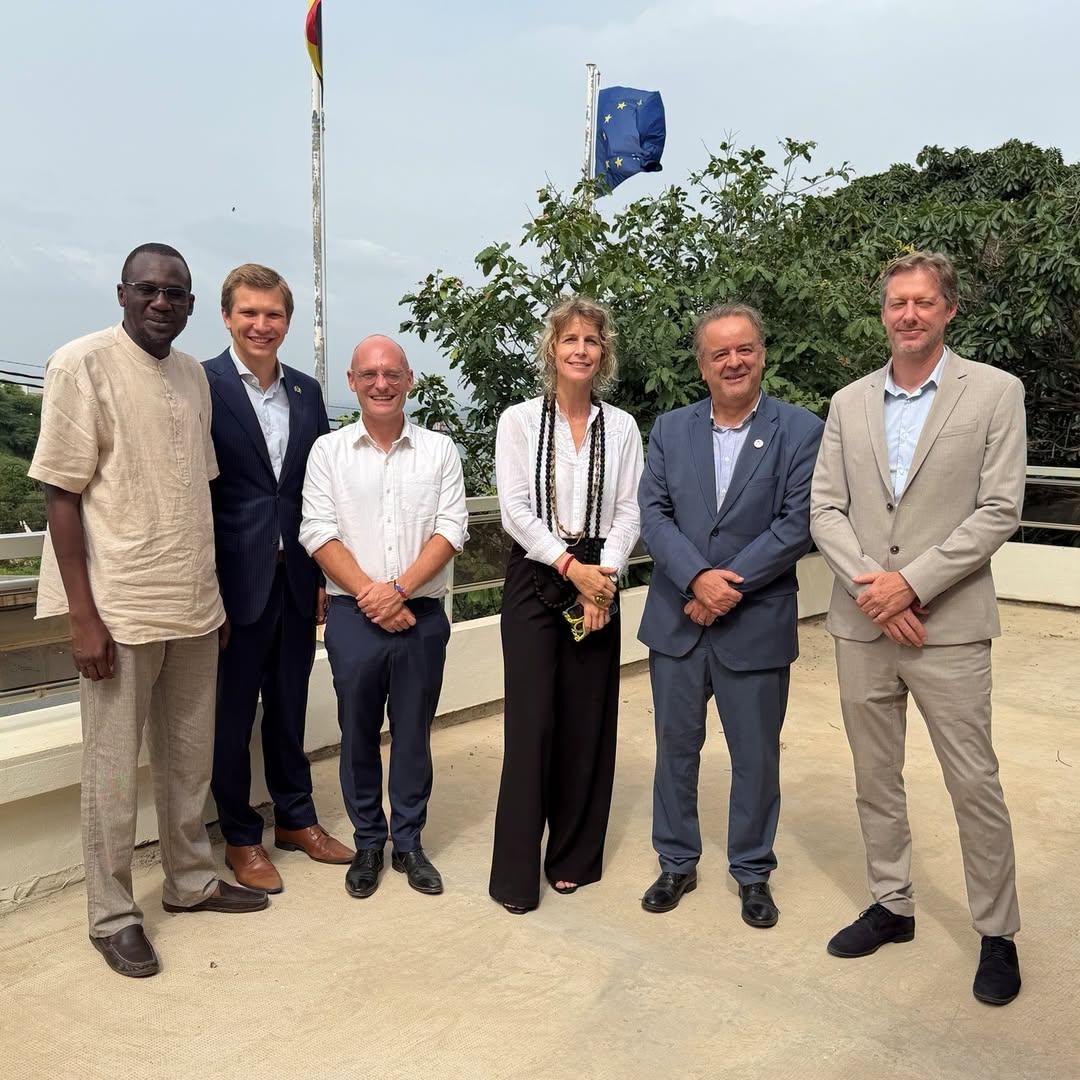
PRADEP-AOS Couloir Ouest : l’équipe réunie à Dakar pour planifier les activités à venir
Aminata KANE | 15/10/2026
Fin septembre 2026, l’équipe du PRADEP-AOS Couloir Ouest s’est réunie à Dakar pour un atelier interne de consolidation des indicateurs et de programmation des activités, avec les partenaires techniques IRAM et AVSF. Enabel, l’Agence belge de coopération internationale, met en œuvre ce Couloir en Mauritanie, au Mali, au Sénégal et en Guinée.Trois temps fortsLes indicateurs : le cadre logique a été passé en revue résultat par résultat. Certains indicateurs ont été maintenus, d’autres reformulés pour être mieux renseignés, d’autres retirés.L’étude de contexte : les participants ont examiné les enjeux et les priorités de chaque zone de concentration. En santé animale, ils ont insisté sur la prévention des maladies transfrontalières et des zoonoses, le renforcement des postes vétérinaires frontaliers, la sécurisation des mouvements de bétail et la lutte contre les médicaments falsifiés.La planification : pour chaque activité, l’équipe a précisé la formulation, les indicateurs, les partenaires, les zones d’intervention, les livrables et le calendrier. Cette feuille de route servira de base au premier Comité technique de suivi et de gouvernance, en novembre en Guinée.Des rencontres institutionnellesEn marge de l’atelier, l’équipe a présenté le programme au nouveau Directeur pays d’Enabel au Sénégal, au Hub régional de l’Union européenne à Dakar et à Madame l’Ambassadrice de Belgique. Tous ont souligné l’importance du pastoralisme pour l’économie, l’environnement et la stabilité de la sous-région.
-
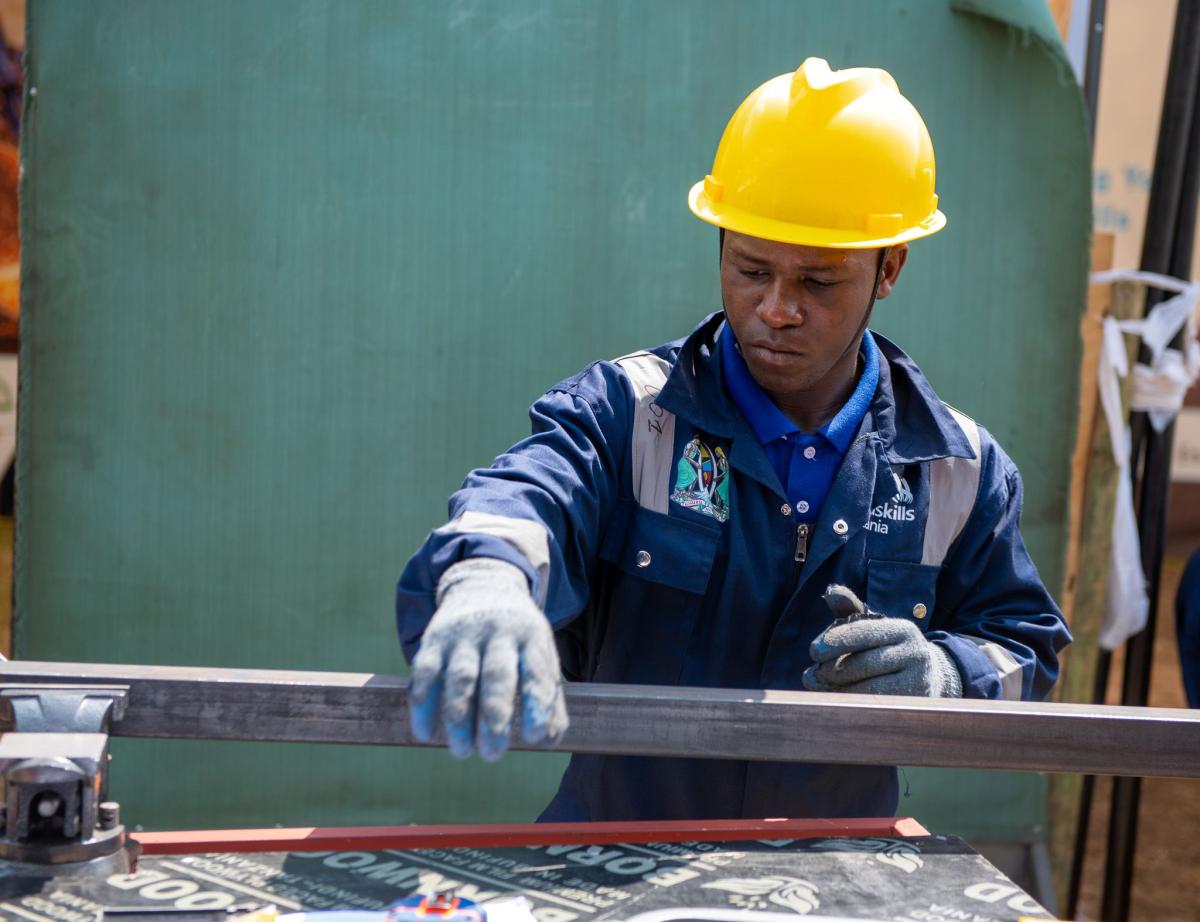
From Dreamful Welder to the Winner of Tanzania National Skills Competition 2026
Mkama MWIJARUBI | 15/10/2026
After completing primary education in 2017, his father took him to a welding workshop in Tanga to learn and grow. That is how Abdalah Mhando was set on a pathway to pursue a skill. After a couple of months, trusting he had learned enough and, hoping that the youngster would soon earn his own living, his dad sent him to an uncle in Dar es Salaam. In Dar es Salaam things did not pan out as expected. Abdallah returned to Tanga to look for jobs. His notable turn down was a sisal plantation. “The manager told me, you have some skill and effort, but you lack all credentials,” said Abdallah. The rejection hurt, but he did not dishearten him. A commissioned study through EU funded INCLU-CITIES project in Tanga, Mwanza and Pemba confirmed that hundreds of thousands of youths who often struggle to land decent jobs partly because employers required a set of skills that most job seekers do not even know they lacked. Abdallah’s pivotal moment came in 2025 with the announcement of sponsored opportunities to learn welding and metal fabrication at Vocational Education Training Authority (VETA) Tanga. Funded by the European Union and implemented by Enabel Tanzania, the training opportunities sought to equip youth with skills that prepared them for the demands of the job market. His fervent driven personality found a welcoming space in the well-equipped workshops and tutors. He participated in almost all classes, and stood out as one always ready to practice, ask questions and consult tutors. No wonder, when VETA Tanga picked learners from the welding class to participate in the skills competition at regional level, Abdallah was on the list. Among twelve competitors from different technical training centers, Abdallah came on top of the list of five that qualified from the regional competition to compete nationally. “It was unbelievable. My tutor called me to travel to the regional competition while I was in practical training at a factory in Tanga. I was sometimes nervous. It was my first ever competition,” he said. He said he learned a lot during the competition. Confidence, consulting with new people— equals and superiors— timed tasks and more important reading drawings and interpreting them fast and executing. He focused on sharpening his skills to interpret technical drawings into an items. In Tanga in August 2026, Abdallah secured top position in welding and metal fabrication in the national skills competition. “I’m grateful to Enabel and VETA for offering the learning opportunities that have supported me to develop my skills and show my capacity,” said Abdallah. The training under INCLU-CITIES has been designed to equip learners with technical and non-technical skills for the job market as employees or owners of small businesses. ends
-
A New Skill Sets Anna on a Pathway to Self-Employment
Mkama MWIJARUBI | 15/10/2026
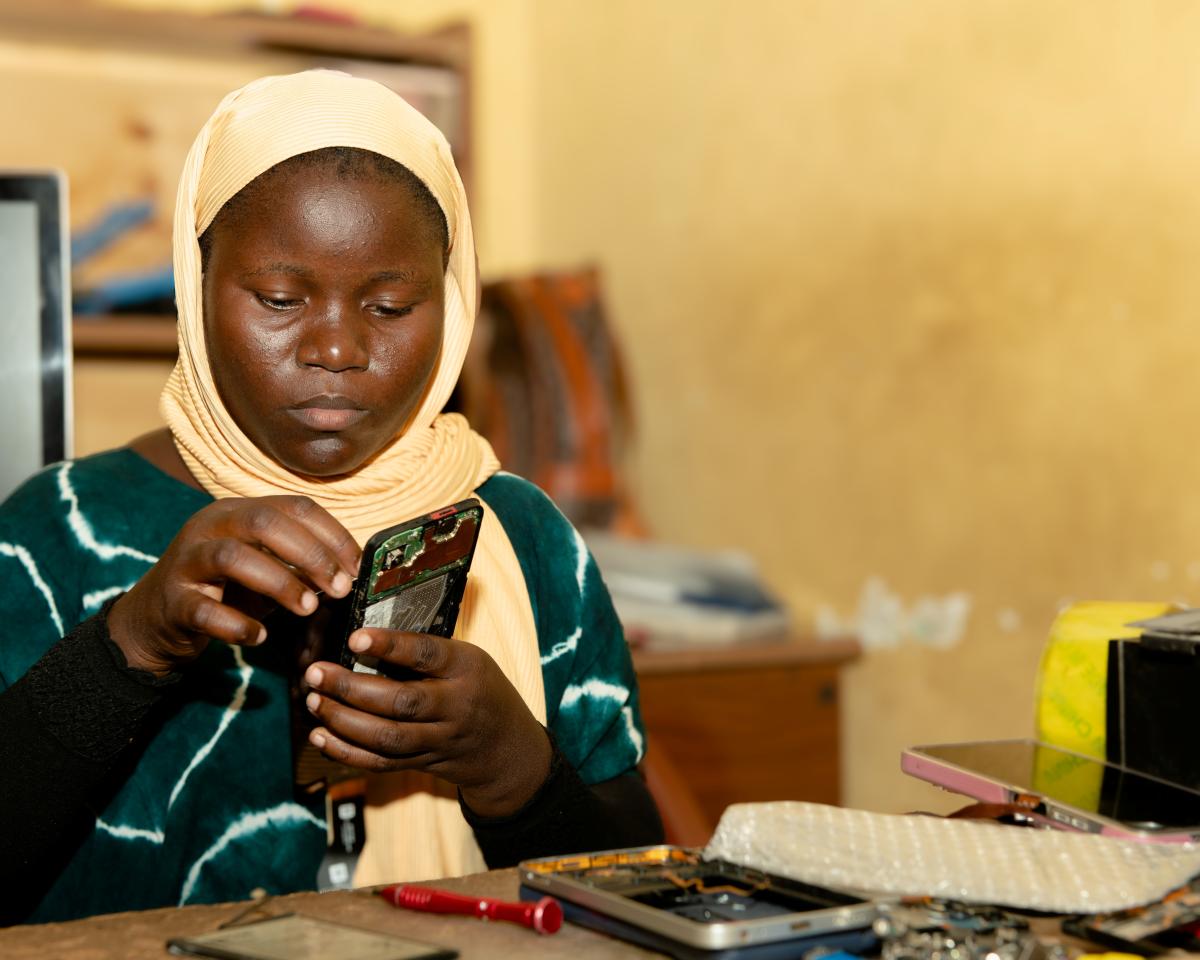
Anna Sanga did not want to stay idle after completing lower secondary school in Tanga. She pestered her parents to support her learn a trade that she can earn her own living. Youth aged 15—34 years old make 34 percent of Tanzania’s population according to official population census 2022. Many youth struggle to find decent jobs or run profitable enterprises because of mismatch in their qualifications and skills needed in the job market. Girls face a particularly more difficult situation because of gender stereotypes that exclude them from technical trades considered male. With funding from the European Union, Enabel Tanzania implements the Inclusive Green and Smart Cities (INCLU-CITIES) project in Mwanza, Pemba and Tanga. The project strengthens vocational training institutions, facilitates their linkage with employers, and promotes digital and green businesses in different value chains. With special emphasis on bringing girls in ‘traditionally’ male trades, INCLU-CITIES partnered with Vocational Education Training Authority (Kipawa) to deliver phone repair classes in Mwanza and Tanga. Anna’s father, a phone repairer too, heard it and nudged her daughter to go register. “I was worried as I went at VETA Tanga to register. I knew it is going to be all boys and men,” says the 21-year-old. And so, it was. She was relieved that in a class of 36 learners; she was among the three girls. Intervention INCLU-CITIES focuses on urban areas to support Tanzania’s government efforts to develop business opportunities, skilled jobs and resilient to dynamics of climate and environment changes. It is estimated that by 2050 more than half of the population of Tanzania will be living in urban areas. Vibrant businesses, skilled workforce and green investment will contribute to building liveable and inclusive cities. Anna found the phone repair classes at VETA useful. Theory and practical sessions helped the knowledge settle in. To facilitate transition from vocational training to jobs, INCLU-CITIES project coordinate collaboration between training institutions and employers. To sustain this collaboration beyond the project lifetime, a structure called Skills Development Platforms (SDPs) has been formed to bring together employers, training providers and other stakeholders. Their dialogues results in tweaking training programmes to suit labour market needs and increase employment opportunities for graduates. For Anna’s case, this linkage took her to phone repair master craft on 14th Avenue in Tanga town. Master crafts are well positioned to support apprentices with techniques and nuances they may not attain at campus classes and workshops. “Technical work is only part of what a successful phone repair craft person should know. I spend a lot of time guarding my apprentices on keys skills like confidence, customer care, and legal issues related to our trade,” says Hussein. He has been in phone repair trade for nearly 20 years. “Fundi Hussein has taught me that the first quality I must have is confidence. If you doubt your capacity to problem solving you will fail to diagnose and address issues a client brings,” says Anna. After spending time at VETA and now as apprentice at Hussein’s phone repair shop, she has gained confidence in diagnosing issues in phones and thinking about solutions. Content with her choice of trade, Anna is looking forward to opening her own shop to repair phone and sell phone accessories. Overall achievement VETA Kipawa,the only formal vocational training institution offering phone repair classes in Tanzania registered a total of 72 youth for classes delivered in Tanga and Mwanza in December 2025 to February 2026. Anna is among more than 600 youths from disadvantaged backgrounds who have completed work readiness program and acquired skills that increase their chances of securing employment and self-employment opportunities. They learned cage fish farming, gas welding, electricity, sewage, motorcycle repair, and phone repair. Ends
-
Bee keeping is no longer for men only
Mkama MWIJARUBI | 15/10/2026
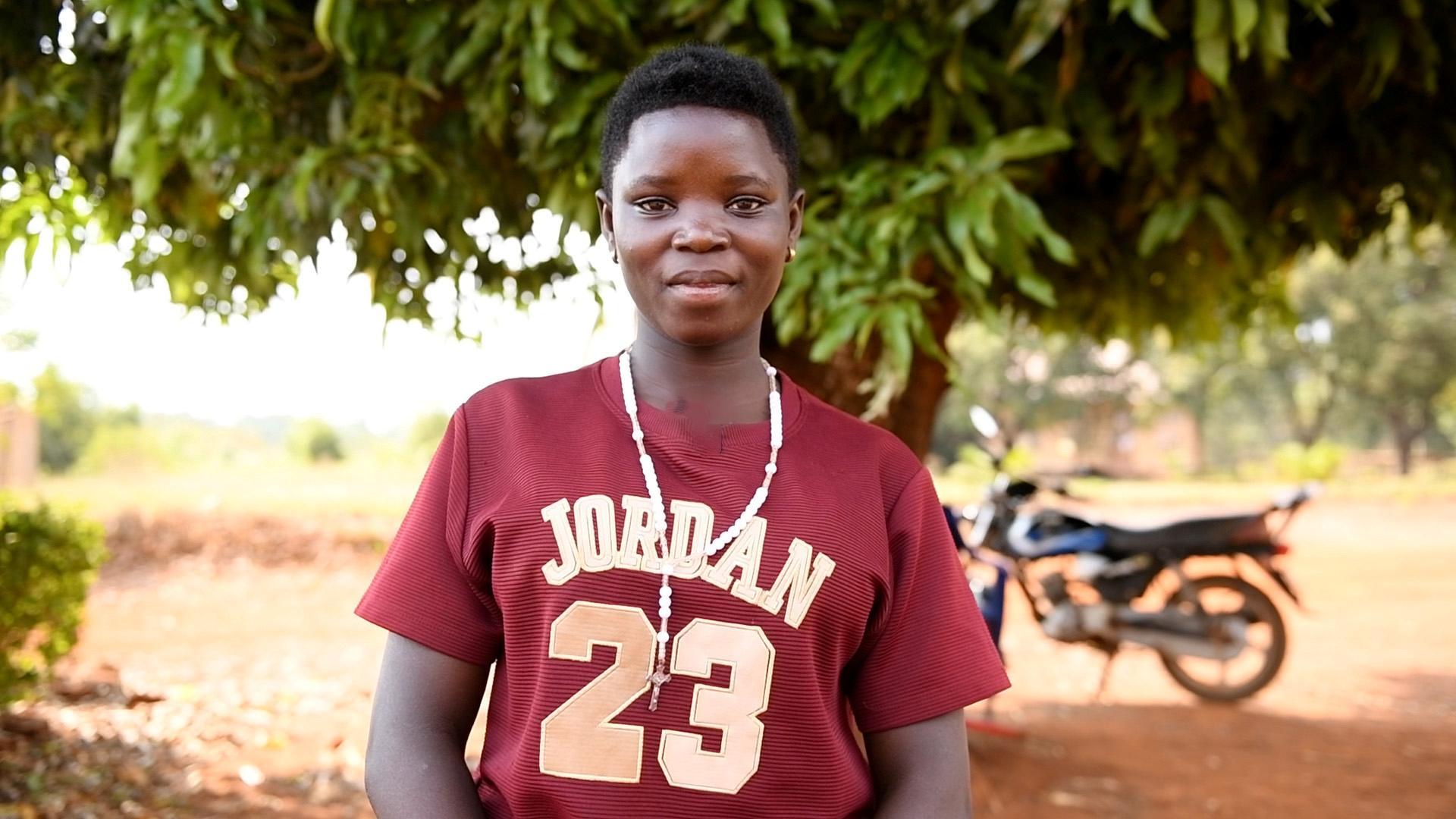
Dainess Issa Ali, a fourth child in her family of four girls and four boys, grew up in an extended family home with uncles and aunties and other siblings. She loved honey and always knew bee keeping and harvesting honey is preoccupation of grown older men. Youth, especially girls in Kigoma region in Tanzania, live with gender realities that confine their choices of study and livelihood trades. Her perspective changed when she registered at the Ministry of Agriculture Training Institute (MATI)-Mubondo to learn bee keeping and value addition to agricultural crops. Organised with technical and financial support from Enabel Tanzania’s Wezesha Binti project the work readiness training sought to enable girls take advantage of the economic opportunities available in Kasulu district in Kigoma—a regional abundantly endowed with fertile soils and swathes of forested land. “I learned a lot about gender and was amazed how our tutors insisted that girls can manage a hive farm just as men. It was unimaginable at first, but I was happy how they helped me understand and practice,” Said Dainess MATI-Mubondo taught her modern ways to set up and manage an apiary and, processing honey to get multiple products. Besides that,Dainess joined Young Beekeepers Group, an organization of 16 members she formed with fellow learners at MATI who came from Kidyama. News of a group of 15 young girls and one young man engaged in bee keeping and honey processing business raised eyebrows in their village. Culturally bee keeping and honey selling is done by aged men in Kidyama and in Kigoma generally. While at MATI-Mubondo, youth learned gender equality, opening their eyes about economic, social and cultural opportunities available to both male and females. With Young Beekeepers, gender is no longer a block. Wezesha Binti project provided the group a start- up capital of 30 hives, protective gear and other bee keeping supplies, The college allocated a forest area to the group for five years to enable them to establish and manage their apiary. Now, contrary to her perspective before Enabel support, Dainess has five hives on her own, apart from the 30 hives that Enabel gave the group to set up their apiary. With her group their plan is to increase their production capacity to 500 hives and move their apiary to their own piece of land by 2030.
-
Kundi Salum’s journey from a stressful youth to decent job
Mkama MWIJARUBI | 15/10/2026
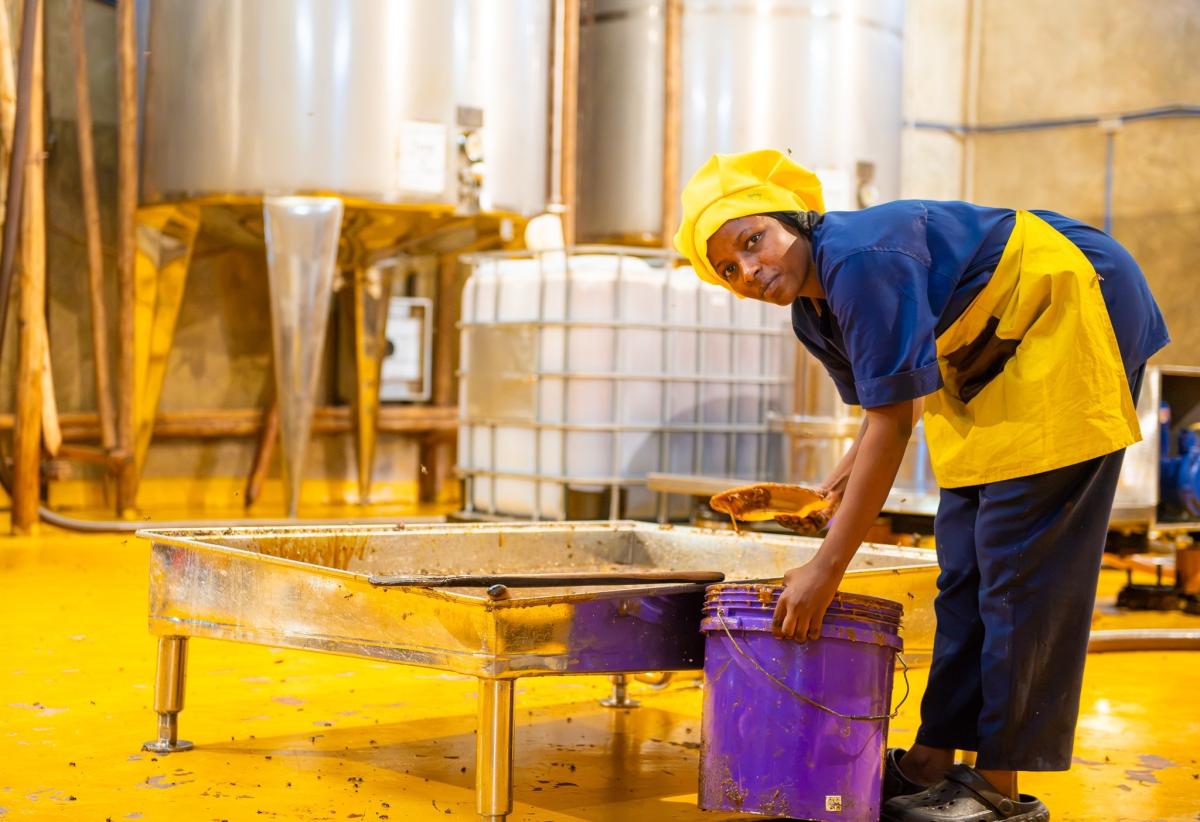
Back in 2022, Kundi Salum and her family had considered learning a skilled trade at the Kigoma centre of the Vocational Education and Training Authority (VETA), but the costs were too high for her aunt who had been taking care of the young lady after her parents passed away. Kigoma region’s population is dominated by a youth workforce. However, many young people—particularly girls and young women—remain poorly positioned to benefit from economic opportunities that continue to grow in Kigoma. High training costs, persistent gender stereotypes, inadequate gender-responsive facilities, weak links between training institutions and employers, and limited access to workplace experience restrict their participation in vocational education and their transition into decent employment. Kundi’s path changed in 2025 when she joined food processing course at VETA Kigoma through the facilitation of Wezesha Binti Project. With support from the Belgian government, the Wezesha Binti project strengthens the transition from training to work by facilitating linkages between TVET institutions linkages and employers. In Kigoma town, Third Man Limited, a honey processing and marketing company famously known as Upendo honey is one of private sector collaborators in the Wezesha Binti’s TVET program. “We found that Wezesha Binti mission to empower girls with skills and decent jobs and businesses matches with our objectives as a company,” says, Byela Bandio, a Human Resource Officer at Third Man Limited. As part of the memorandum of understanding between Enabel and VETA, doors were open for learners like Kundi to gain the much-needed experience. “At Upendo honey I learned how to live like an employee, how to interact with people at a place of work, how to contribute to a team,” says Kundi. On top of providing space for VETA’s students to gain practical experience, Upendo Honey offered to employ some, based on the company’s requirements. Kundi was one of the three girls who received a call to report for work at Upendo Honey a couple of months after completing their field attachment. Employers that collaborate with VETA and Enabel through Wezesha Binti benefit with meeting youth that are hardworking and malleable therefore can be trained to fit in their environment. “Without this collaboration probably, we would not have been able to meet some of these young girls who are excellent staff and very good people,” says Byela. Upendo honey did not require additional interview for the youth because they already observed their work ethic during their practical attachment. Kundi's experience reflects the broader impact of the Wezesha Binti Project in supporting young women to transition from training to decent employment. A total of 300 graduates (204 women and 96 men) has secured decent employment through partnerships with public and private sector employers, including Third Man Limited (Upendo Honey), Kasulu Sugar Company, and other industries. “I’m very grateful for the opportunity to get a job at Upendo Honey. I have a salary, I have NSSF, and I have medical insurance. Our factory is far from restaurants, but our employer provides lunch for us. I feel valued.” Her story demonstrates how partnerships between TVET institutions and employers can create sustainable employment opportunities for young women in Kigoma. ends