Rechercher
Affichage de 225 à 240 sur 3052 actualités
-
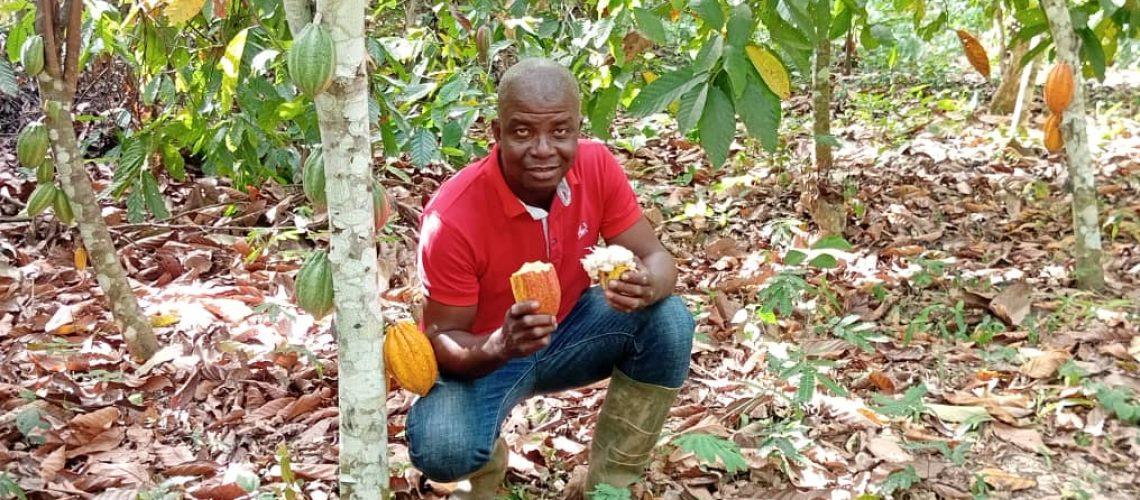
Cacao “Fine Saveur” en Côte d’Ivoire : de l’excellence agronomique à la conquête du marché de spécialité
Samuel POOS | 02/04/2026
En Côte d’Ivoire, le cacao est historiquement associé aux grands volumes de production (“bulk”) plutôt qu’au marché de niche de la qualité “specialty”. Pourtant, une véritable révolution gustative est en marche. Grâce aux projets pilotes mis en œuvre par Enabel (l’agence belge de coopération internationale), au travail rigoureux des coopératives et à un potentiel génétique souvent méconnu, la Côte d’Ivoire prouve aujourd’hui qu’elle peut produire un cacao “fine saveur” d’exception. L’enjeu désormais : structurer l’exportation et bâtir, étape par étape, une véritable réputation internationale auprès des chocolatiers les plus exigeants.La transformation de la qualité sur le terrain et la reconnaissance internationaleDes pratiques post-récolte optimisées : une transformation en un an et demiFinancé par l’Union européenne et mis en œuvre par Enabel, le projet pilote “Cacao durable – Fine saveur” a accompagné trois coopératives : Ecam, Scamed et Cafugo. L’objectif était d’améliorer les pratiques post-récolte pour révéler le potentiel du terroir ivoirien.En seulement un an et demi de travail, les résultats sont remarquables. Les producteurs engagés ont vu leur productivité augmenter et ont gagné en moyenne 10 % de poids en plus par sac de cacao livré, grâce à une diminution drastique des impuretés et des défauts. La qualité globale s’est transformée : le cacao de “grade 1” a un taux de défaut inférieur à 1 %.Yeyasso : l’exigence du bio et la rigueur scientifiqueEn parallèle, le Trade for Development Centre (TDC) d’Enabel accompagne la coopérative Yeyasso depuis plusieurs années dont le trajet vers l’excellence s’intitule “Crafting Superior Aroma”. L’approche de Yeyasso repose sur une gouvernance professionnelle et une discipline stricte liée à l’agriculture biologique. Pour garantir une qualité constante, la coopérative a mis en place une sélection drastique des cabosses et une fermentation centralisée. Un véritable protocole scientifique est appliqué, avec des brassages réguliers et un contrôle quotidien de la température, de l’acidité et du taux de sucre. Ce travail minutieux aboutit à un chocolat fin, aux arômes fruités naturels.Une reconnaissance internationale par Cocoa of ExcellencePour valider ces efforts de manière indépendante, les échantillons des quatre coopératives ont été évalués hors compétition par un panel d’experts internationaux de Cacao of Excellence.Les résultats de ces tests, présentés lors de l’édition 2026 de Chocoa à Amsterdam, sont sans appel !À l’échelle internationale, un score de 7,5/10 permet d’entrer dans la catégorie très convoitée des “Cacaos d’excellence”. Plusieurs producteurs ivoiriens ont largement dépassé ce seuil :Le producteur Sombie Mamadou (coopérative CAFUGO) a obtenu la note exceptionnelle de 8,0/10 pour un cacao aux notes de fleur d’oranger, d’agrumes et de panela épicée.Le producteur Louan Ambroise (coopérative YEYASSO) a décroché un 7,7/10 pour un chocolat complexe mêlant une acidité fraîche (pomme, citron, litchi) et des notes d’épices.La productrice Angaman Martine (coopérative SCAMED) a également obtenu 7,7/10 grâce à un profil très harmonieux aux notes de fruits tropicaux.Si ces trois producteurs se hissent au sommet, l’ensemble des autres cacaos testés a également prouvé son excellence en frôlant ou dépassant la note de 7,2/10 (la référence “fine saveur” pour la Côte d’Ivoire), témoignant d’une qualité exceptionnelle et constante à travers les différents lots.L’agronomie au service du goût : un immense potentiel génétique issu de semencesLe Dr. Mathias Tahi du Conseil Café Cacao n’est pas étonné par ces résultats, qui s’expliquent par le riche patrimoine génétique du cacao ivoirien. Les plantations sont issues de semences (et non de clones) provenant de croisements historiques avec des variétés aromatiques mondialement réputées (Trinitarios, Forasteros et Criollos). Associé à des méthodes de préparation rigoureuses, ce potentiel naturel unique permet de révéler un cacao extra-fin. Face à ces preuves de réussite, le Dr. Tahi s’est engagé à faire remonter ces résultats au plus haut niveau de son institution, car : « La tendance aujourd’hui, c’est la recherche de saveurs fines. Que l’image d’une Côte d’Ivoire connue jusqu’ici comme un pays qui fait du cacao bulk sorte de l’esprit des gens, au profit d’un cacao made in Côte d’Ivoire de saveur fine ». Commercialisation et exportation : les clés pour réussir sur le marché de nicheIdentité et origine : les conseils pour se positionnerAvoir un produit d’exception est une chose, savoir le vendre en est une autre. Björn Becker, producteur de chocolat de spécialité à Bruxelles (Mike&Becky), confirme qu’il existe un marché florissant de petits chocolatiers prêts à payer un prix très rémunérateur pour cette qualité. Cependant, il livre de précieux conseils stratégiques :Miser sur l’identité ivoirienne : Sur ce marché, s’anonymiser fait courir le risque de retomber dans les logiques de l’industrie de masse. Les acheteurs veulent voir la région d’origine affichée fièrement. Il souligne qu’il n’a pas connaissance d’une tablette de spécialité valorisant l’origine “Côte d’Ivoire” sur son emballage. C’est donc une opportunité immense pour se démarquer.Séparer les lots : Il est crucial de ne jamais mélanger les fèves, afin de préserver la spécificité aromatique unique de chaque lot et de chaque terroir.Oublier les labels qu’il qualifie d’industriels : Dans le chocolat de spécialité, les labels de type Rainforest Alliance ou Fairtrade n’ont pas d’importance aux yeux des acheteurs ; seule la certification “Bio” peut avoir une valeur ajoutée.Construire sa réputation pas à pas : la stratégie de l’exportationPour lier ces producteurs ivoiriens d’excellence aux chocolatiers européens, l’intervention d’importateurs spécialisés est indispensable. Katrien Delaet, de Sylva Cacao, insiste sur la nécessité de construire des chaînes d’approvisionnement courtes et directes, bien qu’elles soient aujourd’hui parfois entravées par des défis logistiques en Côte d’Ivoire. Surtout, elle met en garde contre la volonté de vouloir exporter immédiatement de très gros volumes. Avant de rechercher des volumes massifs en “fine saveur”, il faut d’abord construire la réputation de la Côte d’Ivoire sur ce segment. La stratégie gagnante repose sur une croissance organique, intimement liée à la demande réelle. L’approche idéale consiste à commencer par l’envoi de petites quantités : un premier “conteneur test” (environ 25 à 40 tonnes). Cela laisse le temps aux chocolatiers de tester les fèves, de développer leurs propres recettes et de s’assurer que le produit plaît à leurs clients.Si le succès est au rendez-vous, la réputation s’installe, et les volumes commandés augmentent progressivement l’année suivante. Produire de la haute qualité sans avoir sécurisé ce marché progressif serait le meilleur moyen de décourager les producteurs. L’avenir du “fine saveur” ivoirien se construira donc sur la patience, l’excellence et le partenariat à long terme.Photo : Louan Ambroise, producteur de la coopérative YeyassoArticle initialement paru sur le site du Trade for Development Centre : https://www.tdc-enabel.be/fr/2026/02/23/cacao-fine-saveur-en-cote-divoire/
-
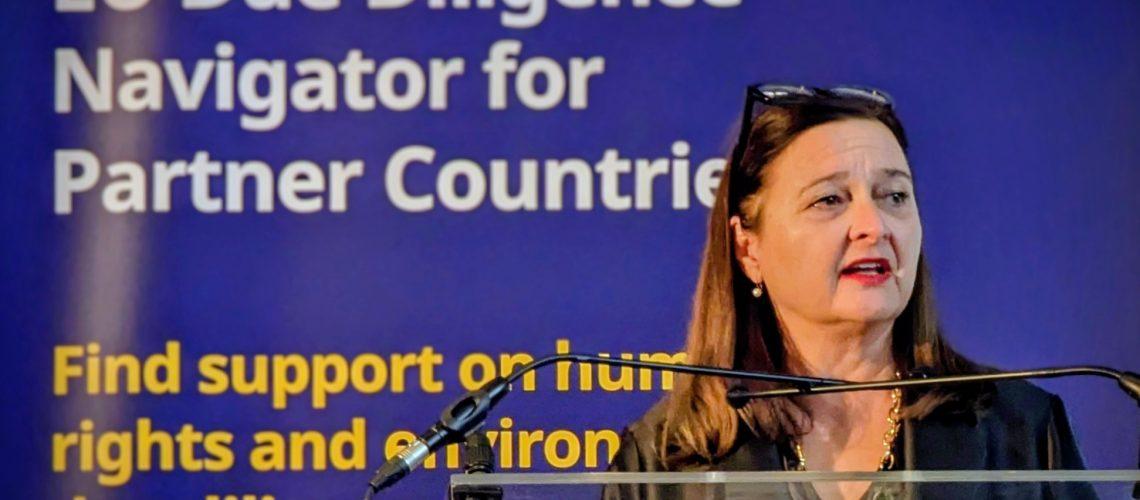
The EU Due Diligence Navigator for Partner Countries
Samuel POOS | 01/04/2026
The EU Due Diligence Navigator for Partner Countries is a new online platform from the European Commission that concretely helps stakeholders in partner countries prepare for the due diligence requirements set out in the European Corporate Sustainability Due Diligence Directive (CSDDD).A Key Tool of the Team Europe InitiativeThe Navigator was developed as part of the Team Europe initiative “Sustainability in Global Value Chains,” co-piloted by the Commission (DG INTPA) and the German Federal Ministry for Economic Cooperation and Development (BMZ). It aims to make the implementation of the CSDDD more inclusive, taking into account the realities of partner countries and promoting shared responsibility between European buyers and suppliers in the South.At the launch event on March 16, 2026, in Brussels, speakers from Africa, Asia, and Latin America stressed that the platform addresses a very concrete need for clarity and coordination in the face of the proliferation of European regulations (CSDDD, EUDR, etc.).What exactly does the Navigator offer?The Navigator is aimed at a wide range of users: businesses (large and SMEs), cooperatives and producer organisations, public administrations, civil society, trade unions and technical partners. For each of these profiles, the site explains what the CSDDD implies in practice and links to the most relevant resources for strengthening human rights and environmental due diligence.“Today, more than 250 programs are already featured in the Navigator’s database, ranging from training and evaluation tools to equipment financing and transparency initiatives. This unique overview makes it possible to identify sectoral gaps and better coordinate our efforts,” said Marjeta Jager, Deputy Director-General of the Directorate-General for International Partnerships (DG INTPA) at the European Commission, during the launch event organised in Brussels on March 16, 2026.Users can filter by country, sector, type of stakeholder, type of support (training, financing, evaluation tools, etc.) to identify the programs that best match their situation.The Trade for Development Centre of Enabel is one of the Navigator’s tools. Have a look to discover what TDC is doing in Human Rights and Environmental Due Diligence.More than a directory: a guidance serviceThe Navigator is not limited to listing links: a team of experts offers a personalised guidance service to help stakeholders understand the CSDDD’s expectations and connect with the right support mechanisms. Users can contact the team via the platform and be put in touch with initiatives adapted to their context, whether it is sectoral training, risk mapping tools, or funding for pilot projects.This networking is crucial in a context where civic space is shrinking in several regions and where information on available resources remains fragmented. By centralising this information, the Navigator becomes a unique entry point for anyone wishing to strengthen their compliance and their impact on the ground.A Lever for Sustainable Value ChainsThe CSDDD requires large European companies – and certain non-European companies highly active on the EU market – to identify, prevent, and mitigate human rights and environmental risks across their entire value chains. This creates both challenges and opportunities for producers and exporters in partner countries, particularly in agricultural sectors such as cocoa and coffee.The Navigator can become an important lever so that these actors are not simply ‘made compliant’, but can also take advantage of the new requirements to improve their practices, access financing, and consolidate their commercial relationships with the European market. The challenge is to move from a punitive logic to a partnership approach, with a more equitable distribution of the costs and benefits of the transition towards sustainable value chains.What now?The platform is set to evolve: the database will be regularly updated, new resources will be added and the tools will be progressively better adapted to the needs of SMEs and producer organisations in partner countries. The success of the Navigator will also depend on its ownership by the stakeholders concerned: the more they contribute to it by sharing their initiatives and needs, the more relevant and useful the tool will become in transforming global value chains.By centralising the resources of “Team Europe”, the Navigator simplifies the due diligence ecosystem and promotes constructive dialogue between the North and the South.To explore the tool and its resources, visit the European Commission’s official website: EU Due Diligence Navigator.
-
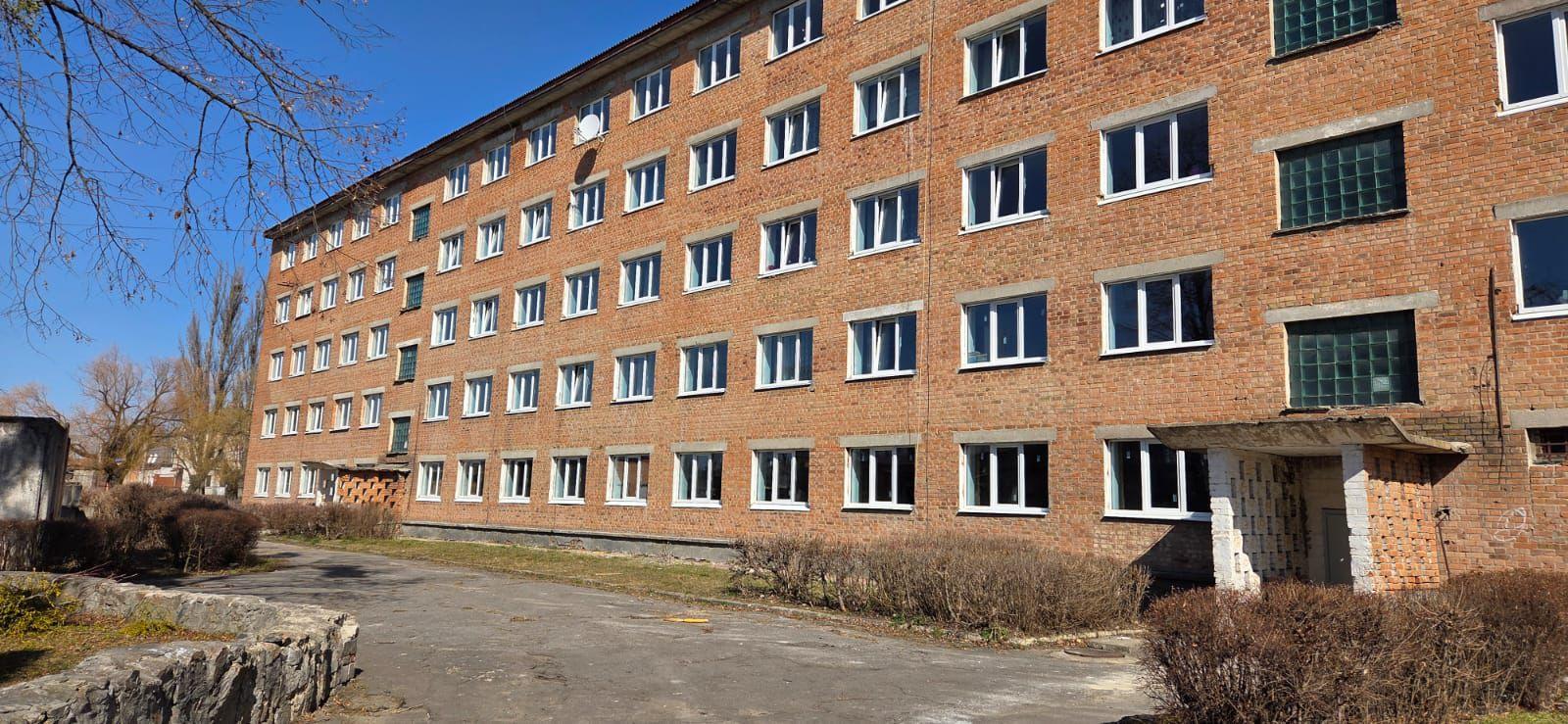
Ukraine: Enabel supports a VET school in the Kyiv region with the window replacement
Taisiia DRUZIUK | 31/03/2026
225 energy-efficient windows have been installed at the Bila Tserkva Vocational School of Construction and Services dormitory, with support from Enabel. During one of the Russian attacks, the 250-bed dormitory in the Kyiv region was damaged by the blast wave. Having a prior commitment to support the installation of new windows, Enabel accelerated the process to replace the shattered ones as quickly as possible. In addition, we also upgraded 28 interior doors. Bila Tserkva VET School is receiving comprehensive support from Enabel. Next in line is the thermal modernisation of the workshop building – specifically, roof and façade repairs. Previously, part of the windows in this building were already replaced through Belgian funding. Enabel is also supporting the institution in its transformation into a Centre of Vocational Excellence and will introduce a project that will strengthen training for furniture design and manufacturing specialists.
-
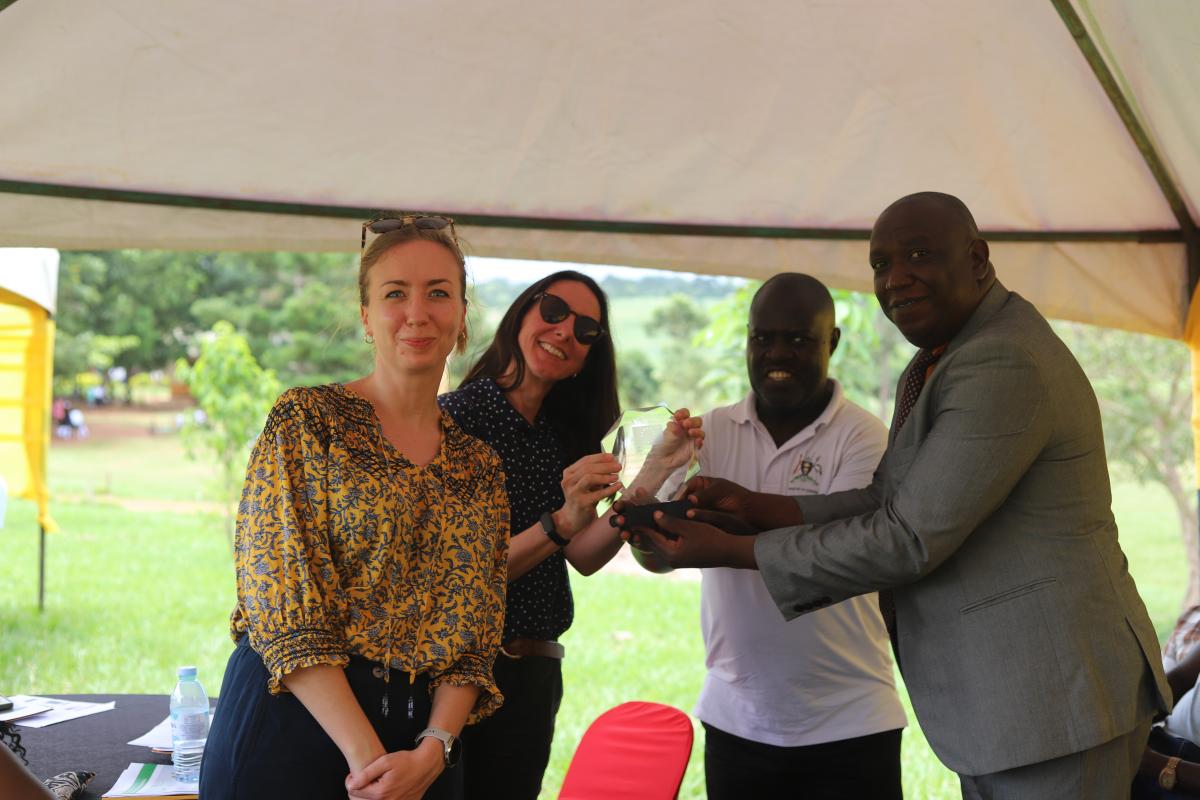
Seeing impact first-Hand: Inside the EU visit to Busoga
Dorothy KYAMAZIMA | 30/03/2026
From March 11–13, a delegation from the European Union joined Enabel on a field mission to Busoga to see, first-hand, how development programmes are making a difference in communities. Across Jinja and Bugiri, the visit brought together different strands of Enabel’s work in education, health, skilling, and human rights, each offering a glimpse into how people are being supported to build better futures. Empowering Young People Through Education At Busede Secondary School, the delegation saw how education is becoming more practical and relevant. Teachers demonstrated more interactive, learner-centred approaches that are improving the quality of teaching. Beyond the classroom, students confidently shared practical skills gained from life skills training; preparing them for life after school. In Busede alone, over 300 students have benefited from life skills training, contributing to more than 10,000 learners reached across Uganda. Through the WeLearn/WeTeach project, 1,000 fellowships have also been provided to learners at risk of dropping out due to financial challenges. So far, 493 of these students have successfully completed Senior Four. Reducing Maternal Deaths, One Step at a Time At Mpumudde Health Centre IV in Jinja, one of the facilities supported under the WeCare project, the delegation engaged with health workers and mothers to understand how services are being delivered. Our efforts focus on addressing the three delays in maternal care: deciding to seek care, reaching a facility, and receiving quality treatment. To tackle the first delay, through Saving for Health groups, we have helped communities mobilise over UGX 2 billion for health emergencies, including more than UGX 300 million saved by 886 expectant mothers. To improve access to care, Enabel’s partnership with Babies and Mothers Alive is helping connect mothers to timely information and emergency transport. So far, over 15,000 expectant mothers have been supported with transport through the Mama Rescue App. At the facility level, improvements are also visible. Across Busoga and Rwenzori, more than 100 health workers and 90 ambulance drivers have been trained, 11 newborn care units established, and 1,000 units of blood collected for emergencies. Ensuring Communities Have a Voice In Bugiri, the Business and Human Rights project demonstrated how human rights principles are being put into practice. With the Makuutu Rare Earth mining project taking shape, Enabel, alongside partners like African Centre for Energy and Mineral Policy (ACEMP), is facilitating dialogue between communities, local leaders, civil society, and private sector actors. These discussions are supporting the development of Community Development Agreements (CDAs), helping ensure fair compensation, proper resettlement of Project Affected Persons, and shared benefits through jobs and community services. Creating Sustainable Livelihoods The final part of the visit focused on a key question for many young people: how to turn skills into income. Through the WeWork–HortiMarket Dynamics project, implemented by Swisscontact, the delegation visited initiatives strengthening horticulture value chains in Busoga. They met young people who are not only receiving training, but are already connected to markets. The project is supporting 1,800 disadvantaged youth, women, and persons with disabilities with access to skills, quality inputs, and market opportunities. A highlight was the visit to Trafford Export Commodities, where a youth-led aggregation hub model is being piloted across Jinja and Kamuli. Here, young people are working together to supply products (tomatoes, onions, watermelon, cabbage, and chill) to markets in a more organised and profitable way. By the end of the visit, one thing was clear: the real impact of these programmes is best understood through the people behind them. A student gaining skills and confidence, a young woman, later a mother, able to access timely care and a community shaping decisions that affect its future and a young entrepreneur building a livelihood.All these are not separate stories but are part of the same journey. Across Busoga, Enabel’s programmes are working in a connected way, linking education, health, livelihoods, and human rights to support young people at different stages of life. With support from the European Union, this integrated approach is helping move beyond individual projects towards lasting impact where people are empowered to thrive within stronger systems and communities.
-
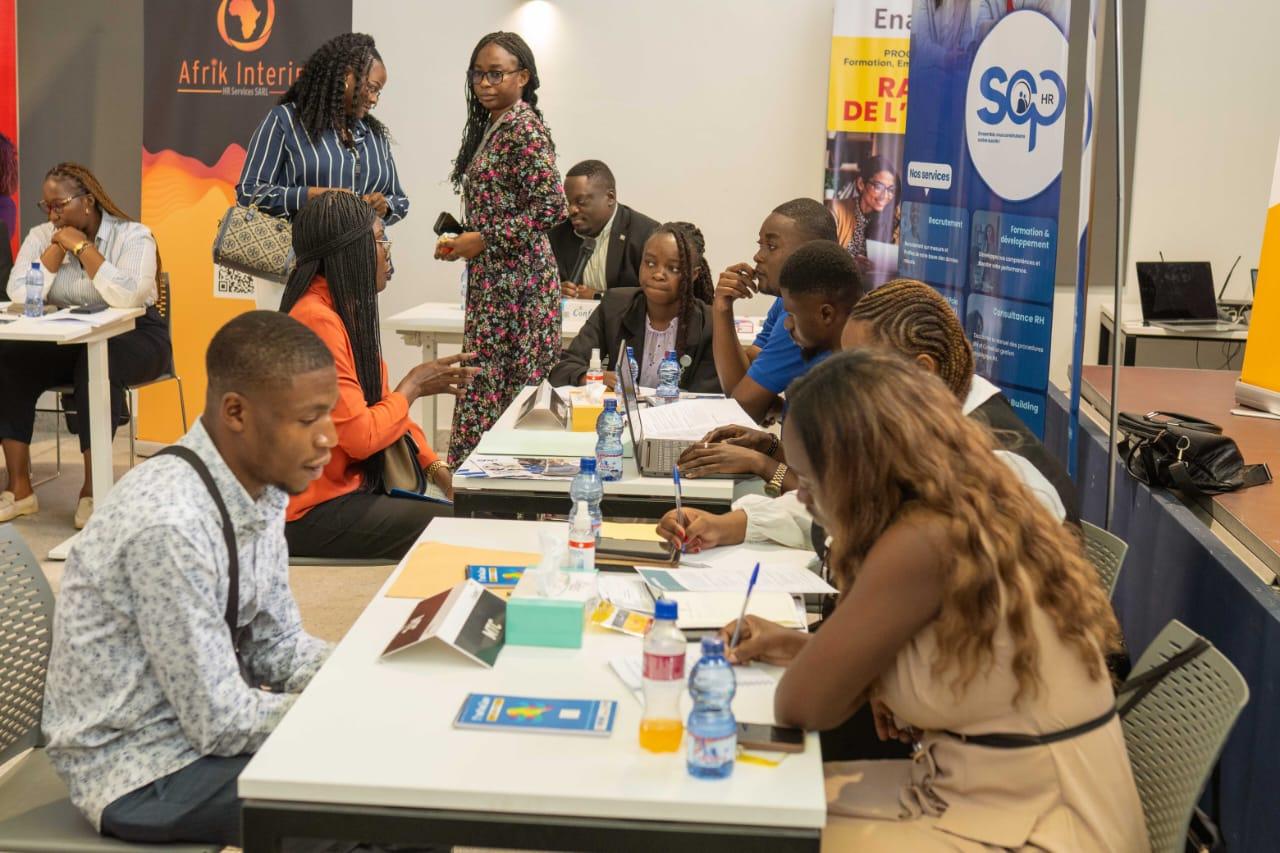
Quand la formation ouvre les portes de l’emploi
Mandy BAKINE NGASHUE | 26/03/2026
Quatre cents (400) jeunes Kinois ont franchi une étape décisive vers l’insertion professionnelle. Le Rallye de l’emploi, lancé sous l’égide du Directeur général de l’Office national de l’emploi (ONEM RDC), a réuni une quinzaine d’entreprises autour d’un objectif commun : transformer l’accompagnement en opportunités concrètes. Porté par un partenariat entre la SODEICO Development et l’ONEM RDC, cet événement organisé du 16 au 17 mars 2026 a offert un cadre privilégié pour des échanges directs entre candidats et recruteurs. Au programme : des perspectives de stage, des entretiens ciblés et des ateliers inspirants, couronnant ainsi le parcours du projet Formation, Emploi et Entrepreneuriat (FEE). Un dispositif complet, allant de la formation intensive au coaching personnalisé, jusqu’à la mise en relation avec les acteurs clés du marché. Malgré les défis logistiques, plus de trois cents (300) jeunes ont répondu présent. Les résultats parlent d’eux-mêmes : • Plus de 170 entretiens ont débouché sur une seconde phase de sélection en entreprise ; • 15 stages professionnels ont été actés, et un emploi confirmé ; • Plus de 40 jeunes femmes ont participé à une masterclass animée par des figures inspirantes, renforçant leur confiance et leur réseau. Un bilan qui témoigne de la pertinence d’une approche alliant formation, mentorat et mise en relation. Et qui rappelle, s’il en était besoin, que l’emploi se construit aussi par l’audace et la rencontre.
-
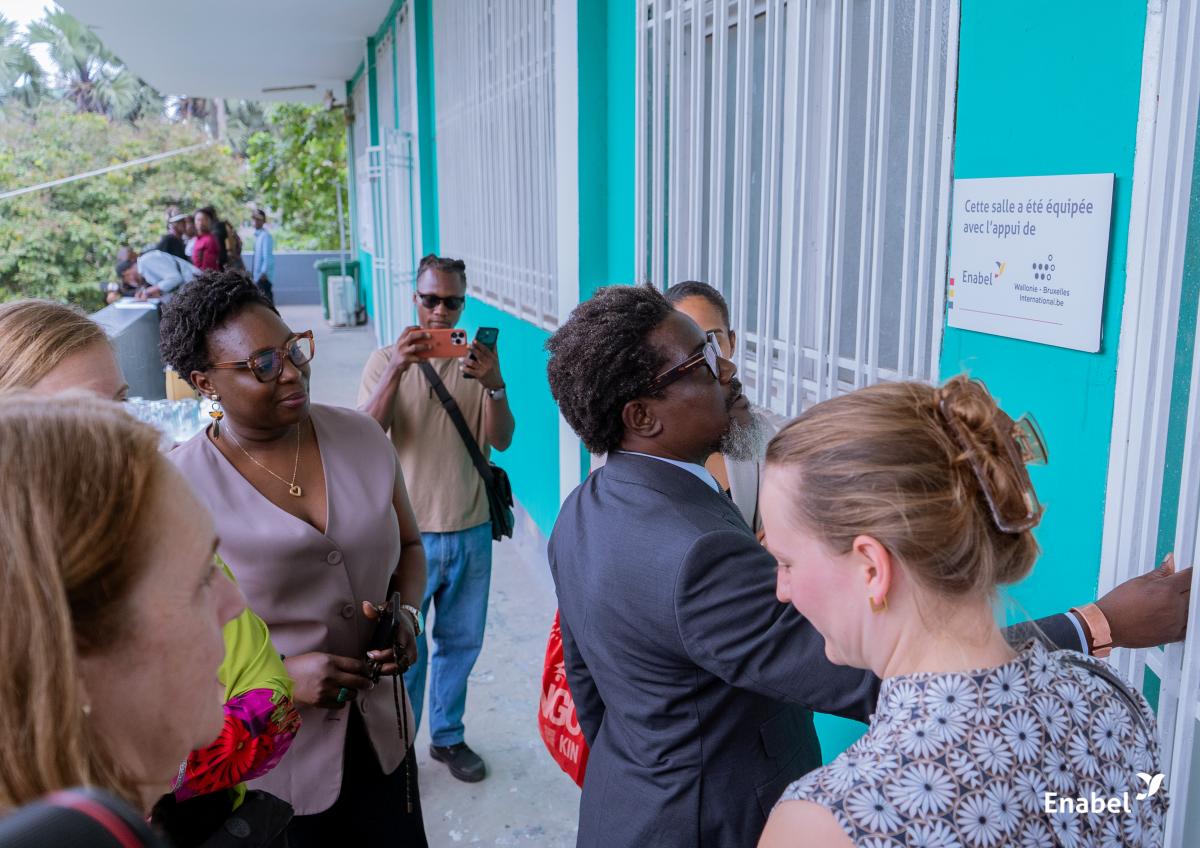
Une salle de cinéma d’animation pour les jeunes créateurs congolais : Nouveau tremplin de créativité et d'opportunités professionnelles
Mandy BAKINE NGASHUE | 26/03/2026
L’Académie des Beaux-Arts de Kinshasa (ABA) dispose désormais d’une salle de formation entièrement équipée dédiée au cinéma d’animation. Inaugurée officiellement le 25 mars 2026, cette infrastructure est le fruit d’un partenariat entre le projet Jeunesse Créative d’Enabel, Wallonie-Bruxelles International (WBI) et l’Ambassade de France en République Démocratique du Congo. Elle marque une étape concrète dans le renforcement des industries culturelles et créatives (ICC) du pays. Un appui technique pour combler un besoin essentiel Cette réalisation s’inscrit dans le cadre d’un accompagnement plus large initié il y a un an par le projet Jeunesse Créative d’Enabel auprès de l’ABA. Après une analyse approfondie des besoins, l’appui s’est concrétisé par la fourniture d’équipements techniques de pointe – ordinateurs, tablettes graphiques, logiciels spécialisés – permettant de transformer un espace académique en un véritable atelier de production. « L’objectif était de passer de la théorie à la pratique, explique un responsable du projet. Les étudiants avaient un besoin criant d’accéder à des outils professionnels pour expérimenter, créer et concrétiser leurs projets. Cette salle répond à cette exigence fondamentale. » De la formation à l’entrepreneuriat Au-delà de l’équipement, l’initiative vise un impact transformationnel sur le parcours des étudiants. La salle devient un laboratoire où les apprentissages techniques rencontrent la créativité et l’innovation. Elle sert de plateforme pour : Acquérir une expérience pratique ; Développer une culture entrepreneuriale ; S’ouvrir sur des secteurs porteurs comme le cinéma d’animation qui est un marché en croissance mondiale. Une synergie de partenaires pour un écosystème durable La réussite de ce projet repose sur une collaboration triangulaire efficace. Chaque partenaire a apporté sa pierre à l’édifice :Enabel, via le projet Jeunesse Créative, a assuré le financement et la coordination technique de l’équipement ; Wallonie Bruxelles International et l’Ambassade de France ont mis à profit leur expertise et leurs réseaux dans le domaine de la formation artistique et culturelle. Cette complémentarité illustre la volonté de créer un écosystème pérenne autour des ICC en RDC. La salle inaugurée s’intègre dans une vision plus large incluant, à terme, un accompagnement en incubation de projets et un appui à l’insertion professionnelle. Former les pionniers de l’économie créative congolaise À moyen terme, cette initiative contribue à un objectif ambitieux : faire émerger une nouvelle génération de professionnels qui ne seront pas seulement des demandeurs d’emploi, mais des créateurs d’activités économiques. En dotant les jeunes de compétences techniques solides et d’un esprit d’entreprise, le projet participe à la structuration de filières créatives compétitives en RDC. L’inauguration de cette salle symbolise ainsi bien plus qu’un simple transfert de matériel. Elle incarne un investissement dans le capital humain et créatif du Congo, ouvrant la voie à des réalisations artistiques et entrepreneuriales qui porteront l’identité culturelle congolaise sur les scènes régionales et internationales.
-
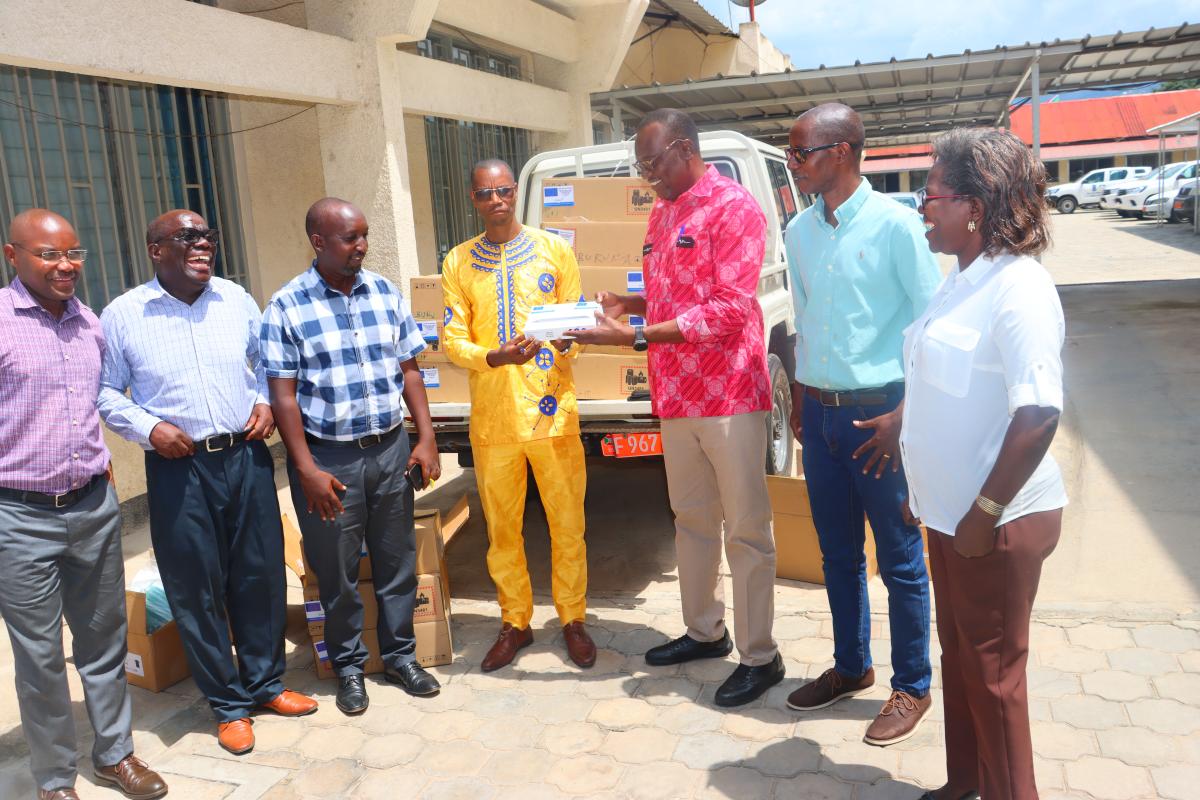
Au Burundi : le numérique au service de soins gratuits de qualité
Jean BIRONKWA | 24/03/2026
Renforcer la transparence et la performance du FBP-Gratuité grâce aux mécanismes de vérification et de validation à travers la digitalisationLe Burundi a mis en place le FBP-Gratuité (Financement Basé sur la Performance couplé à la Gratuité des soins) comme stratégie clé pour améliorer l’accès équitable à des soins de santé de qualité, en particulier pour les femmes enceintes et les enfants de moins de cinq ans. Ce mécanisme repose sur le paiement des prestations fournies par les formations sanitaires, en tenant compte non seulement du volume des services offerts, mais aussi de leur performance et de la qualité des soins. Afin de garantir la fiabilité des données servant de base au paiement, le ministère de la Santé Publique (MSP) a instauré des mécanismes rigoureux de vérification, de contre-vérification et de validation. Ces étapes assurent que les informations utilisées sont conformes aux normes établies et reflètent fidèlement les services réellement rendus à la population.Pour contribuer à ce mécanisme, l’Union européenne, à travers le Programme UE-PASS-FBP3 “AMAGARA MU MURYANGO” mis en œuvre par Enabel, a soutenu financièrement la digitalisation du processus de vérification. Les principales avancées comprennent trois aspects : l’interopérabilité entre la base de données du FBP et celle du système national d’information sanitaire (SNIS) ; la digitalisation de la collecte des données quantitatives et qualitatives grâce à l’utilisation de tablettes et l’intégration d’un module de vérification basée sur le risque dans la plateforme FBP-Gratuité. Pour renforcer les capacités des acteurs impliqués, 350 tablettes ont été remises aux vérificateurs en charge de la vérification des données afin de faciliter la collecte mobile des données. Parallèlement, un programme de formation a permis de renforcer les compétences des vérificateurs au niveau périphérique dans l’ensemble du système de santé burundais.L’introduction du module de vérification basée sur le risque constitue une avancée majeure, elle permet de maîtriser les coûts de vérification en ciblant les contrôles sur les données sensibles, plutôt que de procéder à une vérification systématique. De plus, l’interopérabilité entre les bases de données du FBP et du SNIS garantit une facturation plus fiable et transparente du FBP-G tout en améliorant la qualité des données du système national d’information sanitaire
-
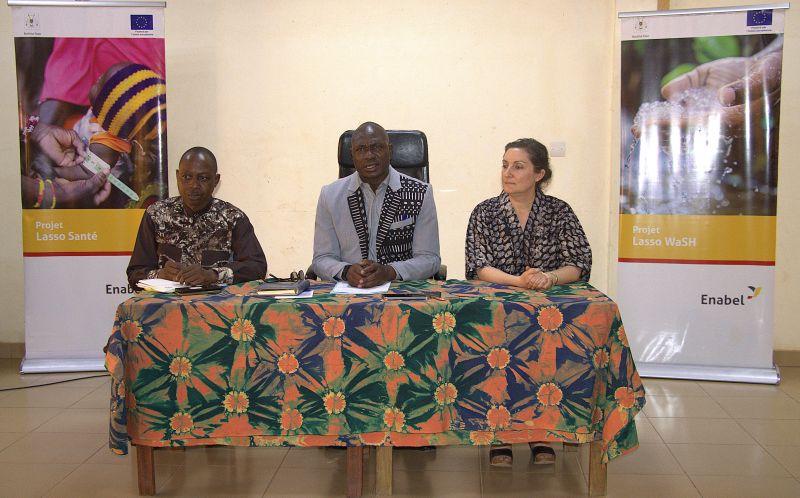
Burkina Faso : des enseignements clés pour des actions en santé plus efficaces
Geoffroy ZONGO | 23/03/2026
Restitution des études des Projets Lasso Santé et WASH : une étape stratégique pour renforcer l’impact des interventions dans le Bankui Le 18 mars 2026, la ville de Boromo a accueilli un atelier régional consacré à la restitution de trois études réalisées dans le cadre des projets Lasso Santé et Lasso WASH, financés par l’Union européenne et mis en œuvre par Enabel, l’Agence belge de coopération internationale. Pour la région du Bankui, cette rencontre marque un tournant stratégique dans la planification des actions à mener au bénéfice des populations. Ces deux projets, qui couvrent la période 2024–2027, visent à améliorer durablement la qualité et l’accessibilité des services de santé, de l’eau, de l’hygiène et de l’assainissement, tout en renforçant la résilience des communautés les plus vulnérables en particulier les femmes, les jeunes filles et les personnes déplacées. Lasso Santé dispose d’un budget de 6,1 millions d’euros et intervient dans 17 communes, tandis que Lasso WASH est doté de 5 millions d’euros avec 6 communes d’intervention, preuve de l’engagement fort de l’Union européenne dans le développement humain et social du Burkina Faso. Des études structurantes pour une mise en œuvre efficaceAu cours de l’année 2025, trois études clés ont été conduites par des institutions spécialisées. Ces études sont : une étude de base et d’identification des besoins prioritaires, une recherche mixte (quantitative et qualitative), et, une étude sur les déterminants comportementaux. Ces travaux constituent un socle d’informations fiables, essentielles pour orienter les décisions opérationnelles. Le recours à des données probantes permet d’ajuster les interventions aux réalités du terrain, notamment dans un contexte marqué par des défis humanitaires et socio-économiques persistants. Lors de l’atelier, les équipes du Centre Muraz, de KENEA Impact et du cabinet 3IR ont présenté les résultats détaillés, suscitant des échanges nourris avec les parties prenantes notamment ; autorités régionales, services techniques déconcentrés, organisations de la société civile et représentants des communautés locales. Un engagement fort des autorités régionalesPrésidant les travaux, le Gouverneur des régions du Bankui et du Sourou, Babo Pierre BASSINGA a souligné l’importance stratégique de ces études pour la réussite des projets. Il a rappelé que la région fait face à des besoins importants en matière de santé, d’eau potable et d’assainissement, notamment pour les femmes, les jeunes filles et les personnes déplacées internes. Dans son allocution, il a déclaré que les analyses présentées « permettent désormais d’avoir une vision claire des réalités du terrain et des priorités d’intervention ». Il a insisté sur la nécessité de fonder les décisions publiques sur des données fiables, particulièrement dans un contexte de ressources limitées et de besoins croissants. Le Gouverneur a également salué l’engagement d’Enabel et de l’Union européenne, avant d’appeler à une mobilisation collective : « Nous nous engageons, avec l’ensemble de nos services techniques et de nos communautés, à accompagner pleinement Enabel dans la mise en œuvre des recommandations issues de ces études. Notre collaboration est essentielle pour améliorer durablement les conditions de vie des populations. » La vision d’Enabel : des interventions ancrées dans les réalités localesJulie VAN DER SMISSEN, Programme Manager à Enabel a réaffirmé l’importance de cette étape dans le cycle de mise en œuvre des projets. Elle a rappelé que l’approche adoptée par Enabel repose sur la co-construction, le partenariat et la prise en compte des spécificités locales. Elle a indiqué que les résultats des études « constituent une base solide pour renforcer la pertinence et l’efficacité des interventions », soulignant que les recommandations formulées permettront d’ajuster les stratégies au plus près des besoins identifiés. Julie a également mis en avant le rôle central des autorités locales et des communautés : « La réussite des projets Lasso repose sur une collaboration étroite entre les collectivités territoriales, les services techniques, les partenaires et les populations. Les échanges d’aujourd’hui renforcent notre conviction que cet engagement collectif est réel et porteur d’impact. ». Elle a conclu en remerciant les institutions ayant conduit les études pour « la qualité et la rigueur du travail fourni », ainsi que l’ensemble des participants pour leurs contributions. Des perspectives prometteuses pour les populations La validation des résultats et recommandations ouvre la voie à une phase opérationnelle mieux ciblée. Les futures activités des projets Lasso Santé et WASH intégreront les éléments issus des études afin de maximiser leur impact. Cela concerne notamment : l’amélioration de l’accès aux services de santé, l’amélioration des conditions d’accès aux services d’eau potable, le renforcement des infrastructures d’assainissement d’une part et, les bonnes pratiques d’hygiène et d’assainissement d’autre part, et la mise en place d’approches comportementales adaptées.Pour les populations des zones d’intervention, ces avancées représentent l’espoir de services sociaux de base plus accessibles, plus inclusifs et plus résilients.Cette journée de restitution démontre l’importance du dialogue, du partage d’informations et du travail collaboratif pour améliorer la qualité des interventions. Elle illustre également la dynamique constructive entre Enabel, l’Union européenne, les autorités régionales et les communautés locales.
-
En RDC, la mobilisation citoyenne relance les travaux communautaires
Paola VANGU TSAKALA | 19/03/2026
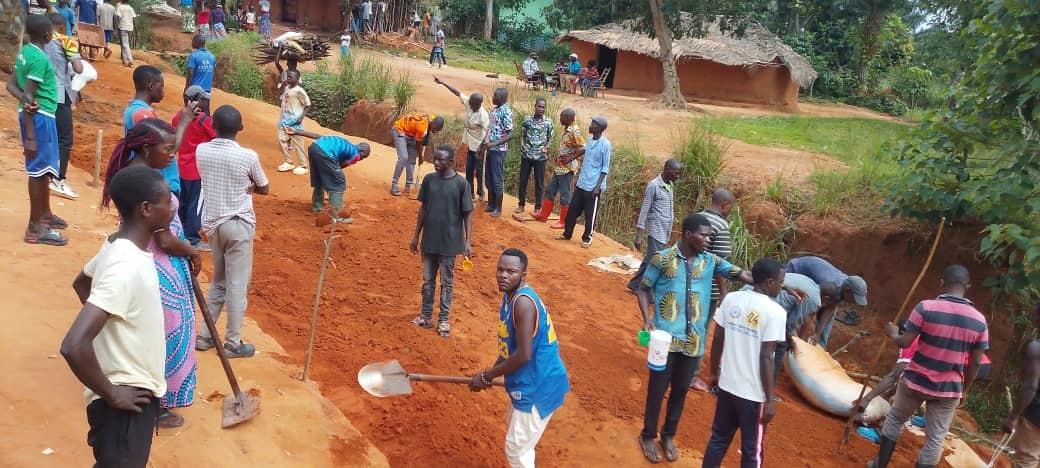
Une dynamique collective retrouvéeAu Sud-Ubangi, le Comité Communal/Local de Développement (CCD/CLD) de Mugila a insufflé une nouvelle dynamique aux travaux communautaires d'assainissement, grâce à l'appui technique du projet Participation citoyenne. Là où la mobilisation était autrefois quasi inexistante, les habitants se réapproprient désormais ces initiatives collectives. « Rassembler les habitants pour les travaux communautaires était un véritable défi avant. Aujourd'hui, chaque quartier mobilise environ 25 personnes lors des séances de salongo, organisées deux fois par semaine », témoigne Demongawi Swange, chef du quartier Sukya.Une gouvernance locale renforcéeCet engagement collectif illustre l'émergence d'une gouvernance locale participative, portée par le comité. En favorisant l'implication directe des citoyens, le CCD/CLD renforce l'appropriation des actions de développement par la communauté elle-même. Au-delà de l'assainissement, un mieux-être partagé La mobilisation ne se limite plus à l'assainissement. Elle s'étend à des actions concrètes touchant au bien-être collectif, notamment le dégagement des voies et l'amélioration du cadre de vie. « Au-delà de l'assainissement, notre mobilisation s'étend à des actions concrètes qui améliorent le bien-être collectif, comme le dégagement des voies dans notre commune de Mugila » , explique Mireille Molenge, présidente du comité. Une communauté actrice de son développement À travers cette dynamique, Mugila s'engage résolument sur une voie de développement portée et construite par ses propres habitants. Une transformation qui illustre le potentiel de la participation citoyenne comme moteur de changement durable au niveau local.
-
Au Bénin la coopération belge tient ses promesses
Reece-hermine ADANWENON | 18/03/2026
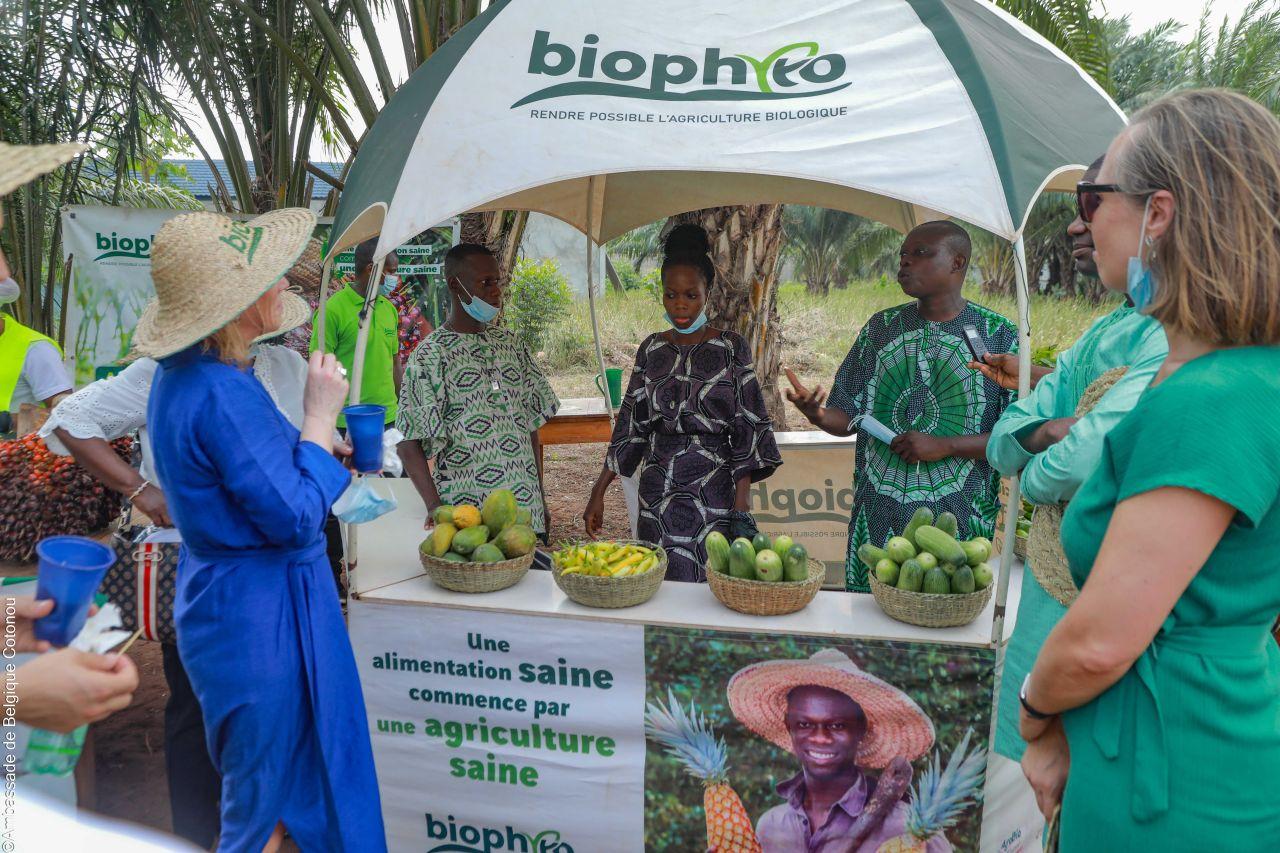
Des actions qui améliorent le quotidien des populations Le mardi 10 mars 2026, Heidy Rombouts, Directrice Générale de la Coopération au Développement belge, accompagnée de l'Ambassade de la Belgique près le Bénin, Mme Sandrine Platteau et du Directeur d'Enabel Bénin Olivier Krins, a effectué une visite de terrain dans la commune d'Allada. Objectif : voir de ses propres yeux ce que la coopération belge construite, avec les Béninois, pour les Béninois. Au Bénin, courant mois de mars, la saison des pluies ne s'annonce pas. Elle arrive. Et ce mardi 10 mars, elle est tombée sur Allada avec cette insistance propre au Sud-Bénin. Mais rien n'a ralenti l'agenda. Ni les délégations. Ni les échanges. Car ce type de mission ne se fait pas en salle de réunion : il se fait au milieu des acteurs qui font, chaque jour, avancer les projets. Heidy Rombouts, en visite officielle au Bénin du 9 au 11 mars, portait ce jour-là un objectif clair : observer le réel, rencontrer les communautés, évaluer l'impact. Pas de présentation PowerPoint. Pas de salle de conférence climatisée. Du concret. Trois visites, trois preuves d'impact 1) Au Port autonome de Cotonou, maillon stratégique de l'économie béninoise et de la connectivité régionale, elle a vu , les résultats qui parlent : modernisation, compétitivité, ambition environnementale, digitalisation et de la performance. Le partenariat entre le Bénin, la Belgique et l'Union européenne démontre toute sa valeur ajoutée. 2) Le centre SONU : quand la formation sauve des vies À Allada, elle a découvert comment l'appui à la santé sexuelle et reproductive sauve des vies, renforcer les compétences des prestataires et améliorer la qualité des soins. Les résultats sont sans appel. En trois ans, plus de 1 500 prestataires de santé formés. Leurs compétences sont passées d'environ 55 % à 90 %. Et le taux de mortalité maternelle dans la zone sanitaire d'Allada est passé de 165,1 à 138,2 pour 100 000 naissances vivantes entre 2022 et 2025. Ce modèle combinant e-learning, simulation pratique et mentorat par des sages-femmes expérimentées a été ultérieurement adopté comme politique nationale du Bénin. Il sera déployé dans les 34 zones sanitaires du pays, dont 5 portées supplémentaires par Enabel dans le cadre du programme P@SRIS (2023-2028, 12 millions d'euros). La délégation a également visité les Cabines d'écoute de la Plateforme Nationale des Usagers des Services de Santé (PNUSS) : 11 espaces confidentiels répartis dans 7 départements, 87 351 usagers accompagnés, 3 048 plaintes déposées dont plus de 80 % résolues en 72 heures. Un outil de redevabilité reconnu par le Ministère de la santé béninois. 3) Elle a également visité Biophyto,une entreprise béninoise est devenue une référence dans la production d'engrais organiques et de bio-pesticides. Derrière cette réussite, il y a une vision, un engagement entrepreneurial fort, mais aussi la cohérence d'un appui belge qui a su mobiliser plusieurs instruments complémentaires pour accompagner la croissance, l'emploi décent et l'expansion régionale d'une entreprise qui emploie aujourd'hui 90 salariés permanents, dont 85 % de femmes, et travaille avec environ 2 000 femmes collectrices. Mais derrière les chiffres, il y a une histoire humaine. Celle de son Directeur Général, Gildas Zodomey, dont la famille a été endeuillée par l'ingestion de denrées contaminées aux pesticides chimiques. De ce drame personnel, il a construit un acte entrepreneurial : produire autrement, protéger la santé et les sols, offrir un avenir aux femmes rurales. La coopération belge a accompagné cette trajectoire à chaque étape : Enabel via le programme DEFIA (assistance technique, subventions, renforcement de capacités), le Business Partnership Facility de la Fondation Roi Baudouin (200 000 €), Kampani, le fonds d'investissement belge à impact (500 000 €) et depuis 2026, BIO-Invest avec un financement de 2,75 millions d'euros. S'y ajoute un don de deux carbonisateurs via Finexpo, instrument des SPF Affaires étrangères. Un continuum d'appuis. Une logique de système. L'approche Team Belgium dans toute sa cohérence. Cette mission nous rappelle avec force que : la coopération au développement est utile lorsqu'elle est ancrée dans les réalités, portée par des partenariats solides et orientée vers des résultats durables pour les populations.
-
Ukraine: Enabel launches an initiative to support mental health of healthcare providers
Taisiia DRUZIUK | 18/03/2026
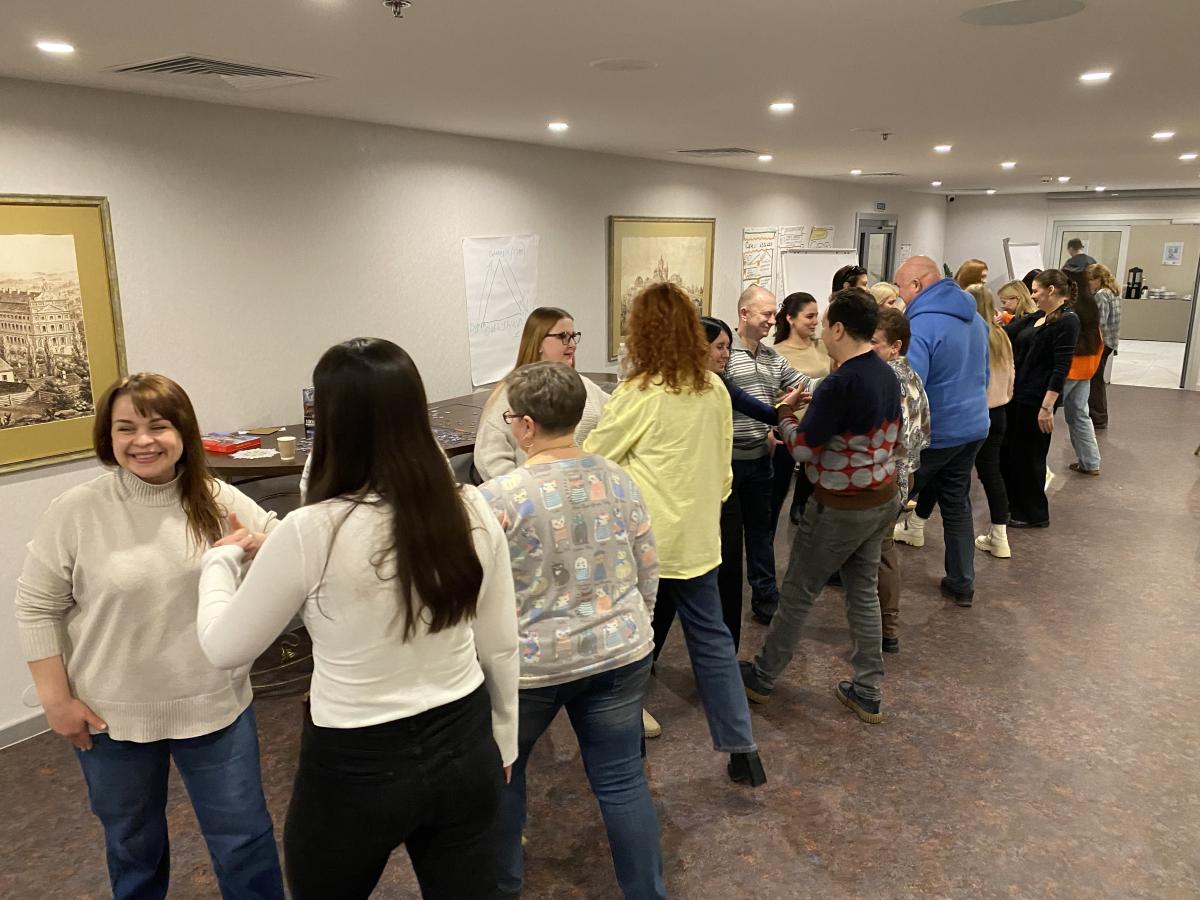
Healthcare professionals face extremely high levels of stress. Since the start of the full-scale war in Ukraine, this pressure has grown even greater. Enabel in partnership with the Ministry of Health of Ukraine is launching an initiative to support the mental health of healthcare providers. The project takes a comprehensive approach: establishing psychological relief rooms and providing training on stress and burnout prevention. The first spaces will be established in six healthcare facilities in the Kyiv and Chernihiv regions that are being renovated and equipped with support from Belgium. These include Kyiv Regional Clinical Hospital, Pryluky Central City Hospital, Koriukivka District Hospital, Kyiv City Clinical Hospital No. 8, Bila Tserkva City Hospital No. 2 and Kozelets Intensive Care Hospital.To gain deeper insight into the real needs of staff in self-managing high level of stress, we organised a training for 60 healthcare workers from these facilities. Participants shared their ideas for creating psychologically safe spaces and explored different stress-management techniques. A separate session focused on developing standard operating procedures for the use of these spaces. Common requests voiced by healthcare providers included fair access to the rooms and the possibility to take a break without having to justify it to their supervisors and colleagues.The next steps in developing the initiative are setting up recovery spaces in selected hospitals and supervisory visits to these facilities.
-
Au Mali, une nouvelle dynamique pour une agriculture locale plus résiliente au climat
Geoffroy ZONGO | 16/03/2026
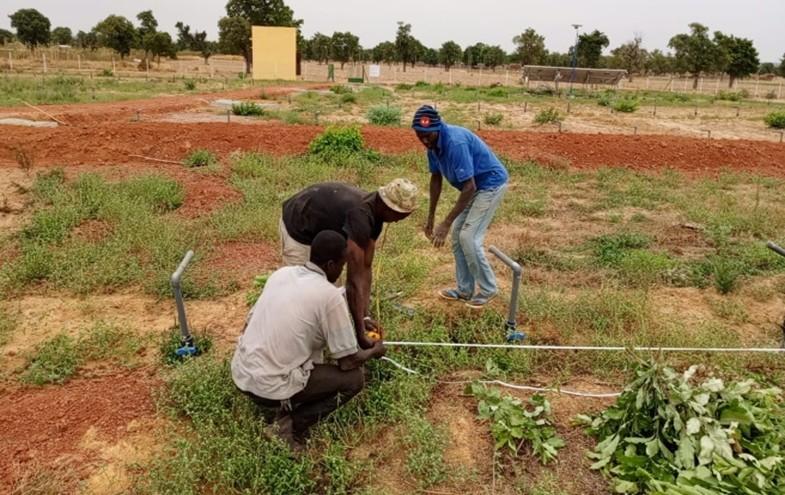
Face aux effets de plus en plus visibles des changements climatiques sur les moyens de subsistance des populations rurales, les initiatives visant à renforcer la résilience communautaire se multiplient au Mali. C’est dans cette dynamique que s’inscrit le Portefeuille Thématique Climat Sahel (PTCS) – volet Mali, qui enregistre des avancées significatives dans la mise en œuvre de ses activités maraîchères au profit des communautés locales. Dans plusieurs localités rurales, les actions entreprises commencent déjà à produire des résultats encourageants. Quatre périmètres maraîchers ont récemment été aménagés dans les villages de Babougou, Nadiobougou, Kènèkélé (commune rurale de Doumba) et Monzona (commune de Koula). Ces réalisations constituent une étape importante dans la stratégie de soutien aux populations vulnérables, confrontées à l’irrégularité des pluies, à la dégradation des sols et à la baisse des rendements agricoles.À la suite de la remise officielle de ces infrastructures aux communautés bénéficiaires, les premières activités de production ont démarré avec une forte mobilisation des exploitants·es. Sur le terrain, les résultats obtenus témoignent d’une dynamique positive et d’un engagement remarquable des populations concernées. Le parcellement des périmètres figure parmi les premières avancées enregistrées. Les espaces aménagés ont été entièrement morcelés, permettant l’attribution des parcelles à 150 bénéficiaires, dont 142 femmes et 8 hommes. Cette forte implication féminine souligne l’importance du maraîchage comme levier d’autonomisation économique des femmes rurales, tout en contribuant à la sécurité alimentaire des ménages.Par ailleurs, la confection des planches de culture a été réalisée par l’ensemble des bénéficiaires, marquant une étape essentielle dans la préparation de la campagne agricole. Les exploitants ont également procédé à la mise en place des premières pépinières, traduisant leur volonté d’assurer un démarrage rapide et efficace des activités. Les premières opérations de repiquage ont déjà commencé, notamment avec la culture d’échalotes, symbole du lancement effectif de la production maraîchère. Ces résultats encourageants laissent entrevoir de bonnes perspectives pour la première campagne agricole. Les communautés bénéficiaires espèrent non seulement améliorer leurs revenus, mais aussi diversifier leur alimentation et réduire leur vulnérabilité face aux aléas climatiques.Au-delà des résultats immédiats, cette initiative s’inscrit dans une vision plus large de développement durable et d’adaptation climatique. En soutenant la production maraîchère, le PTCS volet Mali contribue à renforcer les capacités locales, à promouvoir des pratiques agricoles adaptées au contexte sahélien et à améliorer durablement les conditions de vie des populations rurales. Il convient de rappeler que le Portefeuille Thématique Climat Sahel (PTCS) – volet Mali est financé par le Royaume de Belgique et mis en œuvre par Enabel, l’Agence belge de coopération internationale. L’objectif est de soutenir des solutions concrètes et durables face aux défis climatiques qui impactent fortement les communautés locales du Sahel. Alors que la campagne maraîchère débute sous des signes encourageants, les bénéficiaires et les parties prenantes du PTCS volet mali restent mobilisés pour accompagner cette dynamique et transformer ces premiers résultats en succès durables pour les communautés rurales maliennes.
-

Affordable healthcare in Uganda is possible - A Community-Based Health Insurance member's story
John CANDIGA | 16/03/2026
What if accessing healthcare didn’t mean risking financial hardship?In this video, CBHI (Community-Based Health Insurance) member Mrs. Isabella Bagambaki shares how community health insurance has helped her family seek care without fear of high medical costs.By pooling small, affordable contributions, CBHI reduces out-of-pocket expenses, encourages early treatment, and protects households from falling into poverty due to illness.
-

Promoting affordable healthcare in the communities of Uganda through Community-Based Health Insurance
John CANDIGA | 16/03/2026
Universal health coverage starts at the community level, and Community-Based Health Insurance (CBHI) is making that possible.We highlight the actors driving the Community-Based Health Insurance (CBHI) uptake, including project staff, CBHI coordinators, and District Health Officers, working together to build trust, mobilise households, and expand access to health protection.When communities and local authorities work together, families gain confidence to enrol, access care, and stay protected, a vital step toward stronger health systems and inclusive social protection for all.
-
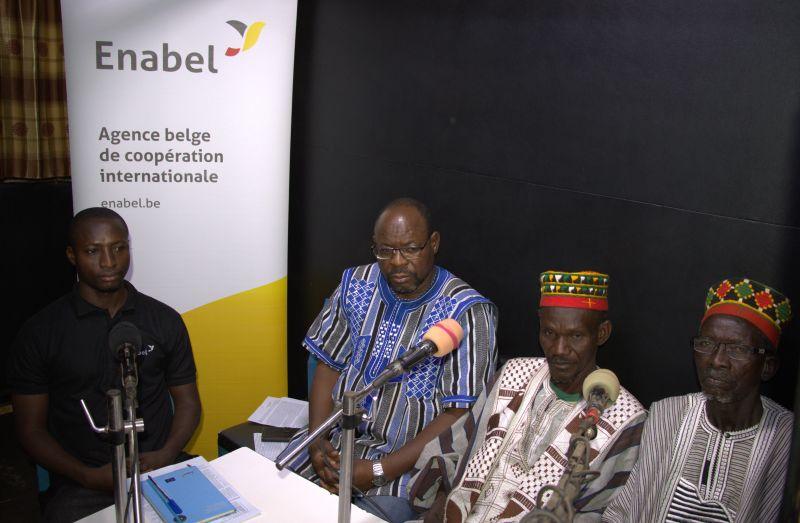
Burkina Faso : une émission radiophonique pour prévenir les conflits locaux
Geoffroy ZONGO | 16/03/2026
Quand l’information aide à apaiser les tensions et à éclairer les populations sur la sécurisation foncière et la prévention des conflitsLe samedi 28 février 2026, les ondes de Radio ZAMA FM, station émettant depuis Kaya et couvrant l’ensemble de la zone jusqu’à Pibaoré, ont vibré au rythme d’une émission spéciale consacrée à la sécurisation foncière rurale, à la prévention des conflits et au rôle de l’Attestation de Possession Foncière Rurale (APFR).Cette initiative s’inscrit dans le cadre du Portefeuille Thématique Climat Sahel – Volet Burkina Faso (PTCS-BFA), mis en œuvre par Enabel et financé par le Royaume de Belgique. Modérée par le journaliste Wendata OUÉDRAOGO, l’émission a réuni autour de la table plusieurs acteurs clés, dont Nebnoma Norbert OUEDRAOGO, Chargé de projet – Gouvernance Locale à Enabel, intervenant comme représentant de l’agence belge de coopération internationale. L’Observatoire national du foncier au Burkina Faso (ONF‑BF), les autorités coutumières et un représentant des bénéficiaires ont également pris part à cette session d’échanges interactifs. Renforcer la compréhension des populations sur l’APFR et le foncier ruralDès l’ouverture, le journaliste a rappelé le contexte : la remise officielle, la veille, de 100 APFR à Kaya dans le cadre du PTCS‑BFA, un jalon majeur pour la sécurité foncière des communautés locales. Nebnoma Norbert OUEDRAOGO, représentant Enabel, a expliqué les fondements de l’engagement de l’agence : « Le PTCS‑BFA vise à renforcer la résilience des communautés face aux effets du changement climatique en améliorant la gestion durable du foncier. La sécurisation foncière est un pilier essentiel pour prévenir les conflits et favoriser le développement local ». Il a mis en exergue le rôle d’Enabel : appui technique, accompagnement méthodologique, appui logistique aux procédures locales et facilitation de l’accès aux documents fonciers via le projet Soutien à la Décentralisation foncière, à la Prévention et à la Gestion des Conflits (SDF‑PGC), mis en œuvre par l’ONF‑BF.Démystifier les procédures d’obtention de l’APFRL’intervention du représentant de l’ONF‑BF Adama DEME s’est voulue pédagogique, rappelant les étapes du processus d’obtention de l’APFR : dépôt de la demande auprès de la commission foncière villageoise, réception de la demande au niveau du service foncier rurale, sortie terrain de l’agent domanial (prise de coordonné, réalisation de croquis), dépôt du dossier auprès des services de la direction régionales des impôts (RDPF et cadastre) pour requérir leur avis, publication foncière, constatation contradictoire (assortie de PV), paiement des coûts locaux par le demandeur, signature de l’APFR par le président du conseil de collectivité. Il a également souligné l’importance de vulgariser les textes juridiques et de soutenir les populations dans des procédures souvent jugées longues ou complexes.Le rôle crucial des autorités locales et coutumières L’émission a mis en lumière les défis rencontrés par la mairie de Pibaoré en matière de gestion foncière : pression croissante sur les terres, méconnaissance des procédures administratives par les usagers, et nécessité d’une coordination étroite avec les acteurs coutumiers. Les chefs coutumiers, garants de la légitimité sociale en matière de foncier, ont rappelé leur implication décisive dans l’identification des détenteurs coutumiers, la validation communautaire des limites parcellaires et la prévention des litiges. Leur rôle, ont-ils souligné, est essentiel pour instaurer un climat de confiance et garantir la pérennité des initiatives foncières. Témoignages des bénéficiaires : une transformation concrète du quotidien Au fil de l’émission, un représentant des bénéficiaires a partagé son expérience, soulignant l’impact de l’APFR sur la sécurité et la sérénité de son exploitation agricole : « Obtenir l’APFR, c’est être enfin sûr que la terre que l’on cultive depuis des années nous appartient officiellement. Cela ouvre aussi des perspectives nouvelles : accès au crédit, investissement dans la terre, transmission à nos enfants. » Ce témoignage a permis d’illustrer la portée réelle des actions entreprises : la sécurisation foncière ne se limite pas à un document administratif, elle transforme durablement les perspectives économiques des ménages ruraux.Un outil puissant de prévention des conflits Tous les intervenants s’accordent sur le fait que la sécurisation foncière est un levier majeur de paix sociale dans les zones rurales du Burkina Faso. Les conflits liés à la terre y sont fréquents, et l’absence de documents officiels crée ambiguïtés, tensions et parfois violences. L’émission a rappelé que l’APFR, en clarifiant les droits, contribue directement à réduire les litiges et à renforcer la cohésion sociale. La séance d’échanges avec les auditeurs a d’ailleurs permis d’apporter des réponses précises aux préoccupations liées à ces tensions. Une émission interactive au service du développement local En clôturant l’émission, le journaliste a salué l’engagement du PTCS‑BFA et l’implication de tous les acteurs. Il a rappelé que cette initiative n’est qu’une composante d’un programme plus large visant à promouvoir un foncier sécurisé, inclusif et durable, condition indispensable à la résilience climatique et au développement rural. Grâce à cette émission, les populations de Kaya, Pibaoré et des villages environnants ont bénéficié d’un temps d’éclairage, de dialogue et d’information structuré, renforçant ainsi leur compréhension des enjeux fonciers et leur capacité à entreprendre des démarches pour sécuriser leurs terres.