Turning UGX 100,000 into a growing poultry enterprise in Uganda
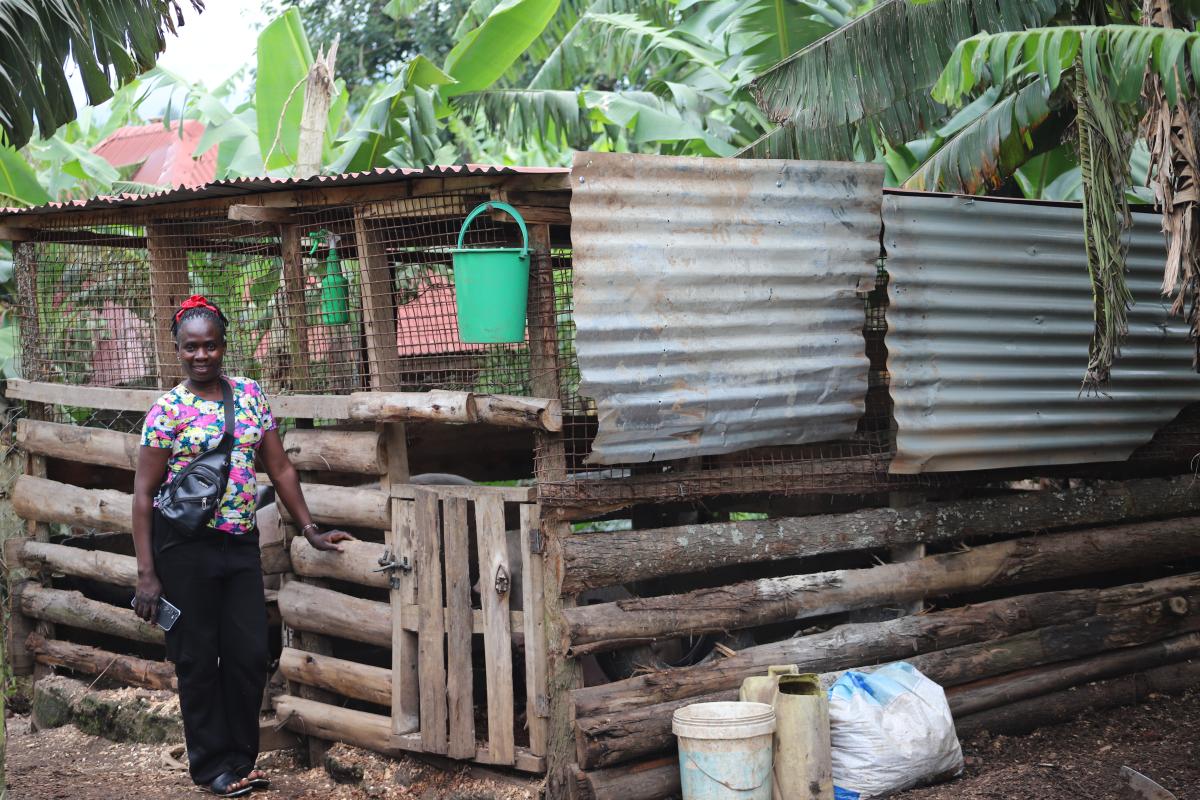
When Ritah Asaba became a caretaker for a family home, she
noticed an unused poultry structure on the property. Before her employers
travelled abroad, she asked whether she could use it to start a poultry
business, and they agreed. At the time, she had only UGX 100,000 (€24), far too little to
begin.
A friend whose wife had participated in the WeWork – green
and decent jobs for youth project introduced her to it. The project
is implemented by Enabel in partnership with Ile de Paix and The Association of
Rwenzori Community (RCA), with funding from the European Union and the
Government of Belgium. Ritah attended the residential bootcamp, where she
learnt poultry management, brooder preparation, and how to treat birds using
herbs such as garlic, ginger, and aloe vera. She also learnt that outstanding
participants could qualify for a UGX 1 million (€239), micro‑grant.
“I decided I would put everything I had learnt into practice,” she says.
The project provided her with 50 kilogrammes of
concentrate and 50 kilogrammes of pre‑starter feed as her preferred start‑up
kit. To buy chicks, Ritah borrowed UGX 300,000(€72)
and combined it with her own UGX 100,000, enabling her to purchase 100 chicks.
When she sold her first flock to Nyaika Hotel, she earned a profit of UGX
500,000. The hotel has continued buying from her, although at the time of the
interview she was still waiting to receive payment for one delivery.
Ritah has since expanded her business to 300 birds. She
also received the UGX 1 million (€239), micro‑grant
awarded after Ile de Paix carried out assessments during mentorship sessions to
identify youth with strong potential to grow their businesses. The evaluation
and selection were conducted by an independent firm to ensure transparency.
Riita invested the grant in more feeds and additional stock, further
strengthening her enterprise. Following the project’s advice on
diversification, she used part of her poultry profits to buy a pig, which has
since produced 12 piglets.
“I have really benefited. I can even teach other young
people how to rear poultry because it has helped me so much,” she says. Riita
combines poultry farming with her responsibilities as caretaker for her
employers’ home and children. She is also an energetic marketer. “I can carry
four birds in my hands and walk around the neighbourhood looking for customers.
By the time I come back, I have sold them.” She also advertises her birds
through the WhatsApp group formed by entrepreneurs who attended the WeWork bootcamp
together.
Although fluctuating market prices remain a challenge,
Riita continues looking for new customers and investing in her business. “I
know I am a hardworking woman,” she says. Her next plan is to expand both her
poultry and pig enterprises, using each one to strengthen the other as her
business continues to grow.
Latest news from this project
No news