Search
Viewing 1 to 15 of 3052 news
-
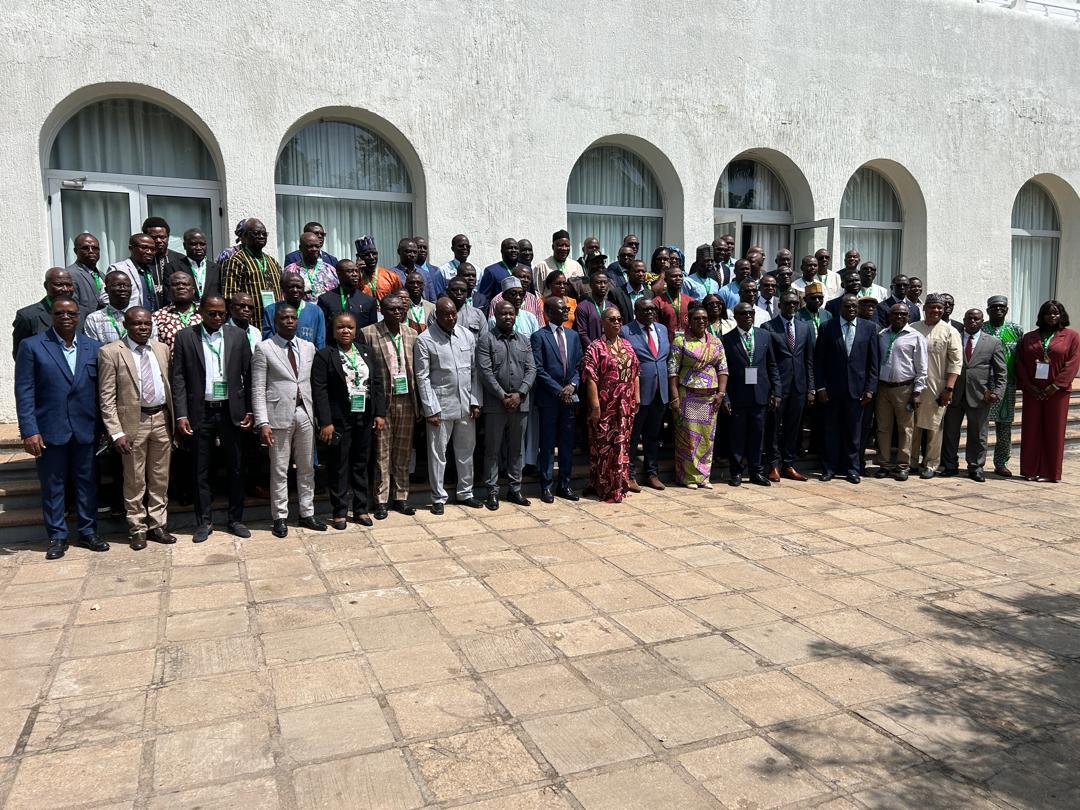
Santé animale : le PRADEP-AOS présent à la réunion régionale des réseaux de la CEDEAO à Lomé
Aminata KANE | 15/10/2026
Du 6 au 8 octobre 2026, le Dr Mamadou Lamine Dia, Expert en santé animale du PRADEP-AOS Couloir Ouest, a participé à Lomé à la 11e réunion annuelle des Réseaux de santé animale de la CEDEAO (RAHN11). Cette rencontre, organisée par le Centre Régional de Santé Animale de la CEDEAO, a réuni les services vétérinaires de plusieurs pays, ainsi que la FAO, l’OMSA, l’UA-BIRA, la GIZ et d’autres partenaires.Ce qui a été discutéSurveillance : les participants ont fait le point sur la situation de l’influenza aviaire et de la fièvre de la Vallée du Rift, et insisté sur le partage d’informations et l’approche « Une seule santé ».Commerce du bétail : une étude comparative a montré que les réglementations nationales sont parfois vétustes et très différentes d’un pays à l’autre, ce qui freine les échanges. Une directive CEDEAO sur le commerce du bétail est recommandée.Information sanitaire : les États ont été invités à désigner leurs points focaux pour le Système régional d’information en santé animale (RAHIS). Une feuille de route de déploiement court de novembre 2026 à juin 2027.La contribution du PRADEP-AOSLe Dr Dia a présenté les priorités du programme en santé animale : surveillance et alerte précoce, contrôle vétérinaire aux frontières, vaccination transfrontalière, lutte contre les faux médicaments et coordination « Une seule santé ». En marge de la réunion, il a échangé avec les services vétérinaires du Sénégal et du Mali sur l’harmonisation des campagnes de vaccination et les mandataires sanitaires.
-
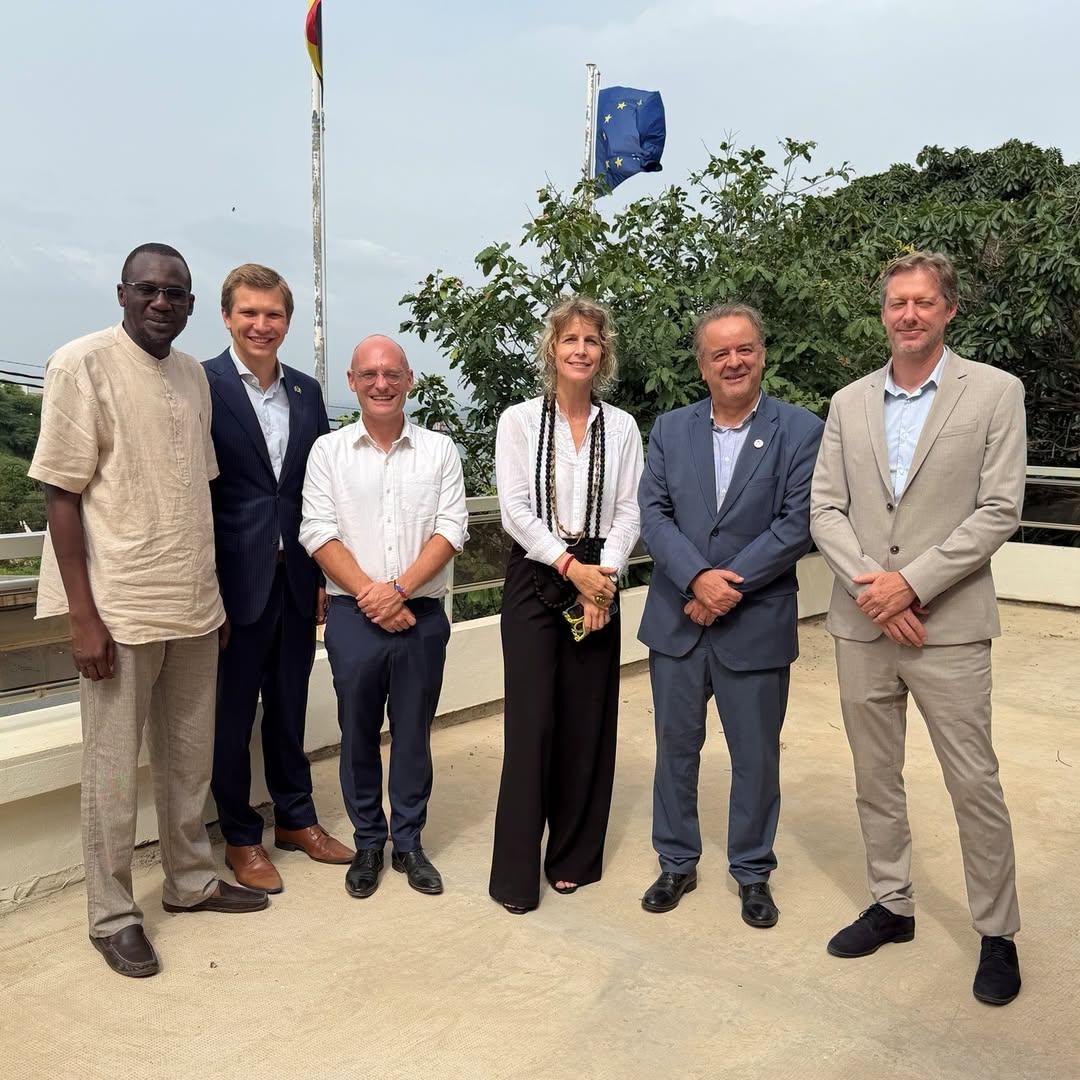
PRADEP-AOS Couloir Ouest : l’équipe réunie à Dakar pour planifier les activités à venir
Aminata KANE | 15/10/2026
Fin septembre 2026, l’équipe du PRADEP-AOS Couloir Ouest s’est réunie à Dakar pour un atelier interne de consolidation des indicateurs et de programmation des activités, avec les partenaires techniques IRAM et AVSF. Enabel, l’Agence belge de coopération internationale, met en œuvre ce Couloir en Mauritanie, au Mali, au Sénégal et en Guinée.Trois temps fortsLes indicateurs : le cadre logique a été passé en revue résultat par résultat. Certains indicateurs ont été maintenus, d’autres reformulés pour être mieux renseignés, d’autres retirés.L’étude de contexte : les participants ont examiné les enjeux et les priorités de chaque zone de concentration. En santé animale, ils ont insisté sur la prévention des maladies transfrontalières et des zoonoses, le renforcement des postes vétérinaires frontaliers, la sécurisation des mouvements de bétail et la lutte contre les médicaments falsifiés.La planification : pour chaque activité, l’équipe a précisé la formulation, les indicateurs, les partenaires, les zones d’intervention, les livrables et le calendrier. Cette feuille de route servira de base au premier Comité technique de suivi et de gouvernance, en novembre en Guinée.Des rencontres institutionnellesEn marge de l’atelier, l’équipe a présenté le programme au nouveau Directeur pays d’Enabel au Sénégal, au Hub régional de l’Union européenne à Dakar et à Madame l’Ambassadrice de Belgique. Tous ont souligné l’importance du pastoralisme pour l’économie, l’environnement et la stabilité de la sous-région.
-
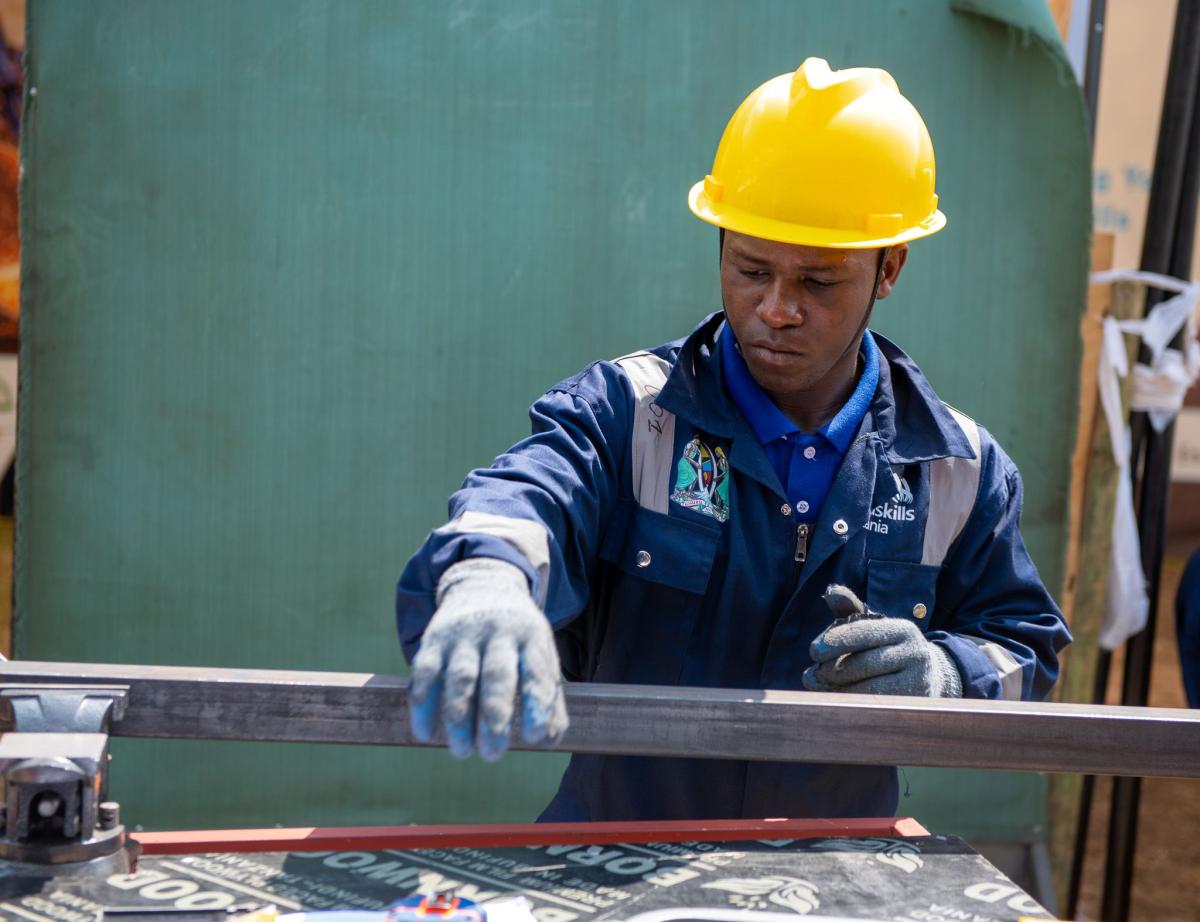
From Dreamful Welder to the Winner of Tanzania National Skills Competition 2026
Mkama MWIJARUBI | 15/10/2026
After completing primary education in 2017, his father took him to a welding workshop in Tanga to learn and grow. That is how Abdalah Mhando was set on a pathway to pursue a skill. After a couple of months, trusting he had learned enough and, hoping that the youngster would soon earn his own living, his dad sent him to an uncle in Dar es Salaam. In Dar es Salaam things did not pan out as expected. Abdallah returned to Tanga to look for jobs. His notable turn down was a sisal plantation. “The manager told me, you have some skill and effort, but you lack all credentials,” said Abdallah. The rejection hurt, but he did not dishearten him. A commissioned study through EU funded INCLU-CITIES project in Tanga, Mwanza and Pemba confirmed that hundreds of thousands of youths who often struggle to land decent jobs partly because employers required a set of skills that most job seekers do not even know they lacked. Abdallah’s pivotal moment came in 2025 with the announcement of sponsored opportunities to learn welding and metal fabrication at Vocational Education Training Authority (VETA) Tanga. Funded by the European Union and implemented by Enabel Tanzania, the training opportunities sought to equip youth with skills that prepared them for the demands of the job market. His fervent driven personality found a welcoming space in the well-equipped workshops and tutors. He participated in almost all classes, and stood out as one always ready to practice, ask questions and consult tutors. No wonder, when VETA Tanga picked learners from the welding class to participate in the skills competition at regional level, Abdallah was on the list. Among twelve competitors from different technical training centers, Abdallah came on top of the list of five that qualified from the regional competition to compete nationally. “It was unbelievable. My tutor called me to travel to the regional competition while I was in practical training at a factory in Tanga. I was sometimes nervous. It was my first ever competition,” he said. He said he learned a lot during the competition. Confidence, consulting with new people— equals and superiors— timed tasks and more important reading drawings and interpreting them fast and executing. He focused on sharpening his skills to interpret technical drawings into an items. In Tanga in August 2026, Abdallah secured top position in welding and metal fabrication in the national skills competition. “I’m grateful to Enabel and VETA for offering the learning opportunities that have supported me to develop my skills and show my capacity,” said Abdallah. The training under INCLU-CITIES has been designed to equip learners with technical and non-technical skills for the job market as employees or owners of small businesses. ends
-
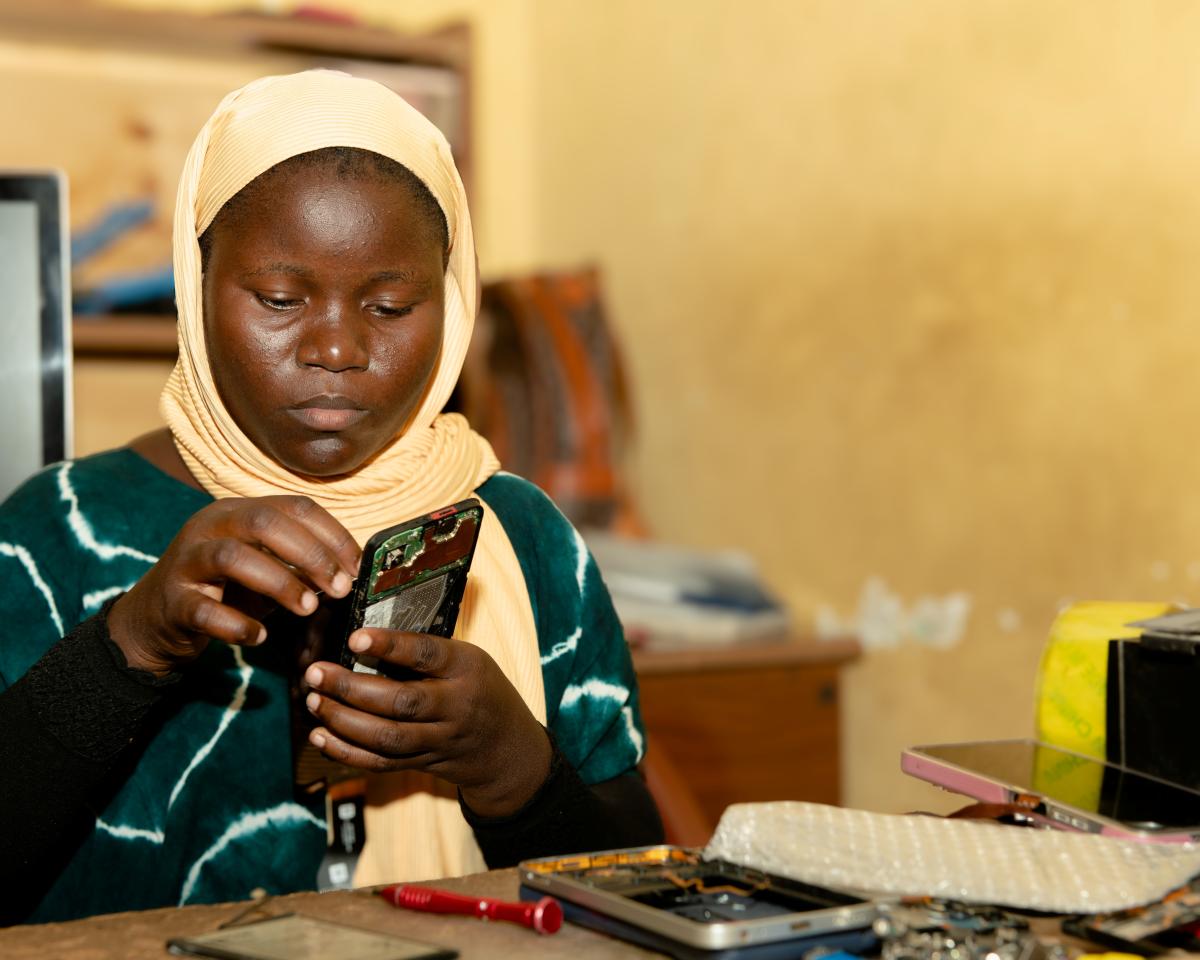
A New Skill Sets Anna on a Pathway to Self-Employment
Mkama MWIJARUBI | 15/10/2026
Anna Sanga did not want to stay idle after completing lower secondary school in Tanga. She pestered her parents to support her learn a trade that she can earn her own living. Youth aged 15—34 years old make 34 percent of Tanzania’s population according to official population census 2022. Many youth struggle to find decent jobs or run profitable enterprises because of mismatch in their qualifications and skills needed in the job market. Girls face a particularly more difficult situation because of gender stereotypes that exclude them from technical trades considered male. With funding from the European Union, Enabel Tanzania implements the Inclusive Green and Smart Cities (INCLU-CITIES) project in Mwanza, Pemba and Tanga. The project strengthens vocational training institutions, facilitates their linkage with employers, and promotes digital and green businesses in different value chains. With special emphasis on bringing girls in ‘traditionally’ male trades, INCLU-CITIES partnered with Vocational Education Training Authority (Kipawa) to deliver phone repair classes in Mwanza and Tanga. Anna’s father, a phone repairer too, heard it and nudged her daughter to go register. “I was worried as I went at VETA Tanga to register. I knew it is going to be all boys and men,” says the 21-year-old. And so, it was. She was relieved that in a class of 36 learners; she was among the three girls. Intervention INCLU-CITIES focuses on urban areas to support Tanzania’s government efforts to develop business opportunities, skilled jobs and resilient to dynamics of climate and environment changes. It is estimated that by 2050 more than half of the population of Tanzania will be living in urban areas. Vibrant businesses, skilled workforce and green investment will contribute to building liveable and inclusive cities. Anna found the phone repair classes at VETA useful. Theory and practical sessions helped the knowledge settle in. To facilitate transition from vocational training to jobs, INCLU-CITIES project coordinate collaboration between training institutions and employers. To sustain this collaboration beyond the project lifetime, a structure called Skills Development Platforms (SDPs) has been formed to bring together employers, training providers and other stakeholders. Their dialogues results in tweaking training programmes to suit labour market needs and increase employment opportunities for graduates. For Anna’s case, this linkage took her to phone repair master craft on 14th Avenue in Tanga town. Master crafts are well positioned to support apprentices with techniques and nuances they may not attain at campus classes and workshops. “Technical work is only part of what a successful phone repair craft person should know. I spend a lot of time guarding my apprentices on keys skills like confidence, customer care, and legal issues related to our trade,” says Hussein. He has been in phone repair trade for nearly 20 years. “Fundi Hussein has taught me that the first quality I must have is confidence. If you doubt your capacity to problem solving you will fail to diagnose and address issues a client brings,” says Anna. After spending time at VETA and now as apprentice at Hussein’s phone repair shop, she has gained confidence in diagnosing issues in phones and thinking about solutions. Content with her choice of trade, Anna is looking forward to opening her own shop to repair phone and sell phone accessories. Overall achievement VETA Kipawa,the only formal vocational training institution offering phone repair classes in Tanzania registered a total of 72 youth for classes delivered in Tanga and Mwanza in December 2025 to February 2026. Anna is among more than 600 youths from disadvantaged backgrounds who have completed work readiness program and acquired skills that increase their chances of securing employment and self-employment opportunities. They learned cage fish farming, gas welding, electricity, sewage, motorcycle repair, and phone repair. Ends
-
Bee keeping is no longer for men only
Mkama MWIJARUBI | 15/10/2026
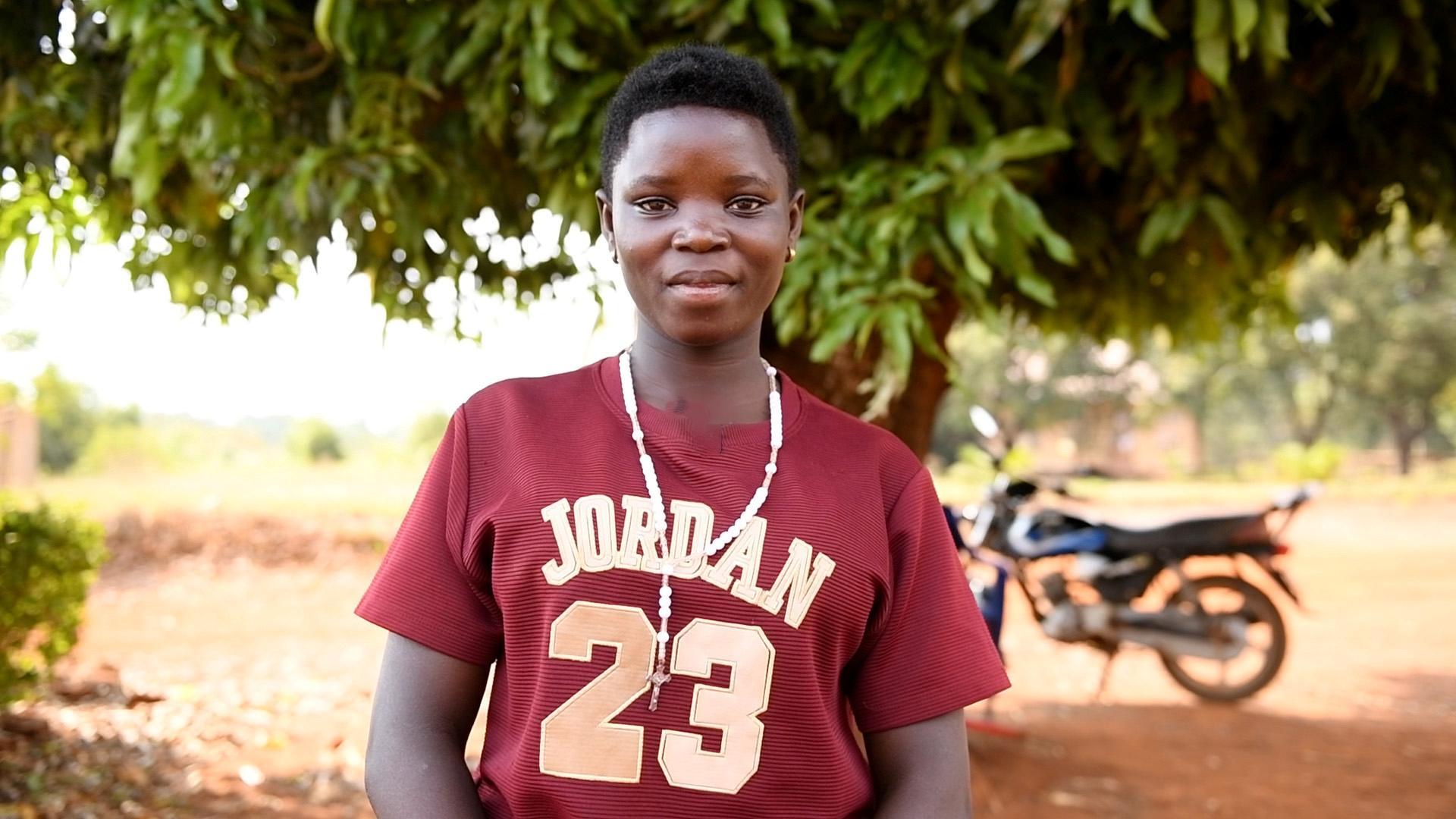
Dainess Issa Ali, a fourth child in her family of four girls and four boys, grew up in an extended family home with uncles and aunties and other siblings. She loved honey and always knew bee keeping and harvesting honey is preoccupation of grown older men. Youth, especially girls in Kigoma region in Tanzania, live with gender realities that confine their choices of study and livelihood trades. Her perspective changed when she registered at the Ministry of Agriculture Training Institute (MATI)-Mubondo to learn bee keeping and value addition to agricultural crops. Organised with technical and financial support from Enabel Tanzania’s Wezesha Binti project the work readiness training sought to enable girls take advantage of the economic opportunities available in Kasulu district in Kigoma—a regional abundantly endowed with fertile soils and swathes of forested land. “I learned a lot about gender and was amazed how our tutors insisted that girls can manage a hive farm just as men. It was unimaginable at first, but I was happy how they helped me understand and practice,” Said Dainess MATI-Mubondo taught her modern ways to set up and manage an apiary and, processing honey to get multiple products. Besides that,Dainess joined Young Beekeepers Group, an organization of 16 members she formed with fellow learners at MATI who came from Kidyama. News of a group of 15 young girls and one young man engaged in bee keeping and honey processing business raised eyebrows in their village. Culturally bee keeping and honey selling is done by aged men in Kidyama and in Kigoma generally. While at MATI-Mubondo, youth learned gender equality, opening their eyes about economic, social and cultural opportunities available to both male and females. With Young Beekeepers, gender is no longer a block. Wezesha Binti project provided the group a start- up capital of 30 hives, protective gear and other bee keeping supplies, The college allocated a forest area to the group for five years to enable them to establish and manage their apiary. Now, contrary to her perspective before Enabel support, Dainess has five hives on her own, apart from the 30 hives that Enabel gave the group to set up their apiary. With her group their plan is to increase their production capacity to 500 hives and move their apiary to their own piece of land by 2030.
-
Kundi Salum’s journey from a stressful youth to decent job
Mkama MWIJARUBI | 15/10/2026
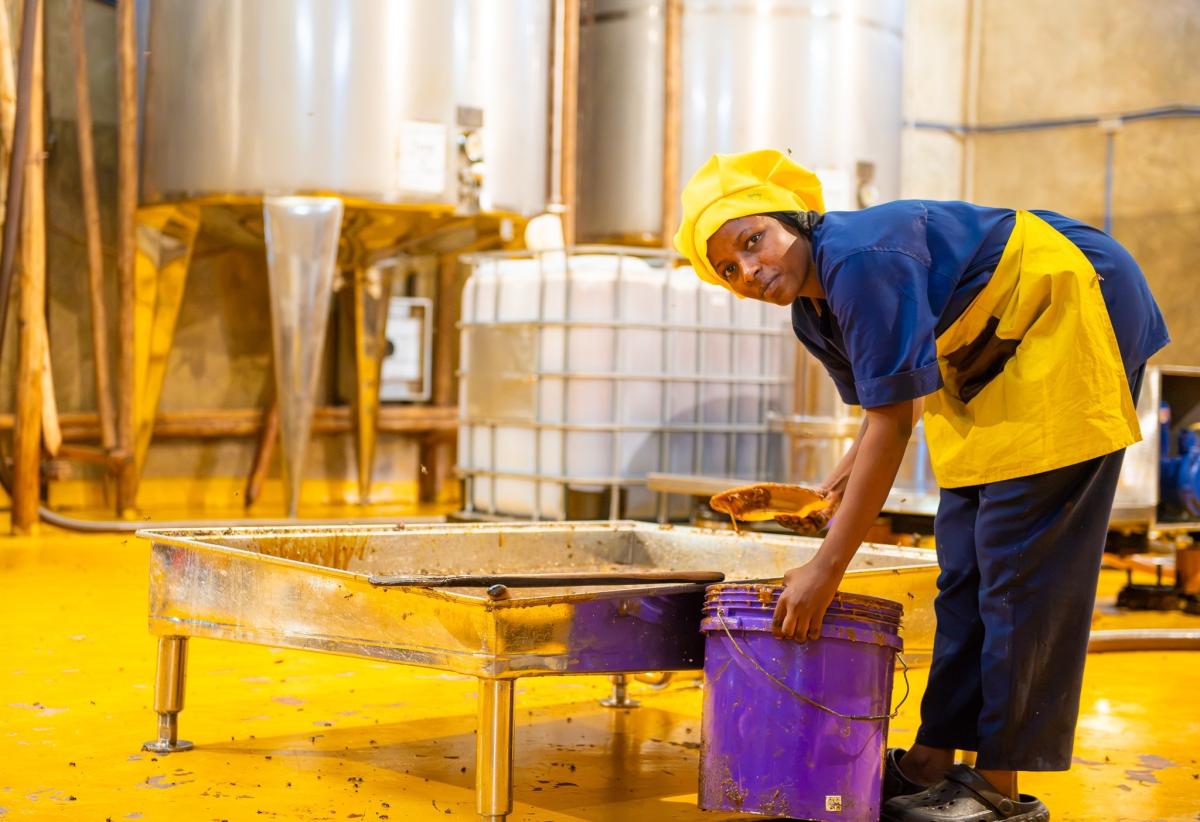
Back in 2022, Kundi Salum and her family had considered learning a skilled trade at the Kigoma centre of the Vocational Education and Training Authority (VETA), but the costs were too high for her aunt who had been taking care of the young lady after her parents passed away. Kigoma region’s population is dominated by a youth workforce. However, many young people—particularly girls and young women—remain poorly positioned to benefit from economic opportunities that continue to grow in Kigoma. High training costs, persistent gender stereotypes, inadequate gender-responsive facilities, weak links between training institutions and employers, and limited access to workplace experience restrict their participation in vocational education and their transition into decent employment. Kundi’s path changed in 2025 when she joined food processing course at VETA Kigoma through the facilitation of Wezesha Binti Project. With support from the Belgian government, the Wezesha Binti project strengthens the transition from training to work by facilitating linkages between TVET institutions linkages and employers. In Kigoma town, Third Man Limited, a honey processing and marketing company famously known as Upendo honey is one of private sector collaborators in the Wezesha Binti’s TVET program. “We found that Wezesha Binti mission to empower girls with skills and decent jobs and businesses matches with our objectives as a company,” says, Byela Bandio, a Human Resource Officer at Third Man Limited. As part of the memorandum of understanding between Enabel and VETA, doors were open for learners like Kundi to gain the much-needed experience. “At Upendo honey I learned how to live like an employee, how to interact with people at a place of work, how to contribute to a team,” says Kundi. On top of providing space for VETA’s students to gain practical experience, Upendo Honey offered to employ some, based on the company’s requirements. Kundi was one of the three girls who received a call to report for work at Upendo Honey a couple of months after completing their field attachment. Employers that collaborate with VETA and Enabel through Wezesha Binti benefit with meeting youth that are hardworking and malleable therefore can be trained to fit in their environment. “Without this collaboration probably, we would not have been able to meet some of these young girls who are excellent staff and very good people,” says Byela. Upendo honey did not require additional interview for the youth because they already observed their work ethic during their practical attachment. Kundi's experience reflects the broader impact of the Wezesha Binti Project in supporting young women to transition from training to decent employment. A total of 300 graduates (204 women and 96 men) has secured decent employment through partnerships with public and private sector employers, including Third Man Limited (Upendo Honey), Kasulu Sugar Company, and other industries. “I’m very grateful for the opportunity to get a job at Upendo Honey. I have a salary, I have NSSF, and I have medical insurance. Our factory is far from restaurants, but our employer provides lunch for us. I feel valued.” Her story demonstrates how partnerships between TVET institutions and employers can create sustainable employment opportunities for young women in Kigoma. ends
-

Collectivités et diaspora : vers des projets structurants pour le développement local en Guinée
Jacques LENO | 15/10/2026
Dans le cadre de la mise en œuvre du projet AMIS (Accompagnement, Mobilité, Insertion et Sensibilisation), financé par l’Union européenne, Enabel a réuni ses partenaires, le mercredi 14 octobre 2026, pour des échanges consacrés à la contribution de la diaspora guinéenne au développement socioéconomique des collectivités locales. Cette rencontre a mobilisé un large éventail d'acteurs institutionnels et territoriaux, notamment la Direction Générale des Guinéens Établis à l'Étranger (DGGE) du Ministère des Affaires étrangères, la Direction Nationale des Collectivités Décentralisées du Ministère de l'Administration du Territoire et de la Décentralisation, les directeurs de cabinet des gouvernorats de Conakry, Kindia et Mamou, ainsi que des cadres préfectoraux, des représentants des collectivités décentralisées et plusieurs départements ministériels sectoriels. Les participants ont partagé leurs expériences, analysé les initiatives déjà menées et identifié les opportunités permettant de renforcer l'implication des Guinéens établis à l'étranger dans la transformation économique et sociale de leurs territoires d'origine. Au-delà des transferts financiers, les participants ont souligné l'importance de valoriser les compétences, l'expertise professionnelle, les réseaux d'influence et les capacités d'innovation dont disposent la diaspora guinéenne. L'ambition est double : d'une part, accompagner les collectivités afin qu'elles développent des mécanismes durables de dialogue et de collaboration avec leurs ressortissants à l'étranger ; d'autre part, encourager la diaspora à investir, selon ses moyens et ses domaines d'expertise, dans des initiatives porteuses de développement pour les communautés locales. La dynamique devrait aboutir à la formulation et à la mise en œuvre de projets structurants dans les différentes collectivités couvertes par le projet AMIS. À travers cette initiative, Enabel et ses partenaires réaffirment leur conviction que la diaspora constitue un acteur stratégique du développement territorial, capable de contribuer durablement à la création d'opportunités économiques, au renforcement des capacités locales et à l'amélioration des conditions de vie des populations.
-
En Mauritanie : le CILSS et Enabel renforcent l’ancrage du PRADEP-AOS
Aminata KANE | 15/10/2026
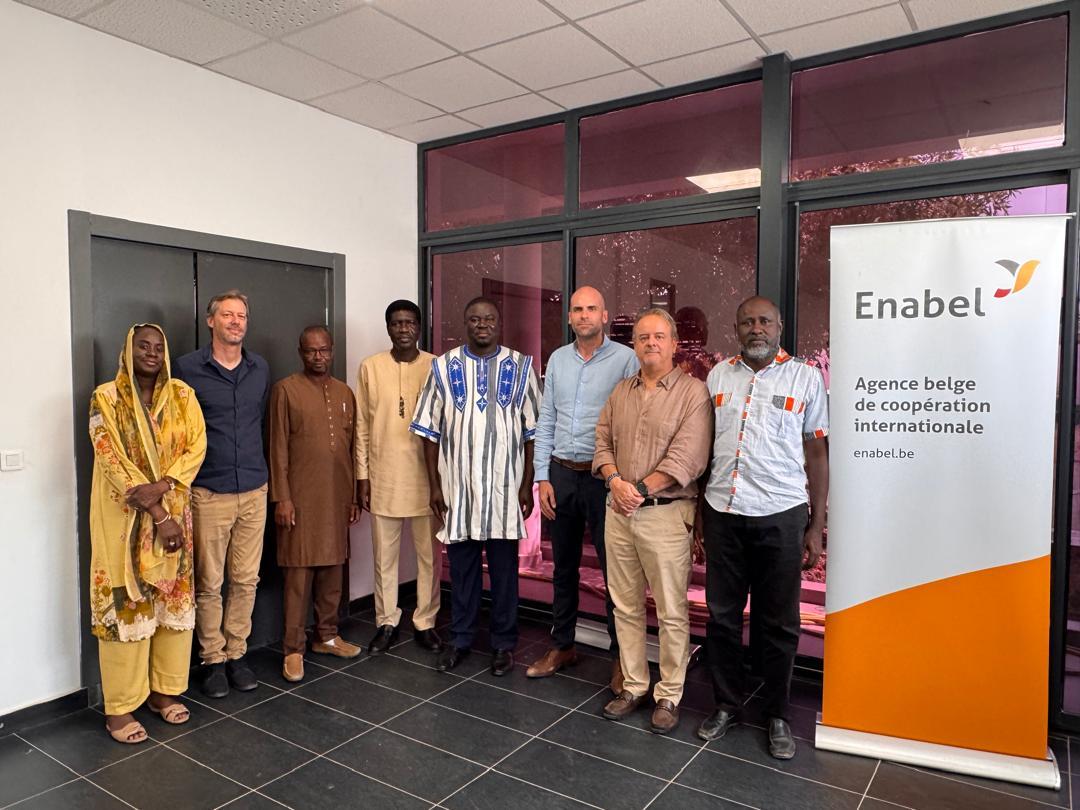
Les 12 et 13 octobre 2026, une mission de concertation institutionnelle et de plaidoyer du CILSS s’est tenue à Nouakchott, dans le cadre du démarrage opérationnel du Programme Régional d’Appui au Développement de l’Économie Pastorale en Afrique de l’Ouest et au Sahel (PRADEP-AOS). La délégation était conduite par le Dr Sylvain Ouédraogo, Secrétaire Exécutif Adjoint du CILSS, avec M. Dieudonné Sanou, Coordonnateur de l’Unité Régionale de Coordination du programme. Enabel, l’Agence belge de coopération internationale, met en œuvre le Couloir Ouest du programme.Un dialogue renforcé avec les autoritésLe 12 octobre, la délégation a échangé avec le Secrétaire général du Ministère de l’Élevage, le Dr Ahmed Ould Allal, sur les priorités nationales : développement de l’élevage, mobilité pastorale et chaînes de valeur pastorales. La désignation de l’Institution Focale Territoriale (IFT) de la Mauritanie a été au cœur des discussions. Cette institution fera le lien entre le PRADEP-AOS, les services publics et les acteurs territoriaux.Le 13 octobre, la délégation a été reçue par le Ministre de l’Agriculture et de la Souveraineté alimentaire, M. Ahmed Baba, qui a réaffirmé sa disponibilité à accompagner le CILSS en Mauritanie.Une séance de travail avec EnabelLa délégation a aussi examiné avec Enabel les activités prévues en Mauritanie, les mécanismes de collaboration avec l’Unité Régionale de Coordination et la préparation du Comité Régional de Pilotage, prévu en novembre en Guinée. Le Couloir Ouest réunit la Mauritanie, le Mali, le Sénégal et la Guinée. Ses zones prioritaires en Mauritanie sont le Guidimakha, le Hodh El Chargui et le Trarza.Un programme régional soutenu par l’Union européenneLe PRADEP est financé par l’Union européenne à hauteur de 60 millions d’euros sur 60 mois, dans 13 pays. Son ambition est de rendre les systèmes pastoraux plus résilients, mieux coordonnés et mieux intégrés aux dynamiques de développement régional.
-
Turning Uganda’s green economy ambitions into decent jobs
Jovia KAVULU | 15/10/2026
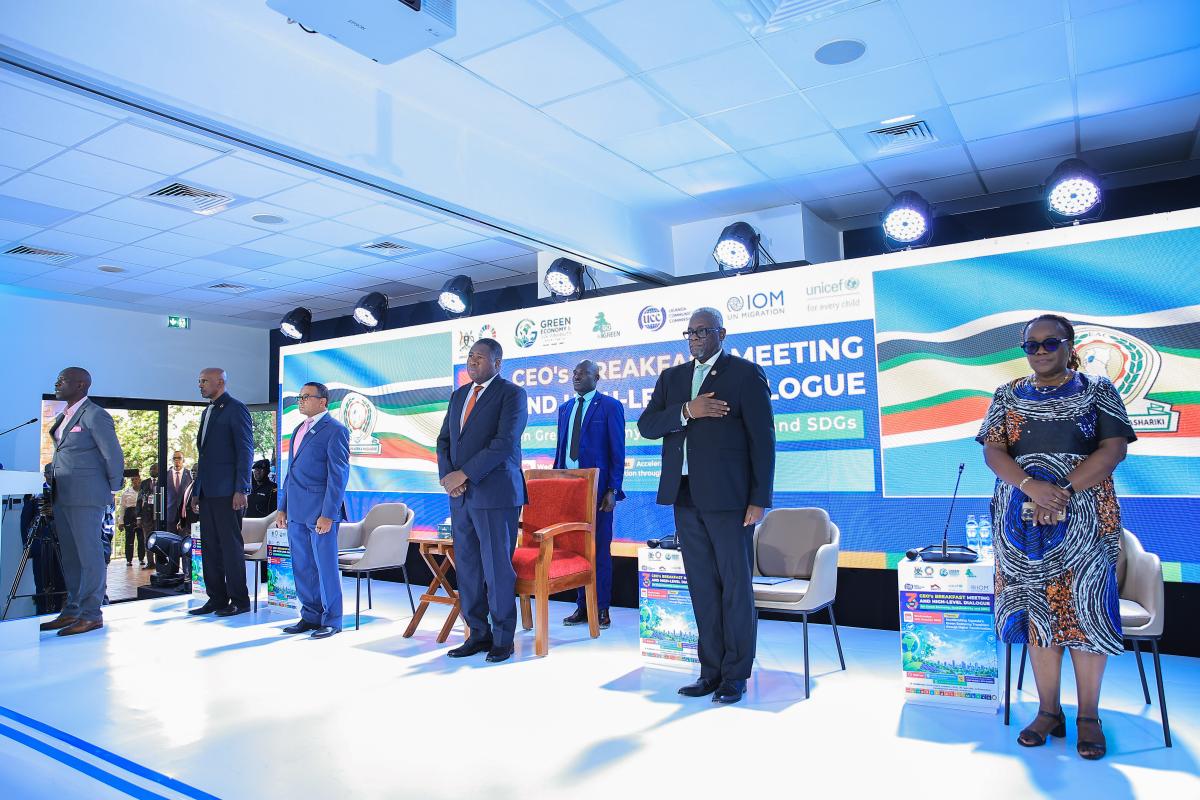
Uganda’s transition to a greener economy presents an opportunity to attract investment, strengthen businesses and create decent jobs for young people. Turning this potential into lasting economic benefits, however, will require coordinated action across government, the private sector and development partners. This was a key message from the 3rd CEO’s breakfast meeting and high-level dialogue on green economy, sustainability and the Sustainable Development Goals (SDGs), held on 14th-October-2026 at the UNICEF Conference Centre in Mbuya, Kampala. The meeting was officially opened by the Speaker of Parliament, Rt. Hon. Jacob Marksons Oboth, who delivered the keynote address under the theme, "Accelerating Uganda’s green economy transition through digital transformation."The dialogue brought together government representatives, business leaders, diplomats, UN agencies, development partners and financial institutions to explore how digital transformation, investment and collaboration can help Uganda advance its green economy ambitions and translate sustainability commitments into practical results. In his opening remarks, the Speaker called on leaders to move beyond discussions and statistics to practical action on climate change and environmental protection. He highlighted the importance of translating commitments into tangible measures that protect livelihoods, strengthen resilience and advance Uganda’s development priorities. Speaking at the meeting, Enabel Country Director Nicolas Oebel emphasised that environmental ambitions must be matched by economic opportunities capable of sustaining businesses and creating jobs. “The green transition will only become sustainable when it becomes economically viable,” Nicolas said, highlighting the importance of connecting skills development, enterprise growth and market demand. This means that Enabel and its partners must look beyond introducing green technologies or training young people in emerging skills to ensuring that businesses can compete and grow, markets exist for green products and services, and young people have clear pathways to employment or establishing their own enterprises. Investment was another important consideration in the discussions. World Bank representatives highlighted the role of green finance, technology and international partnerships in advancing the transition. Attracting investment requires an enabling environment, confidence in the policy framework and well-prepared projects capable of delivering economic and environmental returns. These considerations are closely linked to the development of green value chains, where skills, finance, technology and markets must work together. Without businesses able to generate demand for new skills and investment that enables them to grow, the potential for green industries to create lasting employment remains limited. The discussions also highlighted the importance of connecting environmental sustainability with essential services and social inclusion. UNICEF Country Representative Dr. Robin Nandy stressed the urgency of climate-resilient water, sanitation and hygiene services, particularly for children and vulnerable communities affected by climate shocks. This perspective broadened the discussion beyond economic growth alone, highlighting how climate resilience, public health and access to essential services contribute to a greener and more inclusive economy. For Enabel, linking these wider development priorities with employment means ensuring that emerging green industries create opportunities people can access. Renewable energy, green construction, bamboo and sustainable tourism are among the areas where stronger connections between training institutions, enterprises and markets can help translate green growth into jobs. Young people need more than technical training to benefit from these opportunities. They also need practical experience, employers seeking their skills and pathways into employment or entrepreneurship. Businesses, in turn, need access to skilled workers, appropriate technologies, finance and markets to develop competitive products and services.Enabel’s WeWork-green and decent jobs for youth project, funded by the European Union and the Government of Belgium, connects skills development, employment and enterprise growth as part of its work to expand green and decent job opportunities for young people in Uganda. The discussions at the breakfast reinforced the importance of bringing these different elements together. Government policies can create an enabling environment, financial institutions can unlock investment, development partners can help address barriers, and businesses can turn opportunities into viable products, services and jobs. The challenge now is to translate Uganda’s green economy ambitions into action that delivers measurable economic and environmental benefits. A transition that connects skills, enterprises, finance and markets can enable Uganda to protect its natural resources, strengthen competitiveness, expand economic opportunities and create decent jobs for its young people.
-
Enabel : Cap sur une gouvernance inclusive avec les mentors du projet PG&PC
Hélène Lasoeur BUSIME | 14/10/2026
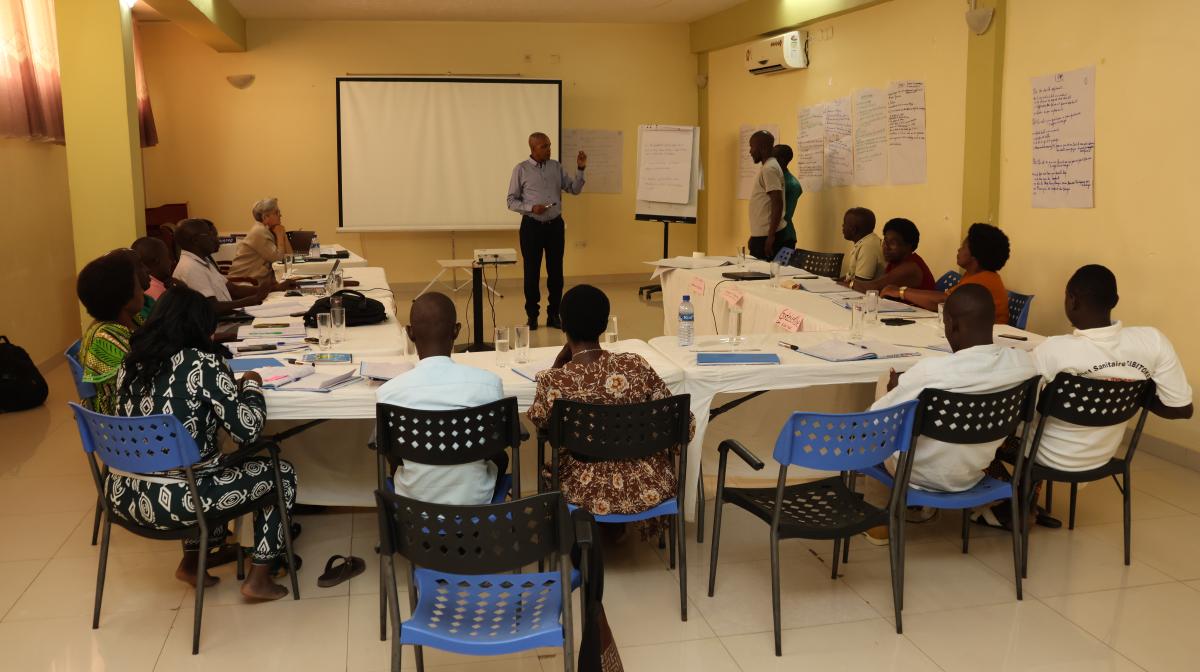
Du 5 au 9 octobre 2026, 14 mentors territoriaux du projet Gouvernance et Participation Citoyenne (PG&PC) d’Enabel se sont réunis à Bujumbura pour une première session de formation. Venus de Kirundo, Cibitoke, Mugina, Bukinanyana et Busoni, ils ont renforcé leurs compétences en vue d’accompagner 92 Organisations Communautaires de Base (OCB) vers une gouvernance plus efficace, inclusive et participative au service du développement local.Pourquoi des mentors ?Face aux besoins identifiés auprès des 92 OCB en matière de gouvernance, de gestion organisationnelle, de plaidoyer, de participation citoyenne, de genre et d’inclusion, Enabel a fait le choix d’un accompagnement de proximité. Les 14 mentors territoriaux soutiendront ces organisations dans le renforcement de leurs capacités et de leur contribution aux mécanismes de gouvernance locale.Une semaine pour préparer l’accompagnement des OCBLes mentors ont renforcé leurs compétences en représentativité, dialogue citoyen et plaidoyer, tout en clarifiant leur rôle d’accompagnateur de proximité. A travers des études de cas, des mises en situation et des échanges d’expériences, ils ont également contribué à enrichir le curriculum de formation. La semaine s’est conclue par l’adoption d’une feuille de route commune définissant les modalités d’accompagnement et de suivi des 92 OCB.« On ne peut donner que ce que l’on a », a souligné Josélyne Habarugira, présidente de la coopérative DUKOREREHAMWE KIZIBANYUNDO à Mugina, illustrant ainsi l’approche participative et coconstruite du dispositif.La formation a été animée par les consultants d’IRAM-CIEDEL, Ana Maria Oliveira et Wenceslas Nahimana, avec l’appui de l’équipe du projet PG&PC.
-

90 nouveaux spécialistes au service de la santé des Béninois, dont 19 boursiers du projet EQUITE
Reece-hermine ADANWENON | 13/10/2026
Le vendredi 9 octobre 2026, l'Institut National Médico-Sanitaire (INMeS) de l'Université d'Abomey-Calavi a remis ses diplômes de Master à 90 professionnels de santé de la promotion 2024-2026 : 45 femmes et 45 hommes. Parmi eux, 19 ont été formés grâce aux bourses du projet EQUITE 2, mis en œuvre par Enabel et financé par l'Agence Française de Développement (AFD). « Derrière chaque diplôme que nous célébrons aujourd'hui, il y a un patient qui sera mieux soigné, un enfant mieux accompagné, une famille mieux soutenue aux heures les plus difficiles. » C'est par ces mots qu'Olivier Krins, Directeur d'Enabel au Bénin, a salué les lauréats réunis dans la salle de conférence de la Mairie de Cotonou.La cérémonie s'est déroulée en présence du Dr Hermine Zounon Mama, représentante la Vice-Présidente de la République, Mariam Chabi Talata. Étaient également présents le Dr Michel Agounkpé, représentant le Ministre de l'Enseignement supérieur et de la Recherche scientifique et le Dr Francis Dossou, représentant le Ministre de la Santé. Mme Arlette Bello Saïzonou, 1ère Adjointe au Maire de Cotonou, était la marraine de la promotion. L'AFD était représentée par Mme Sylvie Gomez. Cinq spécialités pour rapprocher les soins spécialisés des populationsLes 90 lauréats sont issus de cinq filières du Master en Sciences infirmières et obstétricales : • Anesthésie-réanimation (8e promotion) ; • Néphrologie-dialyse (4e promotion) ; • Soins palliatifs (4e promotion) ; • Pédiatrie-puériculture (4e promotion) ; • Ophtalmologie (2e promotion). Ces compétences répondent à des besoins concrets du système de santé béninois : accompagner les malades en fin de vie, prendre en charge l'insuffisance rénale, sécuriser les interventions chirurgicales, soigner les plus jeunes et préserver la vue. Pour la Professeure Lisette Odoulami, Directrice de l'INMeS, ces diplômés sont désormais « les professionnels de première ligne » d'un système de santé qui attendent beaucoup d'eux. Elle les a invités à être des références, à partager leurs connaissances et à contribuer à la qualité et à la sécurité des soins. Avec le projet EQUITE dans sa deuxième phase, Enabel et l'AFD ont accompagné la mise en place des Masters en Soins palliatifs et en Néphrologie-dialyse à l'INMeS. Dans sa deuxième phase, le projet a financé les études de 19 lauréats de cette promotion. Ils s'ajoutent aux 39 boursiers de Master financés lors de la première phase. « Nous sommes convaincus que c'est le talent, et non les moyens, qui doit décider de qui peut se former », a souligné Olivier Krins. Il a remercié l'AFD pour la confiance et l'engagement qui ont rendu ce résultat possible. Pour Mme Sylvie Gomez, qui représentait la Directrice de l'AFD au Bénin, ces 90 diplômés sont « 90 nouvelles ressources pour le système de santé béninois ». Elle a rappelé la conviction qui guide EQUITE depuis le départ : on ne peut améliorer durablement la qualité des soins sans investir dans celles et ceux qui les dispensent. La Directrice de l'INMeS a, elle aussi, salue le soutien du projet : bourses d'études, matériel pédagogique et de simulation, et appui à la démarche d'assurance qualité en vue de l'accréditation de six offres de Master et de deux offres de Licence.Au-delà des bourses : former mieux, protéger, valoriserFormer des spécialistes ne suffit pas. Il faut aussi des formations de qualité et durables, un environnement d'études et un système de santé sûr capable d'accueillir ces compétences. Aux côtés du Gouvernement du Bénin, Enabel et l'AFD agissent autour de trois priorités. 1. La qualité et la pérennité des formations. EQUITE 2 soutient l'accréditation prochaine des offres de formation des instituts, dont l'INMeS. Le projet accompagne également les enseignants en pédagogie universitaire et développe la simulation et la digitalisation de l'apprentissage. 2. L'équité et la sécurité des études. Avec les partenaires académiques, le projet porte une politique contre l'exploitation, les abus et le harcèlement sexuels. Objectif : que chaque étudiante et chaque étudiant apprenne dans un environnement sain. 3. Un système de santé qui valorise ces compétences. EQUITE 2 accompagne la mise en place d'une plateforme digitalisée de gestion des ressources humaines en santé et l'élaboration du plan national de développement des ressources humaines en santé.« 45 Femmes, 45 Modèles » : une promotion parfaitement paritaireCette promotion compte autant de femmes que d'hommes. Les lauréats ont voulu en faire un message : à travers l'initiative « 45 Femmes, 45 Modèles », ils souhaitent inspirer les jeunes filles et les encourager à oser les sciences et les métiers de santé. « Une réussite prend toute sa valeur lorsqu'elle ouvre la voie à d'autres », a déclaré Arielle N'Dah, diplômée en Soins palliatifs et porte-parole des lauréats. Elle a rappelé deux années passées à concilier cours, stages, gardes, recherches et mémoires avec des responsabilités professionnelles et familiales. Au nom de la Vice-Présidente de la République, Dr Hermine Zounon Mama a, elle aussi, salue cette présence féminine comme un encouragement pour toutes les jeunes filles qui visent des carrières exigeantes. Elle a appelé les lauréats à offrir la même qualité de soins à chaque patient, quels que soient son origine, son lieu de résidence, son âge ou ses moyens. « Le Bénin a besoin de votre compétence. Il a besoin de votre sens du devoir. Il a surtout besoin de votre humanité. »Allez, soignez, transmettezCe succès est collectif. Il associe l'INMeS, son corps enseignant et ses encadreurs, les hôpitaux qui accueillent les stagiaires, les ministères de tutelle, l'AFD, Enabel et tous les partenaires. Il doit aussi beaucoup aux familles des lauréats. Olivier Krins a conclu par un message simple aux nouveaux diplômés : « Allez, soignez, transmettez. Que vos compétences soient au service de vos communautés, avec exigence et avec humanité. »
-

WorldSkills Shanghai 2026 highlights the value of skills for Uganda’s future
Jovia KAVULU | 13/10/2026
When Paul Terran Lugobe stepped into the cookery competition at WorldSkills Shanghai 2026, he was competing against young professionals from around the world, under pressure and against a shared international standard. The Hotel and Tourism Training College (HTTC) student returned with a 'best of nation medal', recognising him as Uganda’s highest-scoring competitor. Paul was one of three young Ugandans who represented the country at the 48th WorldSkills Competition in Shanghai, China. Flavia Nakaayi, a nursing trainee from Kabale Institute of Comprehensive Nursing, competed in health and social care, while Elizabeth Mirabel Mutoro from Arua Technical Institute represented Uganda in welding. Their participation offered an opportunity to demonstrate their skills on an international stage and showed what young Ugandans can achieve when they have opportunities to develop and demonstrate their abilities. The competition, which concluded on 27th-September-2026, brought together approximately 1,400 young professionals from around the world to compete in 64 skill categories. The accompanying WorldSkills Conference convened more than 2,000 participants, including government officials, international organisations, training institutions and businesses, to discuss how skills development can respond to changing economies and workforce needs. According Jackson Kuucha, Executive Director of WorldSkills Uganda, the competition provides a rigorous test of what young tradespeople can do. Competitors must produce work under time pressure, using the tools and materials of their trade. Assessors from other countries evaluate their performance against a shared international marking scheme. This means that there is no home advantage and no partial credit simply for effort. For Uganda’s representatives, taking part meant measuring their abilities against international standards and gaining experience that can inform their future careers.Their journey to Shanghai began at home. Enabel, working with WorldSkills Uganda under the WeWork – green and decent jobs for youth project facilitated national skills competitions through which the three young professionals emerged to represent Uganda internationally. Their progression from national competitions to the global stage demonstrates how opportunities to showcase practical skills can open doors for talented young people. Funded by the European Union and the Government of Belgium, Enabel collaborates with the Ministry of Education and Sports, WorldSkills Uganda and other partners under the WeWork project to strengthen and promote Technical and Vocational Education and Training (TVET). A key part of this work is addressing public perceptions that often position vocational education as a second choice to academic education. Changing these perceptions starts within communities. Through the WeWork project, para social workers engage parents, young people and community members in conversations about the value of vocational skills. They use social and behaviour change communication approaches and tools, including games, storytelling and flashcards, to make these conversations accessible and relatable. By highlighting the opportunities that technical skills can create, these engagements encourage young people and their families to consider TVET as a pathway to employment and entrepreneurship. Enabel also works with Vocational Training Institutions across Busoga, West Nile, Rwenzori/Albertine and the greater Kampala metropolitan region to organise institutional skills competitions. These events give learners an opportunity to demonstrate their abilities while inviting parents, community members and primary and secondary school students to see vocational training in practice. Through practical demonstrations and interaction with learners, visitors discover the range of skills taught at these institutions and the career opportunities they offer. The experience in Shanghai also speaks to the importance of keeping vocational training connected to the world of work. Uganda’s TVET Act 2025 includes provisions intended to ensure that trainers remain current in their trades, including requirements relating to industrial attachment and licence renewal. The law also provides for a two-month industry break each year. These measures reflect the importance of maintaining relevant, up-to-date skills among those responsible for training the next generation of professionals. At the international level, Uganda’s participation highlighted the opportunities that could come with deeper engagement in WorldSkills International. As an associate member, Uganda is limited to entering three skill categories at the competition. In Shanghai, the country used its places for cookery, welding and health and social care.The state minister for Higher Education, Hon. Phyllis Chemutai, emphasised the need for Uganda to become a full member of WorldSkills International to widen opportunities for young people in TVET institutions. Full membership would allow Uganda to participate in all 64 skill categories, opening more opportunities for young professionals to test their abilities against international standards. However, participating across all categories requires substantial investment. According to Kuucha, only Brazil and China entered competitors in all 64 categories at the Shanghai competition. Each skill category requires experts to accompany and oversee the competitors, in addition to other officials. A delegation could therefore comprise around 200 people travelling for approximately 10 days, making the cost a significant consideration for countries seeking to expand their participation. The discussions at the WorldSkills Conference also emphasised the need to make skills training accessible to people from different backgrounds, embrace new technologies and strengthen cooperation between countries. These efforts are essential to ensuring that skills development keeps pace with changes in the labour market and prepares young people for emerging opportunities. For Uganda, these priorities reinforce the need for collaboration among government, training institutions, employers, communities and development partners to build a skills system that responds to the needs of the economy and creates opportunities for young people. The next WorldSkills Competition is scheduled for 2028 in Aichi, Japan. The experience gained in Shanghai provides Uganda with a foundation to build on as it works to strengthen its TVET sector and create more opportunities for young people to demonstrate their skills on the international stage. Paul Terran Lugobe’s best of nation medal is a notable achievement, but the wider story is about the potential of Uganda’s young people. With quality training, opportunities to demonstrate their abilities and stronger connections between education and industry, vocational skills can open pathways to decent work and contribute to the country’s social and economic development. Through the WeWork project, Enabel and its partners, are working to make these opportunities more accessible and strengthen recognition of TVET as a valuable pathway to a rewarding career.
-
En Mauritanie: Lait et fourrage : à Kaédi, éleveurs, facilitateurs et institutions bâtissent ensemble le conseil de demain
Aminata KANE | 12/10/2026
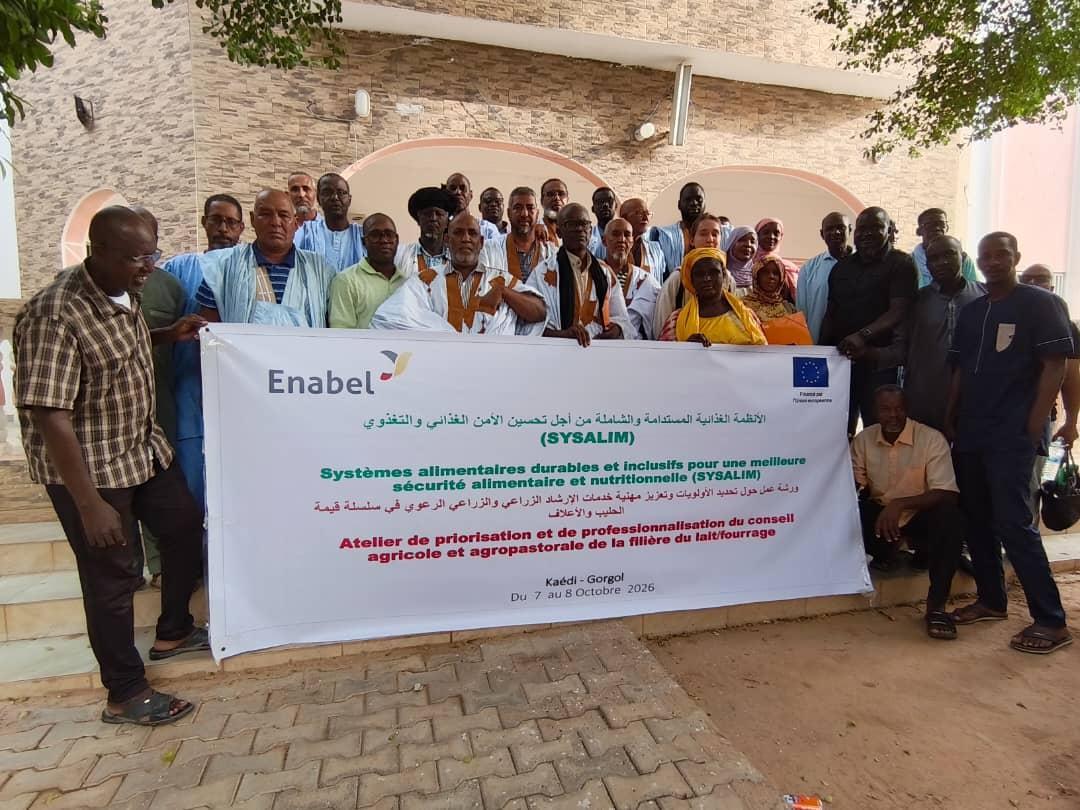
Quarante acteurs venus de Nouakchott, du Trarza, du Brakna, du Gorgol, du Guidimakha, de l'Assaba et du Hodh ont travaillé deux jours à Kaédi pour une question simple : quels services de conseil les éleveurs ont-ils vraiment besoin, et qui peut les fournir durablement ?À Kaédi, dans la salle comme sur le terrain, une conviction a guidé l'atelier de priorisation et de professionnalisation des services de conseil agropastoral de la filière lait/fourrage : on ne repart pas de zéro. Organisé par le projet SYSALIM (Systèmes alimentaires durables et inclusifs), mis en œuvre par Enabel, Agence belge de coopération internationale, avec le financement de l'Union européenne, l'atelier a réuni éleveurs, facilitateurs, organisations socioprofessionnelles, mini-laiteries, services techniques de l'État, structures de recherche et de formation, ainsi que l'équipe SYSALIM.Construire sur l'acquis de RIMDIR, RIMFIL et SECURALIMSYSALIM s'inscrit dans la continuité des interventions précédentes d'Enabel en Mauritanie. RIMFIL a permis d'expérimenter et d'apprendre (facilitateurs, conseil de gestion), SECURALIM de renforcer les acteurs (OSP, techniciens, conseil de proximité). SYSALIM veut aujourd'hui consolider : identifier les services prioritaires, les prestataires crédibles, et tester des modèles viables. Plutôt que de créer un système parallèle, le projet s'appuie sur les compétences et dispositifs déjà présents dans les zones d'intervention.Un besoin n'est pas toujours un besoin de conseilPremier défi relevé par les participants : distinguer ce qui relève de l'investissement (un tank à lait, une motopompe), du financement, de la formation ou du véritable conseil, c'est-à-dire ce qui aide l'éleveur à prendre une meilleure décision. Un refroidisseur à lait ne suffit pas sans accompagnement pour décider, gérer et pérenniser.Du problème au service, puis à l'expérimentationEn cinq exercices, les groupes sont partis de problèmes réellement observés dans la filière, ont formulé la décision que l'éleveur doit pouvoir mieux prendre, puis ont cartographié qui fait quoi aujourd'hui et qui pourrait le porter demain. Ils ont ensuite soumis les services présélectionnés à un « test de professionnalisation » : compétences et outils, proximité, information, organisation, financement, résultats. La question test : « Si SYSALIM cesse d'appuyer ce service demain, qu'est-ce qui reste et qu'est-ce qui s'arrête ? »Les travaux ont fait émerger quatre services de conseil à approfondir :La ressource fourragère : conseil de proximité pour choisir, produire, conserver et valoriser les fourrages adaptés à chaque système d'élevage ;L'animal et le lait : conseil intégré alimentation et performance laitière, pour améliorer production, qualité du lait et rentabilité ;L'eau : conseil pour sécuriser et arbitrer l'usage de l'eau entre abreuvement, production fourragère et autres besoins, à un coût viable ;La reproduction et le potentiel génétique : accompagner les choix de reproduction et d'amélioration du troupeau laitier.Des acteurs du terrain au cœur du dispositifFacilitateurs fourragers du Guidimakha et de l'Assaba, facilitatrices du Brakna, noyau laitier, mini-laiterie, inspections de l'élevage, SONADER, ESAV, ISPM, GNAP, AMAD : la diversité des participants a permis de croiser les regards et de ne retenir que des services réalistes, portés par des acteurs existants. Les témoignages d'un facilitateur et d'une OSP ont ouvert la seconde journée.Et maintenant ?Les résultats des groupes alimentent une matrice opérationnelle des services prioritaires. SYSALIM retiendra un nombre limité de services à expérimenter : tester, mesurer, apprendre, ajuster. Le même exercice est conduit pour le maraîchage et les céréales traditionnelles.Projet SYSALIM, financé par l'Union européenne et mis en œuvre par Enabel, Agence belge de coopération internationale.
-
Des sites identifiés dans les centres de formation publics pour abriter des crèches
Jacques LENO | 09/10/2026
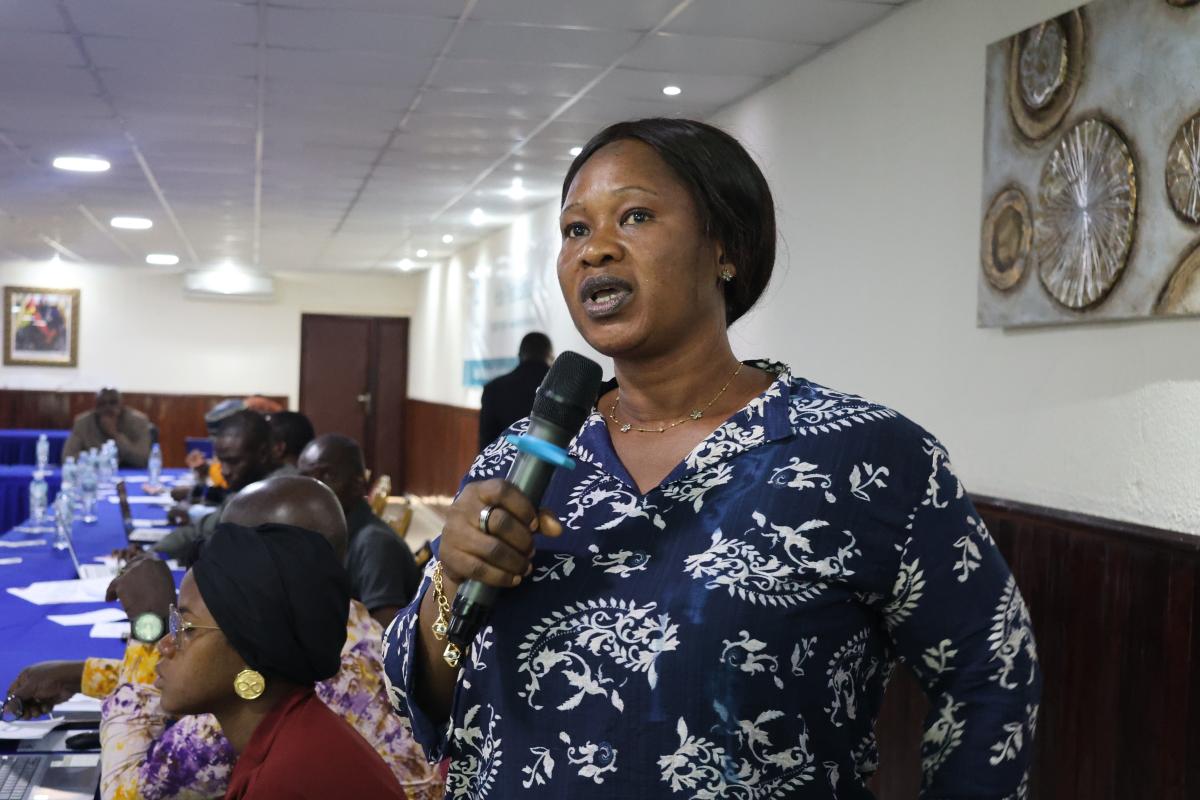
La mise en place de crèches au sein des centres de formation publics franchit une nouvelle étape en Guinée. Réunis les 7 et 8 octobre à Conakry, les acteurs de la petite enfance, de l'enseignement technique et de la formation professionnelle ont validé les sites retenus à l'issue d'une étude conduite avec leur participation active. Cette initiative, portée par la Direction nationale de la Petite Enfance en collaboration avec la Direction nationale de l'Enseignement technique, les écoles de formation technique et professionnelle ainsi que les Centres d'autonomisation et d'entrepreneuriat des femmes (CAEF) de Conakry, Kindia et Mamou, bénéficie de l'appui d'Enabel à travers le projet AMIS grâce au financement de l'Union européenne.Au-delà de l'identification des sites, l'étude a permis d'explorer avec les différentes parties prenantes des modèles de gestion durables adaptés aux réalités locales. Les travaux de l'atelier ont ainsi abouti à l'élaboration de plans d'action et de stratégies de durabilité pour chacun des sites sélectionnés.Au total, neuf sites ont été retenus, dont trois au sein des CAEF et six dans des écoles de formation professionnelle. L'ambition affichée est de faire des futures crèches des structures autonomes, capables de fonctionner durablement sans dépendre exclusivement des financements des partenaires techniques et financiers. Une approche qui entend rompre avec le modèle de crèches créées grâce aux appuis extérieurs mais qui cessent souvent leurs activités faute de mécanismes de pérennisation. Les participants ont réaffirmé leur engagement à faire aboutir ce projet. Prochaine étape : l'appui d'Enabel, à travers le projet AMIS, à la phase opérationnelle de mise en place des crèches. Parallèlement, les acteurs concernés s'organisent pour mettre en place les comités de gestion chargés d'assurer le bon fonctionnement et la viabilité de ces infrastructures.
-
Institutionnaliser le genre : Enabel Burkina Faso, une expérience qui inspire et fait école
Wendpouiré Julien NANA | 09/10/2026
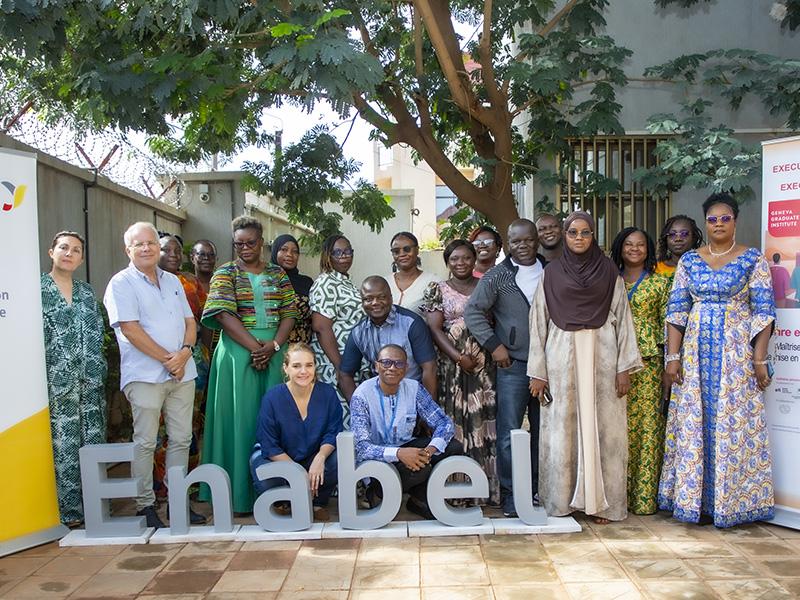
Le 11 septembre 2026, Enabel Burkina Faso a ouvert ses portes à une délégation d’étudiantes et d’étudiants de l’Institut de hautes études internationales du développement (IHEID) de Genève, venu·e·s découvrir concrètement comment une organisation peut faire de l’égalité de genre un principe structurant de sa culture, de ses pratiques et de ses interventions. Une rencontre riche en enseignements, qui confirme qu’au-delà de ses projets, Enabel peut aussi être un espace d’apprentissage, d’inspiration et de partage d’expériences.Et si l’égalité de genre cessait d’être une intention pour devenir une réalité concrète, mesurable et transformatrice ? C’est autour de cette question que s’est articulée la visite de terrain organisée au sein d’Enabel Burkina Faso au profit des participantes et participants aux programmes Executive Certificate of Advanced Studies (CAS) et Executive Diploma (DAS) en Genre et développement de l’IHEID de Genève.Cette visite intervenait à l’issue d’un atelier de fin de module consacré à la budgétisation sensible au genre, aux pouvoirs et transformations sociales. Elle a permis aux étudiant·e·s de confronter les connaissances acquises dans le cadre académique à une expérience institutionnelle et opérationnelle concrète : celle d’une organisation expérimentant l’intégration du genre aussi bien dans son fonctionnement interne que dans la conception, la budgétisation, la mise en œuvre, le monitoring, la capitalisation de ses interventions.Dans son mot de bienvenue, Jozef Noordholland De Jong, Directeur Pays d’Enabel au Burkina Faso, a placé cette rencontre sous le signe de l’apprentissage mutuel. « La budgétisation sensible au genre constitue un levier majeur de transparence, d’efficacité et de garantie de l’égalité de genre », a-t-il souligné, rappelant que cette exigence guide Enabel dans l’intégration systématique du genre et de l’inclusion au cœur de ses projets et programmes. Pour le Directeur Pays, l’objectif n’était donc pas simplement de présenter des outils ou des procédures. Il s’agissait surtout de créer un véritable espace d’échanges permettant aux équipes d’Enabel et aux étudiant·e·s de partager les bonnes pratiques, outils, expériences et leçons apprises du terrain, avec l’ambition d’améliorer continuellement les pratiques organisationnelles et opérationnelles. Du principe à la pratique : une approche intégrée du genreAu cours de la visite, les échanges ont porté sur plusieurs dimensions de l’institutionnalisation du genre. Les étudiant·e·s ont notamment découvert comment les principes d’inclusion peuvent être pris en compte dans les procédures organisationnelles, les ressources humaines, la communication, ainsi que dans la programmation des interventions.La démarche présentée par Enabel montre ainsi que le genre ne se limite pas à une composante isolée d’un projet. Ile genre est une véritable dimension transversale de la culture organisationnelle : équilibre entre vie professionnelle et vie familiale, procédures ressources humaines inclusives et équitables, etc. La dynamique portée par le cercle genre et inclusion d’Enabel Burkina a contribué à la mise en œuvre des projets transformateurs pour une organisation plus inclusive. Sur le plan opérationnel, l’approche repose également sur la co-création avec les partenaires et les acteurs·rices des territoires d’intervention. L’objectif est de contribuer à l’émergence de solutions durables et inclusives, adaptées aux réalités locales et capables de produire des transformations au-delà de la durée des projets. Cette approche trouve son expression dans une conviction forte portée par Enabel Burkina Faso : l’égalité de genre se construit par la co-création, le partenariat, l’engagement et la mobilisation de l’expertise collective. « Deux heures d’échanges, l’équivalent de six mois de stage »Pour les étudiant·e·s, cette immersion a constitué bien plus qu’une simple visite institutionnelle. Jules Rodolphe KOUAME, étudiant originaire de Côte d’Ivoire, ne cache pas son émerveillement devant la richesse des échanges. « Ces (2 h) deux heures d’échange, c’est l’équivalent de 6 mois de stage », témoigne-t-il. Son intérêt porte notamment sur la manière dont Enabel a réussi à opérationnaliser l’institutionnalisation du genre à travers ses différents départements et sa culture organisationnelle. Pour lui, l’expérience a également permis de mettre en évidence un élément déterminant : l’engagement de la haute direction. La présence du Directeur Pays et de son adjointe lors de cette rencontre est perçue comme un signal institutionnel fort. Elle traduit, selon l’étudiant, l’importance accordée à cette question et contribue à expliquer les résultats observés. Son témoignage révèle également une attente : voir les bonnes pratiques expérimentées par Enabel davantage partagées avec les acteurs gouvernementaux et les organisations de la société civile, afin que l’institutionnalisation du genre puisse progressivement irriguer d’autres structures. « L’institutionnalisation du genre n’est pas abstraite »Pour Ange MAKADI NGOY, étudiante originaire de la République démocratique du Congo, cette visite a également permis de déconstruire une idée reçue.Elle explique que l’expérience d’Enabel lui a permis de dépasser l’idée selon laquelle institutionnaliser le genre et mettre en place une budgétisation sensible au genre seraient des processus trop complexes, voire impossibles. La découverte des mécanismes concrètement utilisés par Enabel lui a permis d’en percevoir à la fois les défis et les possibilités. Elle insiste particulièrement sur l’importance des alliés, des ressources et de la formation. Pour elle, une institutionnalisation durable suppose des personnes suffisamment formées et engagées pour porter l’enjeu du genre au sein de leur organisation. Autre élément qui l’a marquée : la transparence dans la manière dont Enabel présente et partage son travail sur le genre. La découverte concrète de la « toile de l’institutionnalisation », étudiée jusque-là dans un cadre académique, lui a permis de passer de la théorie à la pratique. Sa conclusion est particulièrement forte : l’institutionnalisation du genre n’est « pas abstraite ou impossible ou inaccessible » ; elle nécessite du temps, de la volonté, des ressources et des personnes capables de porter cet enjeu. Une expérience qui dépasse les murs d’EnabelCette visite illustre ainsi une dimension essentielle de l’action d’Enabel : faire, mais aussi partager ; accompagner, mais aussi transmettre ; agir avec les partenaires, tout en contribuant au renforcement durable des capacités.L’expérience présentée aux étudiant·e·s rappelle que la transformation ne se mesure pas uniquement au nombre d’activités réalisées ou d’acteurs·rices touché·e·s. Elle se mesure aussi à la capacité d’une institution à faire évoluer ses pratiques, ses procédures, ses partenariats et, progressivement, les normes qui structurent les sociétés inclusives et équitables.Dans cette perspective, l’impact peut prendre de multiples formes : une femme qui accède à un métier traditionnellement réservé aux hommes ; une jeune fille qui poursuit sa scolarité et envisage son avenir avec confiance ; une survivante de violences basées sur le genre qui bénéficie d’une prise en charge respectueuse de ses droits ; une collectivité qui intègre l’égalité de genre dans sa planification et ses budgets ; ou encore un homme qui devient un allié du changement. Enabel Burkina Faso apparaît ainsi, à travers cette rencontre, non seulement comme un acteur de coopération engagé dans des projets et programmes, mais également comme un espace où les pratiques peuvent être expérimentées, documentées, questionnées et partagées.Le regard porté par les étudiant·e·s de l’IHEID constitue à cet égard un retour particulièrement significatif : leurs témoignages montrent que l’expérience d’Enabel peut nourrir la réflexion académique, professionnelle et institutionnelle bien au-delà du Burkina Faso.Car au-delà des projets mis en œuvre, ce sont des trajectoires professionnelles et institutionnelles qui peuvent être influencées. Au-delà des activités réalisées, ce sont des capacités et des opportunités qui peuvent être renforcées. Et au-delà de l’action immédiate, c’est une ambition de transformation durable, inclusive et co-construite qui se dessine.Cette rencontre aura donc permis une nouvelle fois de rappeler une conviction forte : lorsque les connaissances, l’expérience du terrain, l’engagement institutionnel et le dialogue se rencontrent, les pratiques peuvent devenir des références, les expériences peuvent devenir des enseignements et les enseignements peuvent, à leur tour, inspirer d’autres acteurs et actrices à agir.