Patience cuts operational costs through natural feeds at her poultry farm in Uganda
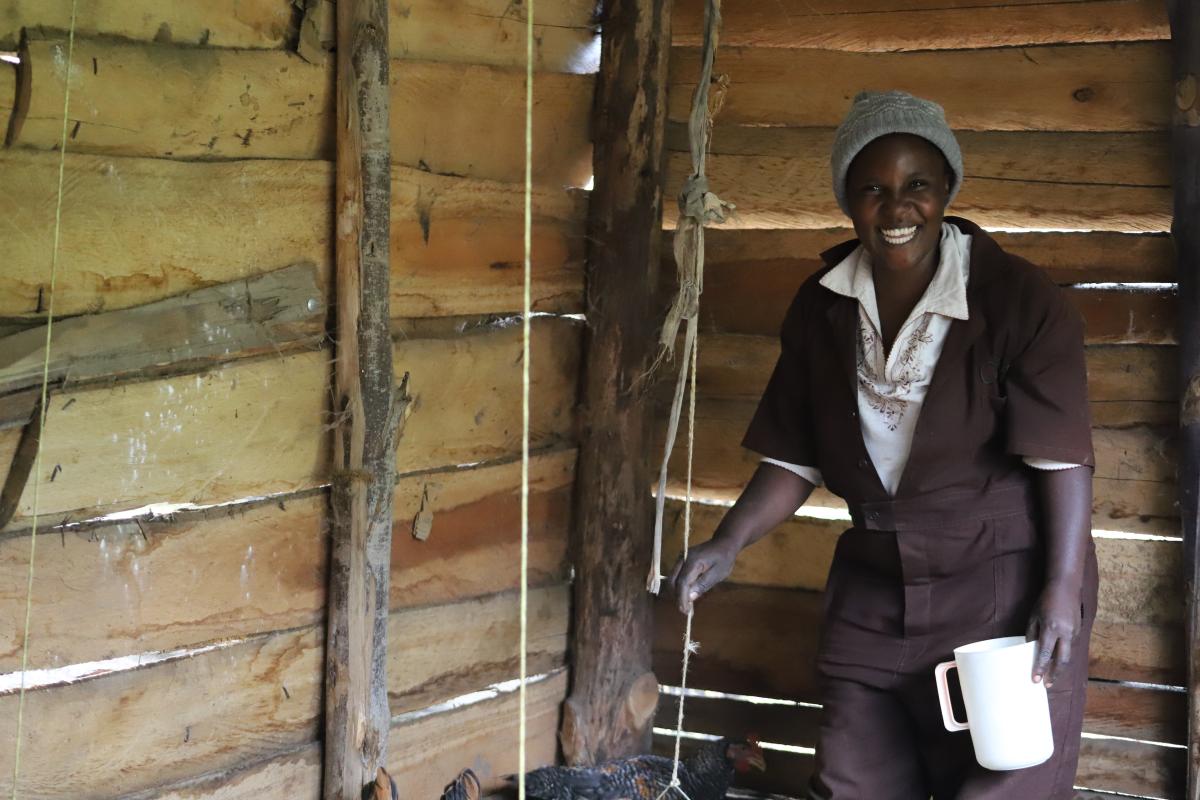
When Patience Nasande started her poultry business in 2024,
she relied heavily on commercial feeds and medicines to keep her birds healthy.
The costs were high, making it difficult for her business to grow. By the time
she applied and joined the WeWork-green and decent jobs for youth project in
December 2025, she already had a poultry house and had begun keeping chickens,
but she felt there was still a lot to learn.
She attended the project’s five‑day residential bootcamp
after hearing about it from a neighbour. “I accompanied my neighbour to collect
her start‑up kit and that is when I learnt about the project. I decided to
apply because I also wanted to improve my business,” she says. The WeWork
project is implemented by Enabel in partnership with Ile de Paix and The
Association of Rwenzori Community (RCA), with funding from the European Union
and the Government of Belgium.
One of the biggest lessons Patience took from the
bootcamp was how to reduce production costs. Instead of relying only on
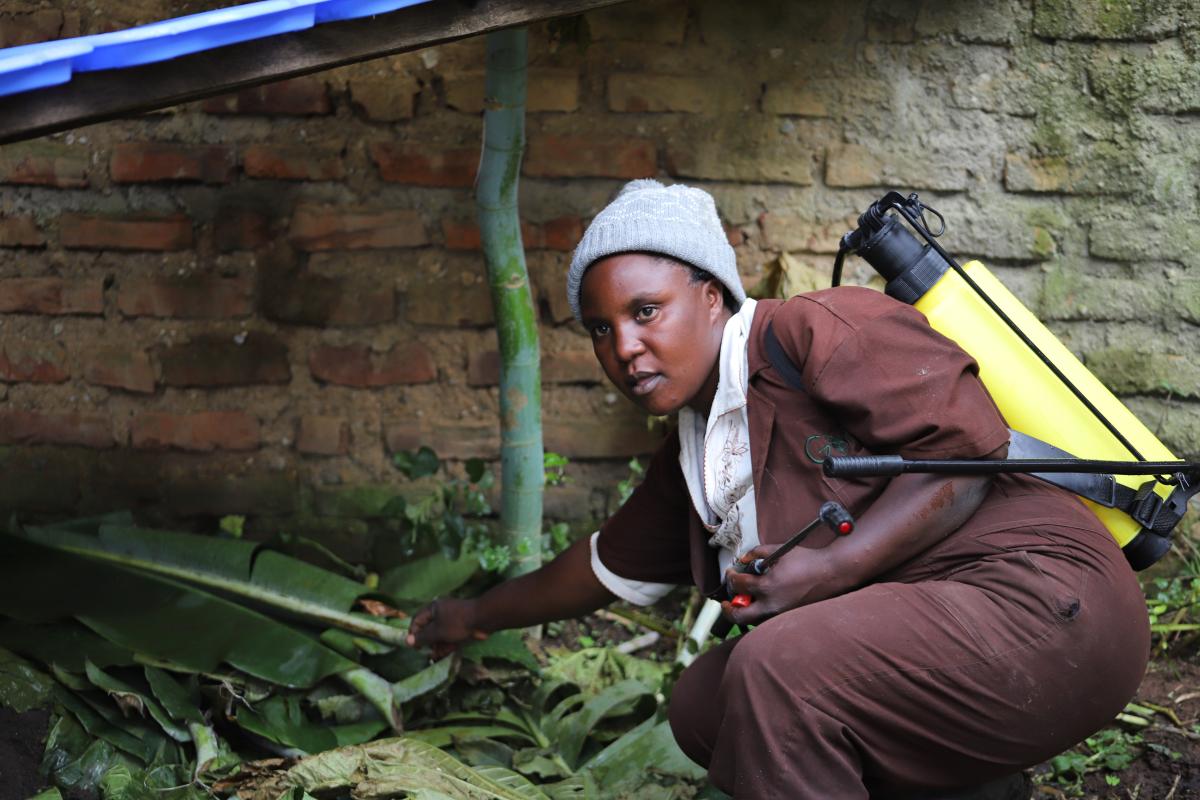
commercial medicines, she now treats her birds using medicinal herbs that she
grows herself. “I used to spend a lot of money on medicines. Now I use herbs
and they work very well,” she explains.
During follow‑up visits, extension workers from RCA
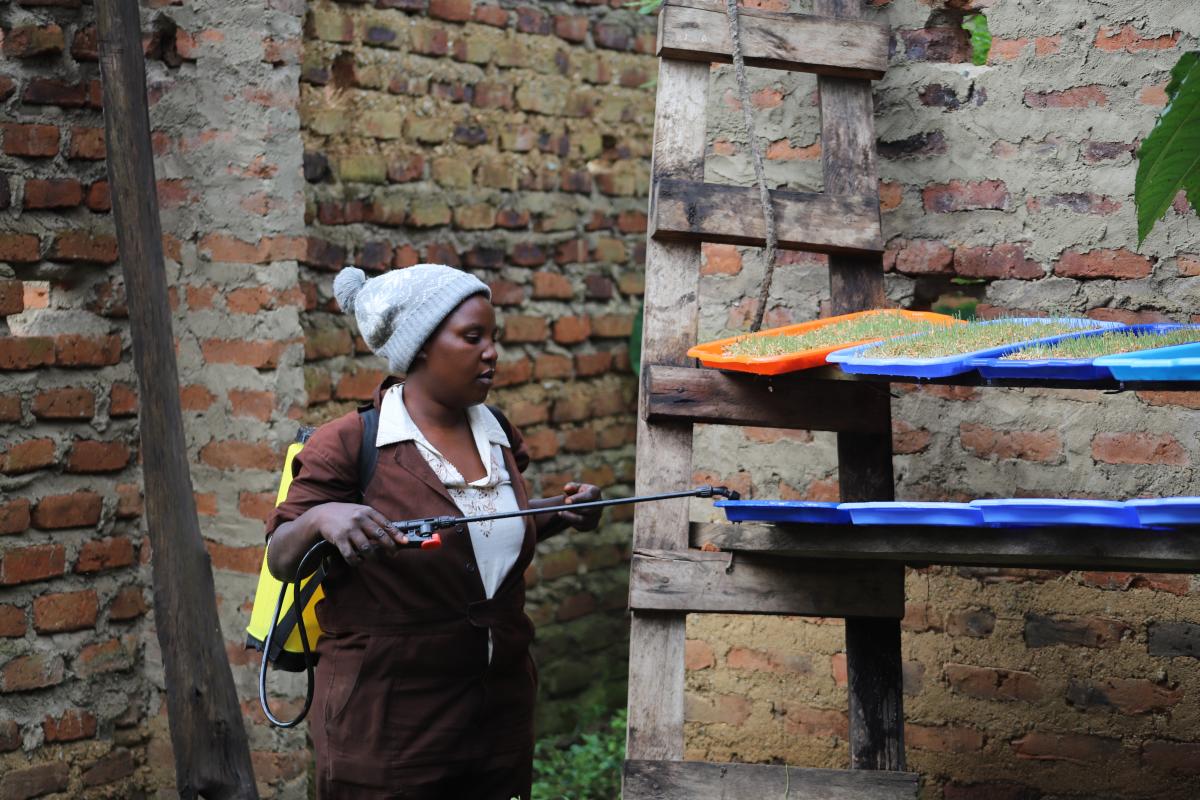
learnt that feeds had become another major challenge. They introduced her to
hydroponic fodder, Azolla, and maggot production, all of which have helped
reduce feeding costs. Lamark Muhindo, a project officer, explains that Azolla
is rich in protein and grows quickly on water. “A handful of Azolla placed in a
pond, and it multiplies within a week. It can be fed to poultry, goats, cows and
even fish,” he says. Today, Patience harvests Azolla every three days from a
small pond on her father’s land and feeds it directly to her birds. She has
also started producing maggots, which she mixes with poultry feeds to improve
their nutritional value.
She believes the changes are already showing results.
“Before, my birds used to lay white eggs. Now they lay eggs with yellow yolks
because of the nutritious feeds,” she says. Patience currently has 32 birds,
having sold part of her original flock to buy more feeds when supplies became
scarce. She plans to restock soon and hopes to become one of the leading
poultry farmers in her community. “I want to be among the best poultry
producers in my area,” she says.
The training also introduced her to record keeping and
business planning, skills she now applies in managing her poultry enterprise.
Although she is not yet a member of a Village Savings and Loan Association,
joining one is among her next priorities. If she receives the project’s UGX 1
million micro‑grant (€239), she plans to buy 100 chicks and more feeds to
expand her business further. The micro‑grant is awarded after Ile de Paix
carries out assessments during mentorship sessions to identify youth with strong
potential to grow their businesses, with the evaluation and selection conducted
by an independent firm to ensure transparency.
Alongside poultry, Patience grows eggplants, helping her
earn additional income while building the poultry enterprise she hopes will
continue growing in the years ahead.
Latest news from this project
No news