Through Enabel project a factory engineer supports creation of jobs in vegetable farming
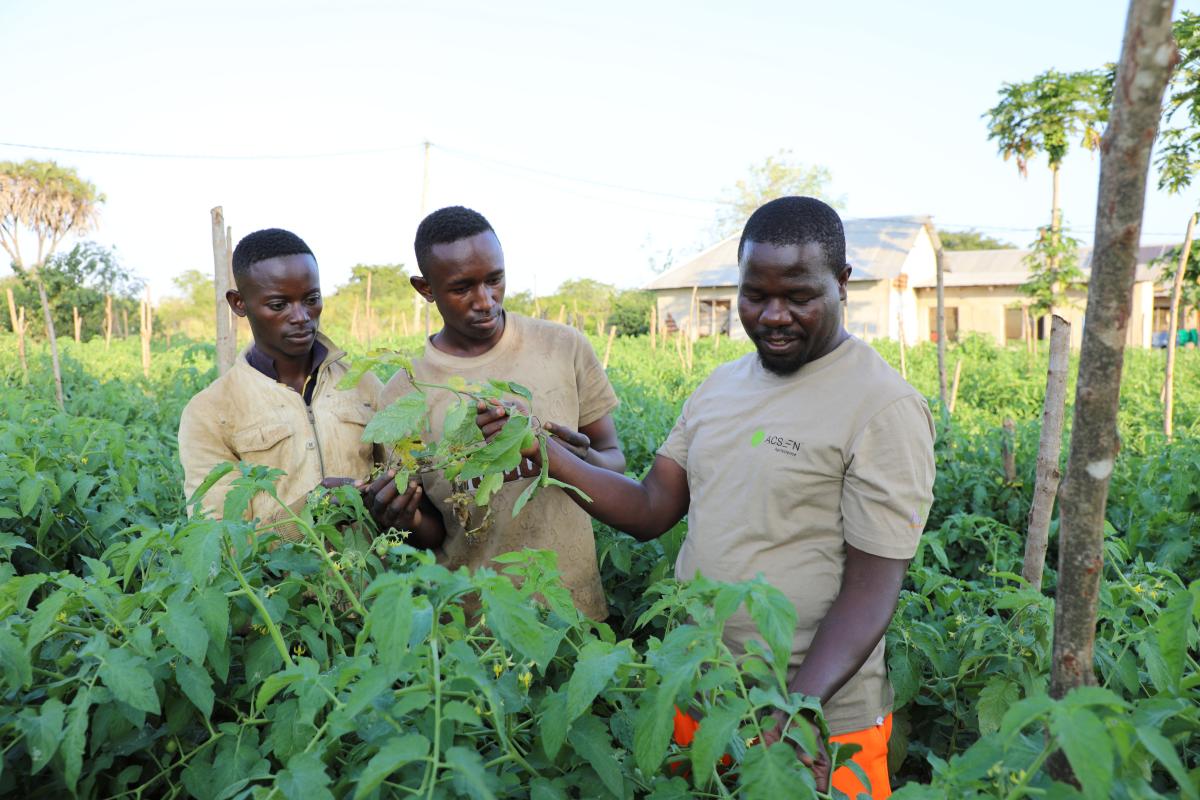
“After working with the Inclu-cities project I see impact among members
of the farmers' groups. Many farmers have now dug their own deep wells, and those
who can afford it have installed solar pumps. All this because they saw the
benefits on my farm,” said James Kapalata.
Seeking to complement his salary with a business he can manage, the
industrial chemical engineer, at Tanga Cement, found land in Kange and started growing
vegetables. Kapalata invested some money in a borehole, but endured high diesel
costs to water his plants. Many vegetable growers around him fared worse,
struggling with uncoordinated marketing, access to knowledge and farming input
and weather hazards.
The Urban Challenge
Tanga, has arable land and is strategically placed near vegetable
hungry markets—Dar es Salaam, Northern zone towns and neighboring Kenya. But,
rain seasonality, lack of market data, high input costs, less coordinated
linkages held off farmers from growing vegetable commercially. Enabel Tanzania implements the INCLU-CITIES
project (2024–2026) with funding from the European Union. The project aims to
stimulate job creation and economic welfare by providing entrepreneurs with the
tools needed to thrive in a modern economy.
The Shift
In Tanzania, Enabel implements the INCLU-CITIES in collaboration
with different partners. RIKOLTO, a Belgian organisation focusing on improving climate-smart agriculture and food security through profitable farm businesses. Under the Inclu-cities projects, RIKOLTO collaborated with Tanga City to implement the Tanga
sustainable food programme.
Starting in May 2024, the project rolled out the Agribusiness Cluster (ABC)
model that connected farmers, agribusiness SMEs, service providers, financial
institutions, government agencies, and other stakeholders to jointly improve
productivity, market access, value addition, and competitiveness in a specific
value chain.
James Kapalata was one five lead farmers empowered to facilitate
farmers' access to business development services, input supply linkages,
financial literacy, and market connections.
As farm Coach Kapalata got training and
a solar-powered pump to fit on his borehole. In this role, he has organized
nearly 60 farmers in two groups, linked them to agri-input companies such as ACSEN Agriscience, a sustainable farming company, and Rijk Zwaan, a fruit and vegetable breeding company, to mention some.
These companies recognized the informed demand for better inputs and brought improved
seeds, pesticide technologies, and knowledge to grow vegetables.
Farmers in Kange ward's priority crops are tomato, watermelon, and
pepper. Farmers’ collaboration in farming blocks created demand for agri-input
suppliers on the one hand.
On the other part farmers were capable of augmenting
their production capacity, attracting buyers and negotiating with leverage with
vegetable buyers in Tanga and Dar es Salaam.
Specifically, Kapalata facilitated:
- successfully negotiations with the sole pepper buyer in Tanga for better prices ·
- a sale contract with another pepper buyer from Bagamoyo, more than 200 kilometres from Tanga City
- access to finance for farmers in Kange ward
Apart from digging wells of their own, more farmers have entered in the block farming collaboration, seeing that it augments their productivity, their negotiating power and attracts big buyers.
"With continued collaboration with our local extension officers, we are confident that agriculture will be sustainable. This is because extension officers understand the challenges faced by farmers in their areas."
ends
Latest news from this project
No news