Building a poultry farm one flock at a time in Uganda
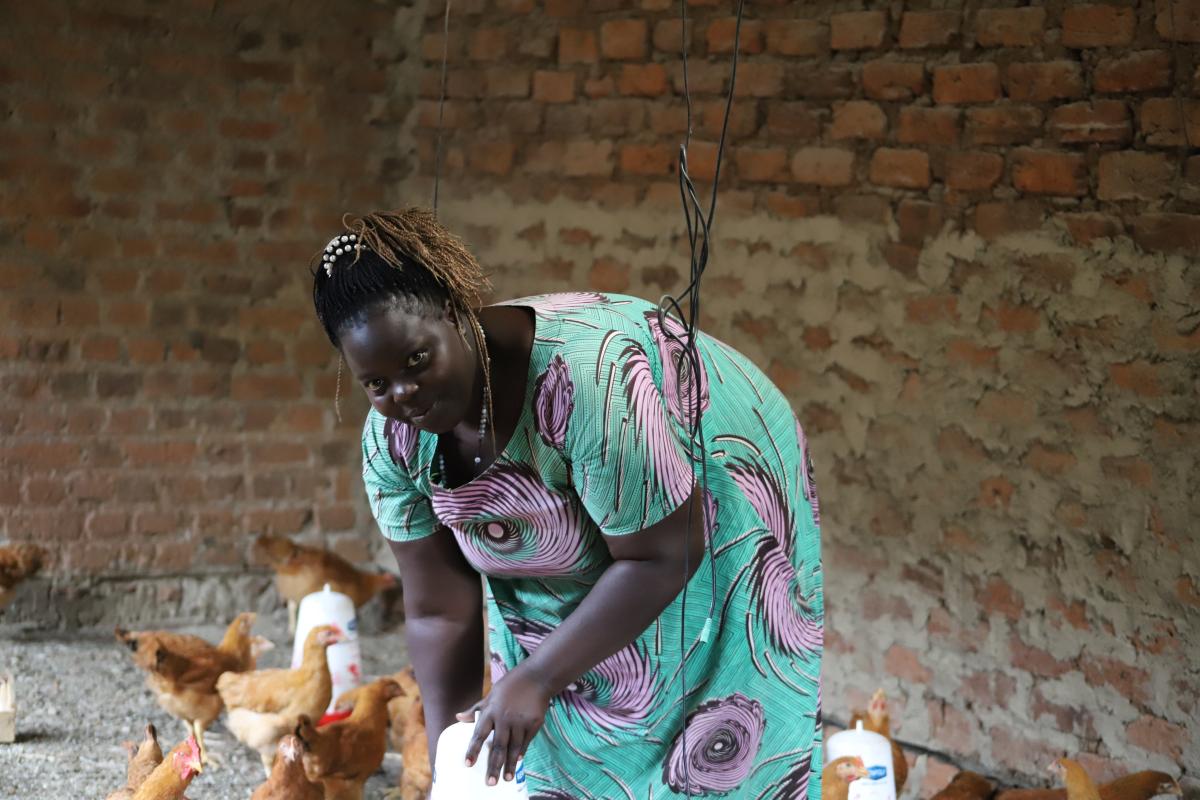
When Yuster Katusabe started keeping poultry, she noticed
there were very few poultry farmers in her community. She saw an opportunity.
“I realised there was a ready market because very few people were doing this
business,” she says. Her location also works in her favour, as she supplies
customers from a nearby trading centre and from Kichwamba Technical College,
where demand for chicken remains high.
Yuster already had 200 birds when she joined the WeWork –
Green and Decent Jobs for Youth project. The project is implemented by Enabel
in partnership with Ile de Paix and The Association of Rwenzori Community
(RCA), with funding from the European Union and the Government of Belgium.
Through the programme, she attended a five‑day residential bootcamp where she
learnt business planning, marketing, and proper record keeping. “I was keeping
records before, but I was not doing it properly,” she admits. She now has a
written business plan and a clear target: by 2027, she wants to increase her
flock to 700 birds.
The project awarded her a UGX 1million (€239) micro‑grant, which she used to buy 100 more chicks and feeds. The micro‑grant is
given after Ile de Paix carries out assessments during mentorship sessions to
identify youth with strong potential to grow their businesses, with the
evaluation and selection conducted by an independent firm to ensure
transparency. Yuster also received 100 day‑old chicks as her start‑up kit.
Today, she keeps 300 birds.
Like many poultry farmers, one of her biggest challenges
is the cost of feeds. To reduce expenses, she adopted hydroponic fodder, learnt
how to prepare poultry feeds herself, and now uses herbal treatments whenever
her birds fall sick. She says these practices have helped reduce production
costs considerably. Her business is entirely family‑run. She has no employees,
but her six children help with daily work while she manages the enterprise.
Besides poultry, Yuster also grows bananas, sells tree
seedlings, and keeps goats. She has been saving with a SACCO since 2023,
setting aside a percentage of every sale she makes. “My plan is to keep saving
and continue increasing my stock,” she says. She first learnt about the WeWork
project through a WhatsApp flyer shared on social media. After applying and
being selected, she found the residential bootcamp an opportunity to learn from
other entrepreneurs. Many of those young entrepreneurs remain connected through
a WhatsApp group where they continue sharing ideas, markets, and experiences.
Project extension workers regularly visit her farm to
monitor progress and offer technical guidance. Lamark Muhindo explains that
hydroponic fodder has become one of the technologies helping poultry farmers
lower feeding costs because the birds consume both the germinated seeds and the
green shoots. Yuster believes the knowledge she has gained, together with
careful saving and reinvestment, will help her achieve her goal of building one
of the largest poultry enterprises in her community.
Latest news from this project
No news