Changing direction to build a bigger poultry business in Uganda
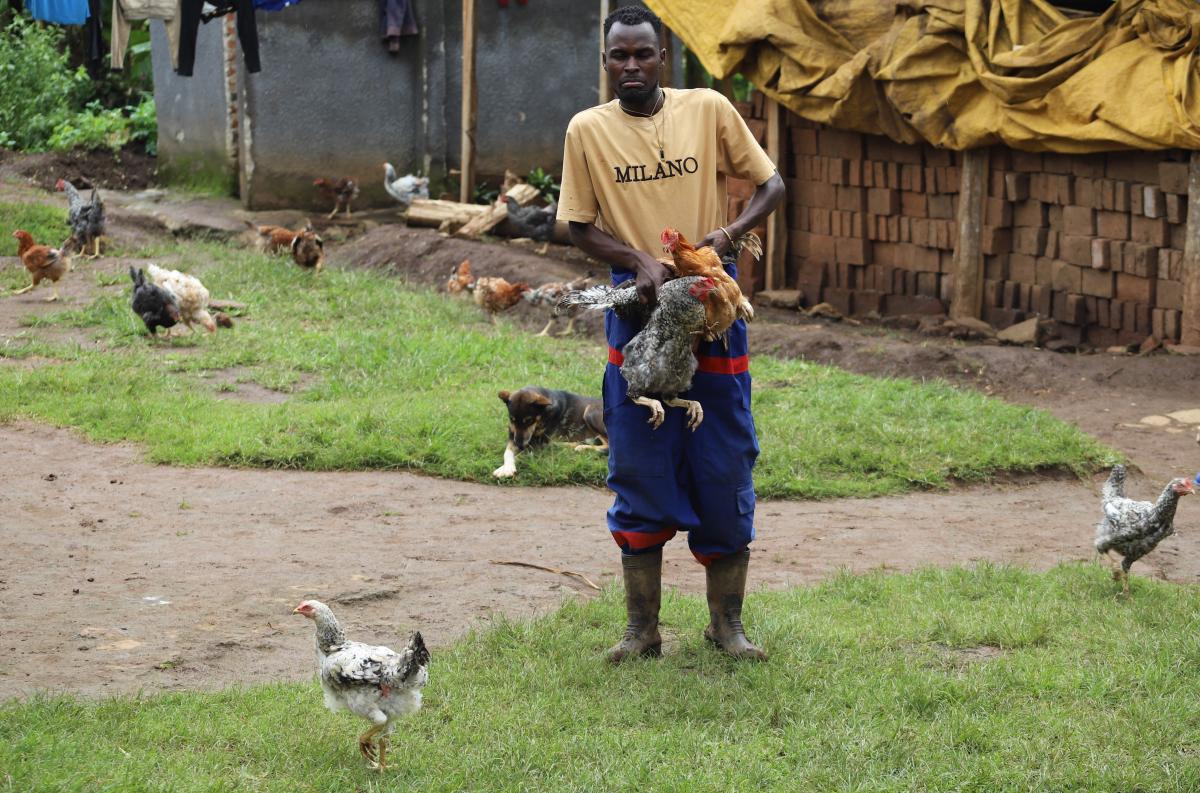
William George Amanyire had already started a poultry
business before joining the WeWork – green and decent jobs for youth project.
At the time, he was rearing 100 layers, but the business was proving difficult.
“The layers were eating a lot, but after four months they had produced very few
eggs,” he recalls.
When a friend shared information about the project,
William applied and was selected. The WeWork project is implemented by Enabel
in partnership with Ile de Paix and The Association
of Rwenzori Community (RCA), with
funding from the European Union and the Government of Belgium. Before attending the bootcamp, project staff visited
his farm to understand his business and prepare him for training. According to
Lamark Muhindo, a project officer from RCA, these visits help staff assess
where each entrepreneur is starting from before the training begins.
During the five‑day residential bootcamp and the
practical sessions that followed, William learnt more about poultry production
and was introduced to broilers. “The training was very interactive. After
learning about broilers, I realised they bring returns much faster than
layers,” he says. Motivated by this new knowledge, he decided to change
direction completely. William sold all his layers and used the money to buy 100
broiler chicks, adding another 100 chicks that he received as a start‑up kit
through the project.
His enterprise grew further when he received a UGX 1
million micro‑grant (€239). The grant was awarded after Ile de Paix carried out
assessments during mentorship sessions to identify youth with strong potential
to expand their businesses, with the evaluation and selection process conducted
by an independent firm to ensure fairness. William invested the grant in 200
Rainbow Roosters, a fast‑growing breed with strong market demand, which gave
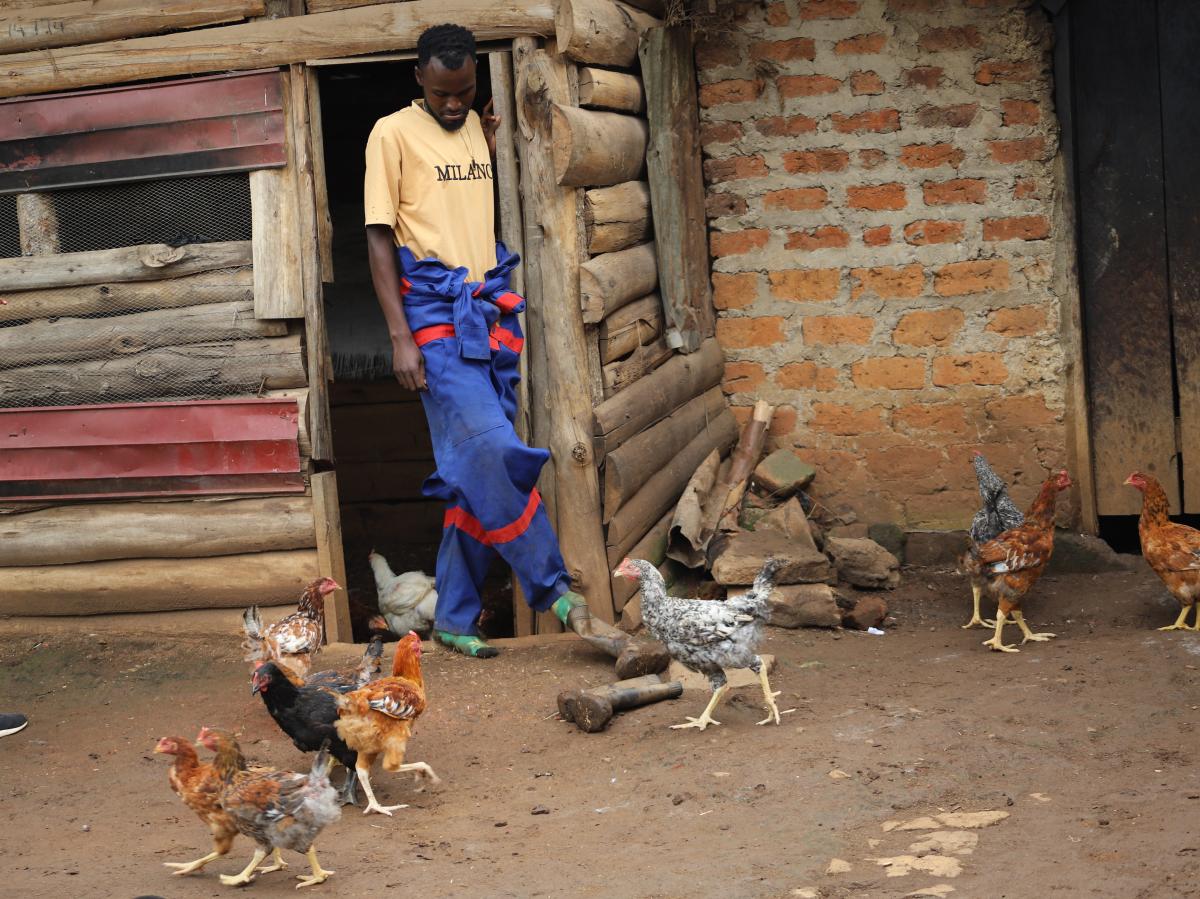
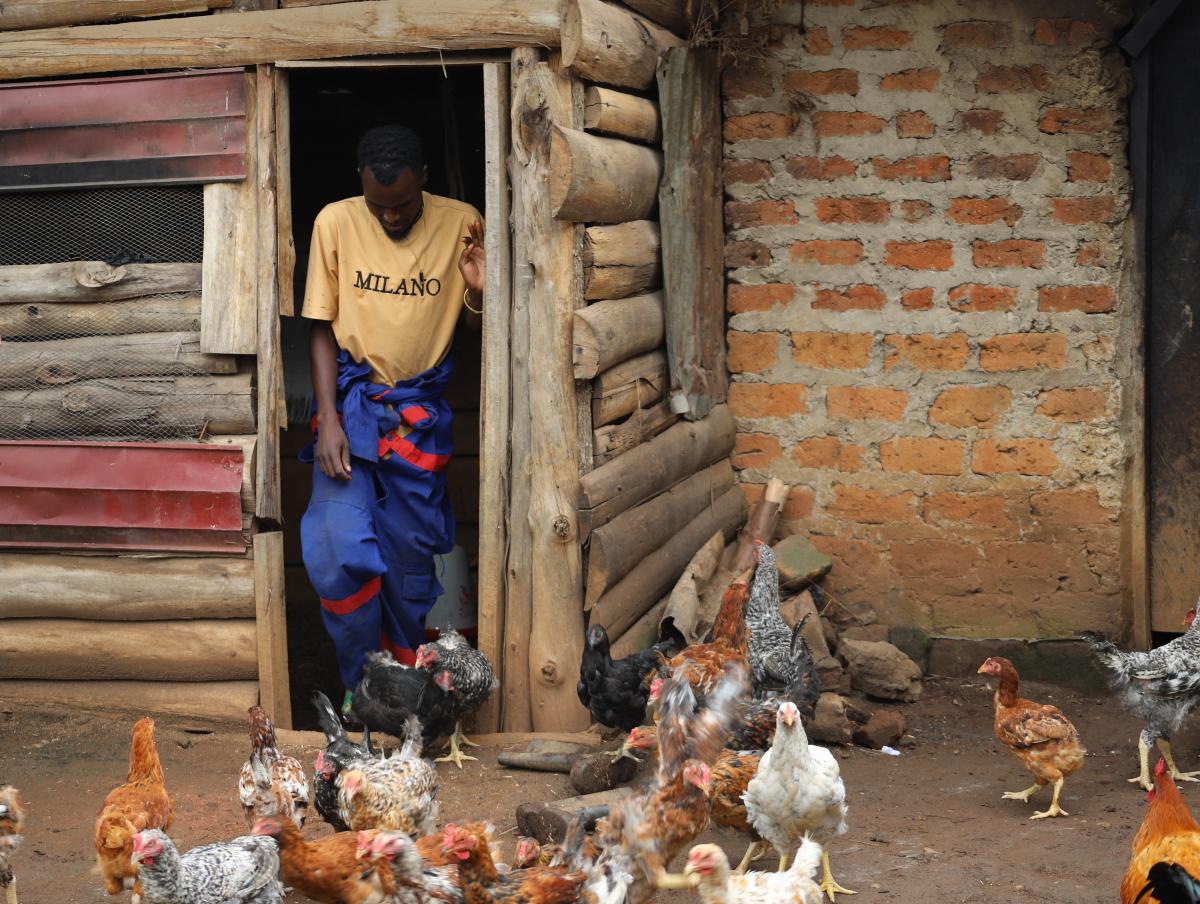
his business a major boost. Today, he keeps about 450 birds and has already
placed an order for another 500 chicks. “The layers gave me a starting point,
but broilers have helped me grow,” he explains.
One of the biggest challenges he continues to face is the
high cost of feeds. To address this, Lamark introduced him to Azolla and
hydroponic fodder, technologies he has started testing on his farm to reduce
production costs. Azolla is a
genus of tiny, fast-growing aquatic ferns, which float on the surface of
freshwater and is highly prized in sustainable agriculture as a nutrient-rich
livestock feed. On the other hand, Hydroponic
fodder is fresh,
sprouted cereal grain (like barley, maize, or oats) grown without soil using
only water and trace nutrients.
With these innovations, William is steadily building a more sustainable and
profitable poultry business.
William has also built
a strong customer network.He supplies restaurants, receives walk-in customers
and regularly markets his birds door to door. He also exchanges customers with
fellow poultry farmers he met through the bootcamp.
“If one farmer runs
out of stock, they refer buyers to another", he says. The training also
improved the way he manages his business. "Before, I was writing some
records, but not in a systematic way. "Today, he uses a laptop to keep
detailed records of income, expenditure, bird weights and even mortality. "When
birds die, I record the cause so that I can avoid the same problem in
future."
William also saves UGX
30,000 (€7) every week through a savings
group and hopes to access youth financing from Centenary Bank to improve his
poultry structures.
A graduate of
Industrial Art and Design, he chose poultry farming instead of pursuing his
profession. Looking around his growing farm, he says he has no regrets!
Latest news from this project
No news