Better planning is helping a family poultry business grow in Uganda
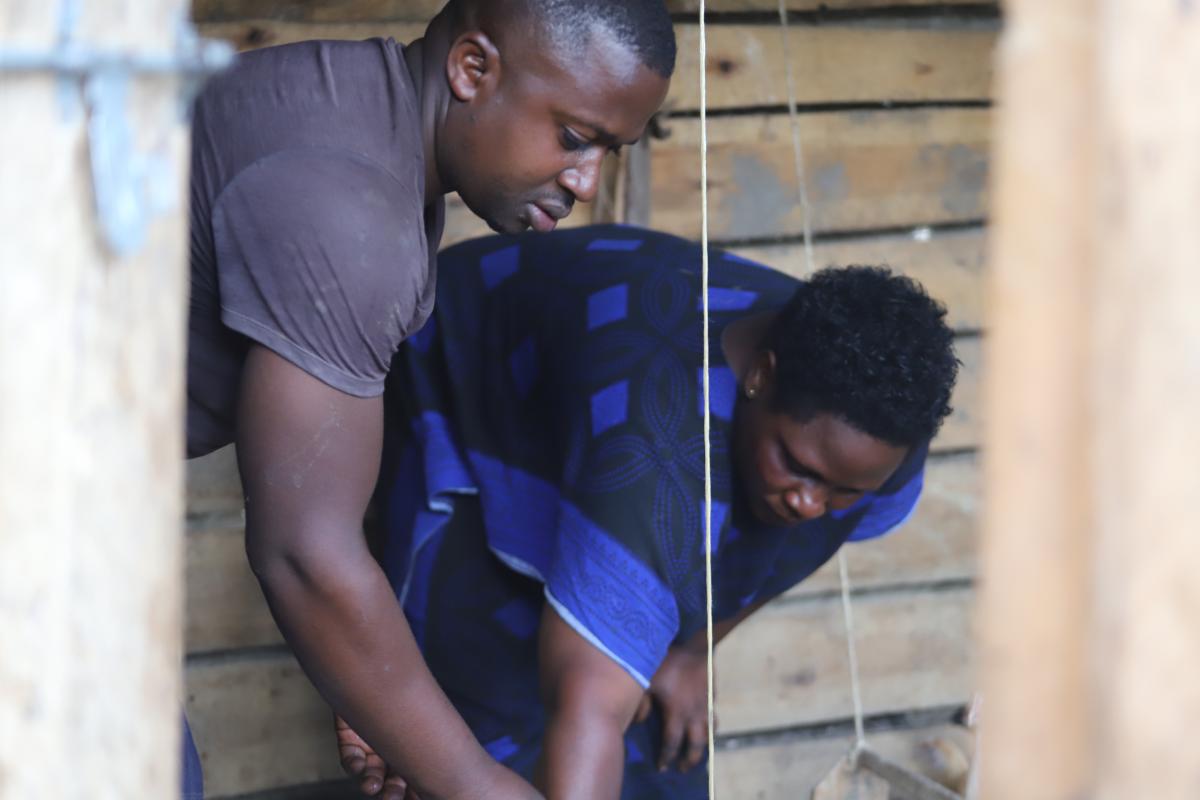
When Margret Kabajungu joined the WeWork – green and decent
jobs for youth project, she was already rearing poultry with her husband, John
Assimwe, at their home in Bunyangabu District in Western Uganda. The couple had
started the business two years earlier and had 35 birds when Margaret was
recruited.
Margret had almost missed being part of the project. This
is because although she had applied during the initial recruitment, she had not
been successful. However, after some participants dropped out, she was invited
to take their place. Although she missed the five‑day residential bootcamp, RCA
field officer Lamark Muhindo ensured she received the training she needed, during
the regular field visits to her home.
“When we recruited her, I took her through
some of the topics that had been covered during the bootcamp so that she could
catch up," says Lamark. "Since then, I have continued visiting them
to ensure they stay on track."
Today, the couple keeps 50 dual‑purpose
birds. At one point, they had increased their stock to 80 but later sold some
after realizing their poultry house had become small. The proceeds enabled them
to fence the compound and build a stronger structure for their birds and their
cow, making the entire farm safer and better organized.
As part of the
project, Margaret received 23 birds and 50 kilogrammes of poultry feeds as a
start-up kit. Those birds are still part of the stock today.
Lamark says that the
project also introduced the family to improved breeds such as Sasso and Kenbro,
which are more productive while retaining the characteristics of local
chickens. These breeds are bred to be harder and more
disease-resistant than standard commercial broilers, while growing faster and
laying more eggs than indigenous chickens.
The couple now buys
one-month-old chicks, raises them for another two to three months and sells
them for meat at a minimum of UGX 30,000(€7) per bird. Their
current stock alone is worth about UGX 1.5 million (€359).
The training also
encouraged the family to diversify. Besides poultry, they rear goats and
cattle, use manure from the animals to improve their crop gardens and have
adopted hydroponic fodder to reduce feeding costs.
"We encourage
farmers to have poultry, crops, cows and goats because each activity
complements the other," Lamark explains.
Another important
lesson was record keeping.
"Before, we kept
everything in our minds," says John. "We would sell birds and later
fail to remember how many we had sold or how much money we had received. Now we
write everything down and it helps us know whether we are making
progress."
The couple also joined
a Village Savings and Loan Association after being encouraged during their
mentorship sessions. Every week, Margret saves about UGX 45,000(€11), and they have already used loans from the group to buy poultry feeds.
Their goal now is to begin brooding 300
day‑old chicks, a move they believe will further increase their profits.
Alongside their small grocery shop and other farm enterprises, poultry has
become one of the businesses enabling them to provide for their five children
with greater stability and confidence.
They are grateful to the project for how
far they have come in their business. The WeWork project
is implemented by Enabel in partnership with Ile de Paix and The Association
of Rwenzori Community (RCA), with funding from the European Union
and the Government of Belgium.
Latest news from this project
No news