Youth Digital Ambassadors facilitate digital inclusion for Small and Medium Enterprises
The entrepreneurship ecosystem in
Tanzania is rapidly growing. In 2021 the Global Innovation Index 2021, ranked
Tanzania as the 5th innovation ecosystem in Sub-Saharan Africa by, exemplified
by a rapidly increasing number of start-ups and hubs.
However, limited tools, skills and resources hold these
developments from trickling down to small and medium enterprises and fuel
growth. Many enterprises still only hope
to make use of the digital tools.
An assessment by Westerwelle Start-up Haus, a
digital skills organisation in Tanzania, found that more than 80 percent face
business-related skills challenges such as managing finances, sales and
marketing to acquire new customers, and setting business goals.
The same assessment found that
businesses had technical digital skills challenges learning new digital skills,
improving quality, and using digital tools.
The major reasons behind the skill
gap lack of programs that support entrepreneurs to digitalize and insufficient support
for the local ecosystem of digital experts and creatives that empower SMEs with
digitalization.
The analysis of Mwanza shows there is a
big gap for digital upskilling for entrepreneurs so that they may utilize
digital tools and opportunities to grow their businesses. The entrepreneurs
also need upskilling on business topics to better understand their financial
and operational management and acquire new customers.
Solution
Under SASA, a program funded by the
European Union in Tanzania, Enabel enlisted the partnership of Digital
Opportunity Trust, Ennovate Ventures and Westerwelle Start-up Haus to fill the
gap by developing program that support entrepreneurs to digitize, and upskill
them in business topics that facilite their familiarity with digital tools.
Ennovate Ventures worked in Mwanza,
while Digital Opportunity Trust and Westerwelle Start-up Haus are working in
Pemba and Mwanza. Each partner had a particular focus and method. Digital
Opportunity Trust (DOT) focused on developing youth as digital ambassadors
(Balozis in Kiswahili), with confidence and knowledge in digital skills, business digitization and market linkages.
Overall the Digital Balozi’s will impact at least 300 young women and
men, aged 18 to 35 years who own and operate micro and small businesses in
their communities in transforming and scaling their enterprises through digital
and green innovation in Mwanza, Pemba, and Tanga.
Inclu-cities project digital program put
youth at the centre of community change by equipping youth and women
entrepreneurs who run micro or small businesses in Mwanza, Tanga, and Pemba
with basic digital, green, and financial literacy skills.
After their training, the first batch of digital ambassadors (Balozis)
was contracted in September 2025 and has since been working in Mwanza, Tanga
and Pemba.
The Balozis linked with SASA program
coordinators and other Inclu-cities project implementing partners in Tanga,
Pemba and Mwanza Digital skills focused on could be data management and
interpretation, digital communications including design, digital marketing,
application design, basic SME cybersecurity awareness etc. Interlinked green
skills could be skills related to the circular economy such as hardware
reparations, recycling and solar or other types of green power.
Targeting Youth (aged
18 to 35 years old) and women entrepreneurs operating micro or small businesses,
the Balozi, recruited trainees through local networks of INCLU-CTIES implementing
partners and local governments in Mwanza, Tanga and Pemba.
“Cross
partnerships with co-implementers of INCLU-CITIES is key to building an
ecosystem of support and cross pollinating the impact of the program,” said
Enabel Tanzania Digital Expert, Joachim Mangilima.
The
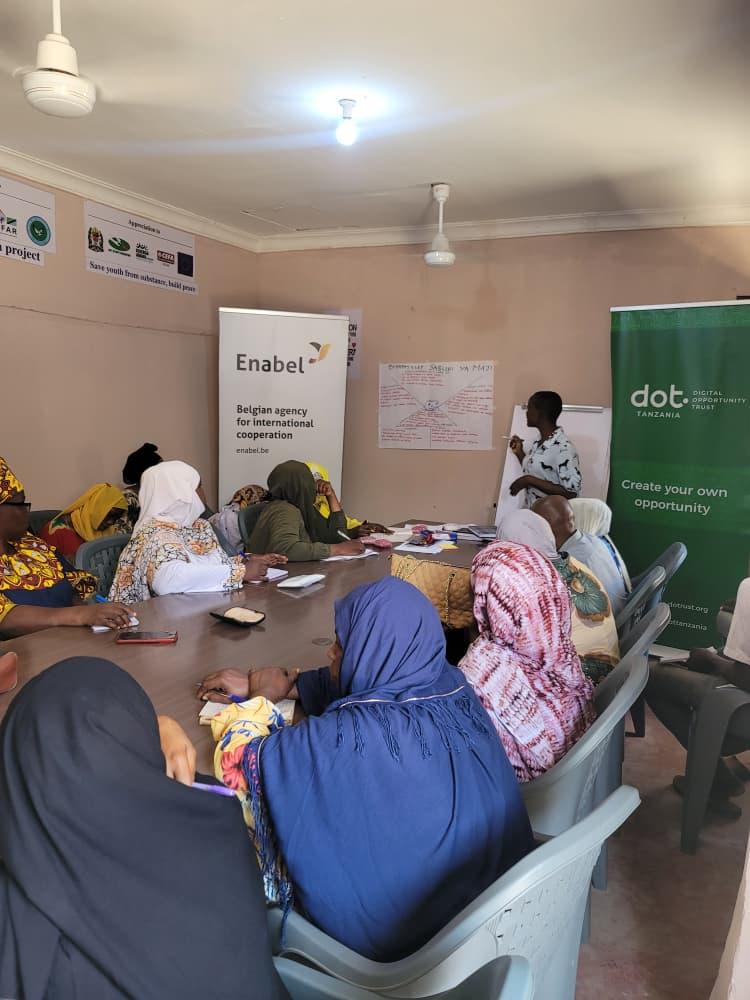
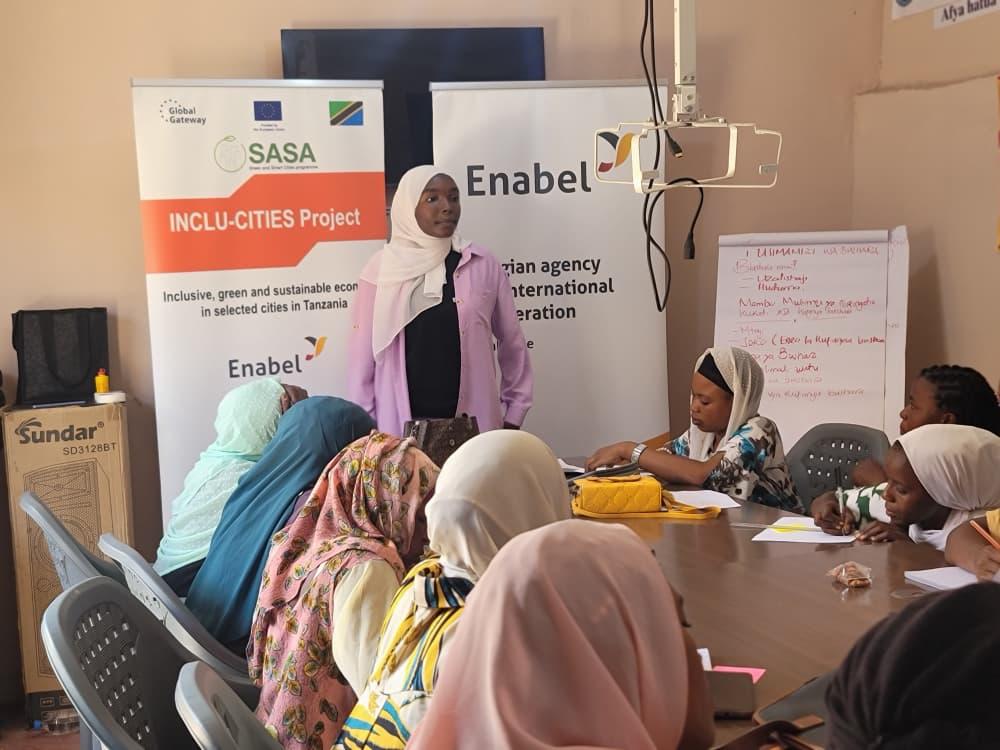
10 Digital Balozi have been deployed in their respective regions where they
work as pairs in program delivery. facilitation, digital business, financial literacy,
21st century and Green Skills.
Deep local partnership
Starting
at the LGA level, digital balozis have been linked with different organisations
that support their role. In Mwanza, John Christopher and Anna Paul, the pair of Digital Ambassadors secured
space to run the training at the premises of the local government, at the
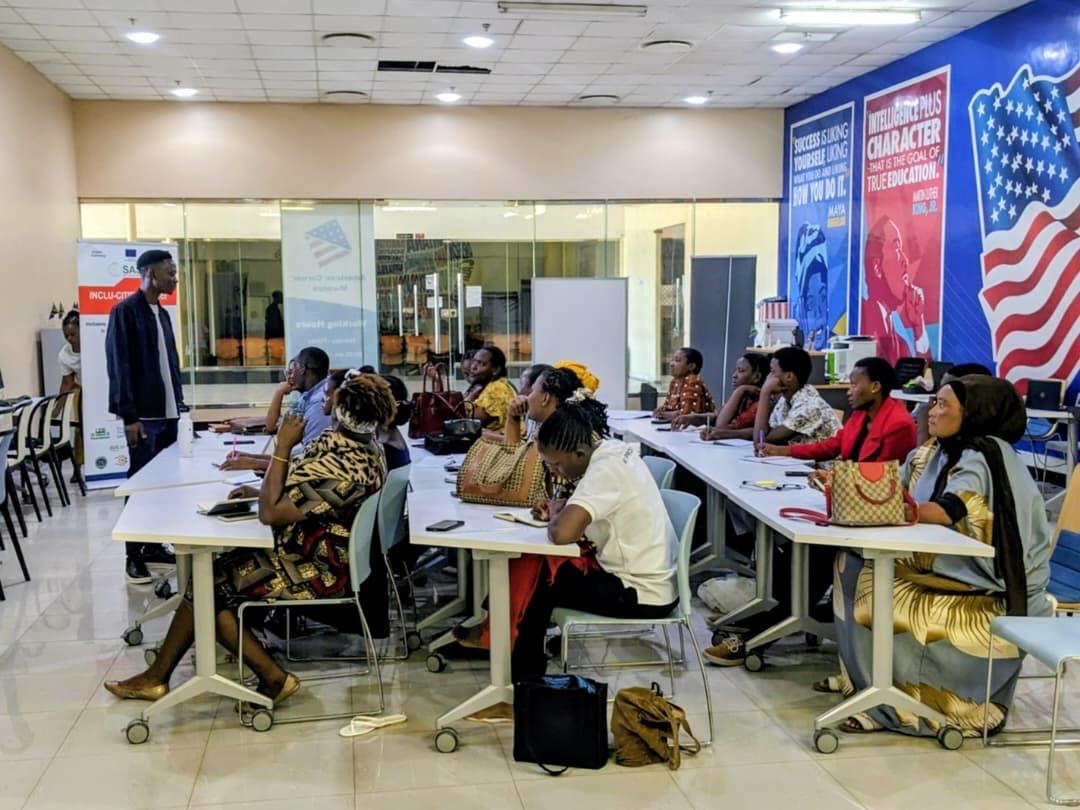
American Corner auditorium in a famous shopping mall. Another premise was made
available at a community youth centre—Fadhili Teens.
Partnerships
with private sector actors and local organisations — including TWCC, ZEEA,
ZNCC, UMATI Pemba, Gift of Hope, PYD, Nyasaka Local Government Office, American
Corner, and Fadhili Teens — played a pivotal role in mobilisation, access to facilities,
and strengthening delivery.
In
Pemba, the Tanzania Women Chamber of Commerce (TWCC), Zanzibar Economic Empowerment
Agency (ZEEA), UMATI, a youth health organisation and a community group, Gift
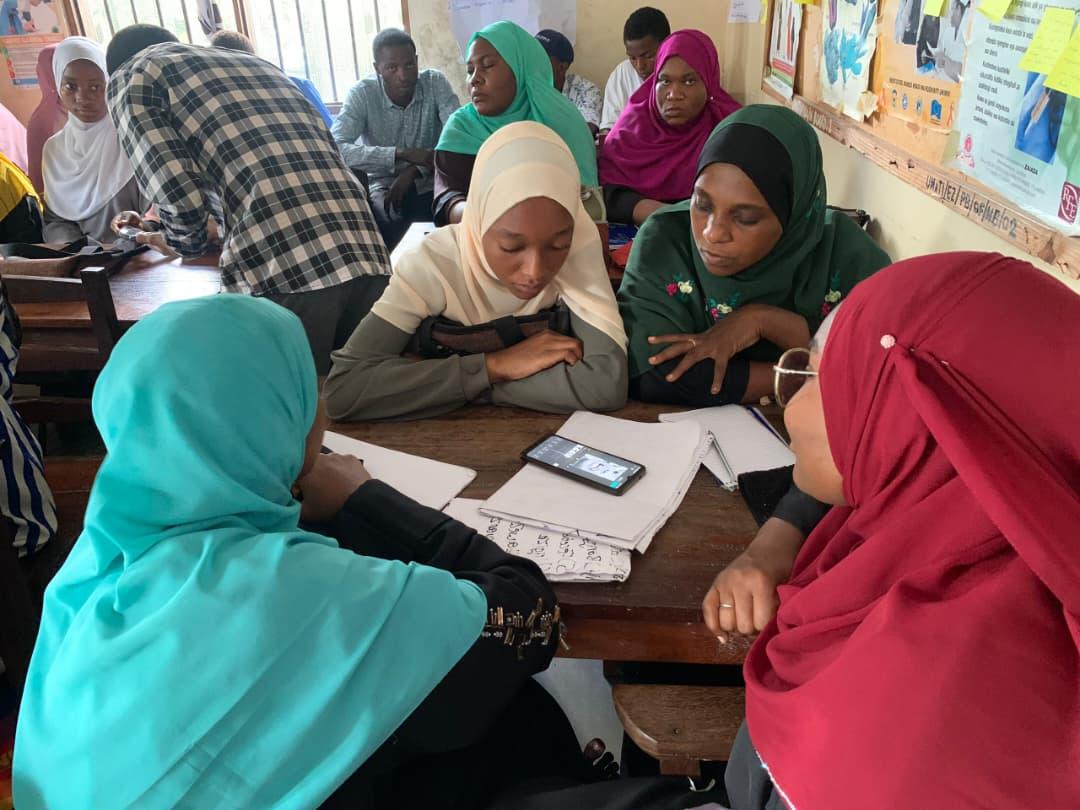
of Hope, offered space in their premises for the youngsters to conduct classes.
“We
are very flexible in terms of spaces we use for our trainings,” says John Christopher, Digital
Balozi in Mwanza. He and his fellow Anna Paul, have conducted classes at posh
American Corner, the government office in Nyasaka community and at a space offered by a
mosque.
These
partnerships have enabled Digital Balozis to establish strong community linkages
and deliver interventions more effectively.
Private sector actors and ecosystem
partners such as Tanzania Women’s Chamber of Commerce (TWCC), the Zanzibar
Economic Empowerment Agency (ZEEA), have been actively involved in supporting
training delivery and shaping tools and methodologies that align with market
needs.
Trainees
came because they needed the knowledge and skills. No one received any facilitation
or even communing fare to participate in the trainings.
As
of the first week of December 2025 ten digital balozi had a total of 220 participants are actively taking
part in the training sessions 173
females and 47 males. Female
participants represented 78% of the
total, aligning strongly with DOT’s gender inclusion model, which aims
for a 70:30 female-to-male ratio.
Consolata
Tedeo Peter, a youth entrepreneur, selling hair extensions and spices is one of
the DOT trainees in Mwanza.
The
training on digital business and online marketing made a difference to her hair
extensions and spices business online and on location. She confesses that she
have reached more clients through WhatsApp, Instagram and Tiktok and Facebook.
“Initially,
I posted occasionally on Whatsapp only. I used to just upload a post without
detailed planning and purpose. But, now using the knowledge I learned in this
training my viewers on Instagram for instance, have increased from 1000 to 6000,”
she says.
Instead
of just posting, now Consolata plans the information that she wants to share,
and she added scheduled tutorials to educate people about how they can benefit
from products that she sells.
“As
my business is gradually growing, I’m no longer pressured to apply for jobs,”
she says curtly. She completed her undergraduate training in Education three years
ago.
Ends

Latest news from this project
No news