Ukraine: study visit to Bruges on vocational excellence
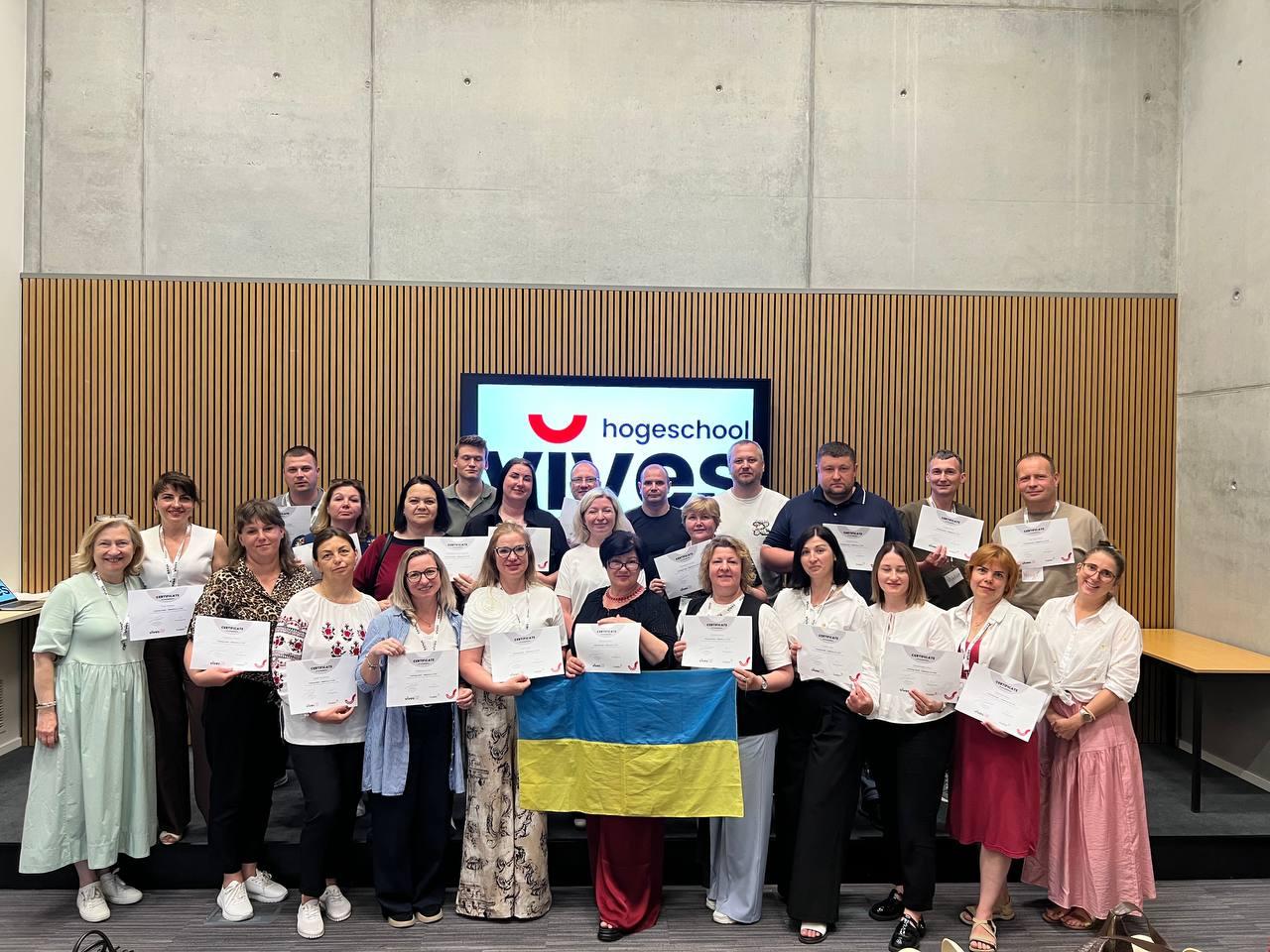
In May 2026, representatives of 22 ukrainian vocational education institutions visited Belgium with the support of Enabel. The practical module in Bruges was a follow-up to the Centres of Vocational Excellence (CoVE) development programme, implemented in partnership with the Ministry of Education and Science of Ukraine.
Over the course of 2.5 months, educators from 12 regions took part in an online course delivered by VIVES University of Applied Sciences. The programme covered four key areas: basic didactics, digital didactics, adult learning, and project-based learning.
For the practical module in Bruges, each school selected one proactive representative. This helped form a community of teachers and trainers who will act as ambassadors of vocational excellence and contribute to the development of the CoVE network in Ukraine.
“These ambassadors have an important mission: they will act as change agents in their institutions and share knowledge with their peers,” explains Enabel expert Oleksandra Borodiyenko. “After returning from Bruges, participants will deliver webinars for the UA CoVE Net community. The next step is the Summer School of Vocational Excellence, where teams from the 22 institutions will present the results of their self-assessment using the ISATCOVE framework developed by the European Training Foundation.”
Throughout June, participants shared their reflections on the visit. Explore the key insights they brought back from Flanders.
Lina Petrushkina
Odesa Center for Vocational and Technical Education
■ Technical education can be prestigious. Proven at VTI Brugge. Forget everything you thought you knew about vocational schools. These are large, modern campuses where students work with industrial robots, 3D printers, and CNC machines that cost as much as an airplane wing.A strong dual education system is in place here: upper secondary students spend several days a week working in real companies. As a result, local employers are lining up to recruit graduates, and young people enter adult life with job contracts already in hand.
■ Everyone has heard of STEM, but in Belgium, they deliberately add the “A” for Arts, meaning design and creativity. The logic is simple: knowing how to code or do math is no longer enough. STEM creates technology; STEAM makes it usable, appealing, and human-centered.
Students don’t just learn formulas – they solve real-world problems. For example, they design smart greenhouses or calculate the school’s environmental footprint.
■ Do you know the biggest challenge with most adult learning courses and training? In Europe, this is often framed as the WIIFM principle (What’s In It For Me?). You don’t start with the topic – you start with the pain point. Instead of saying, “Today we’re learning Method X,” it’s far more effective to ask: “Who here spent two hours this week stuck in routine tasks and wanted to smash their monitor?” When people recognize their own problem, they engage fully.
Adults don’t need notes that will gather dust. They need interactive worksheets and real-life cases – tools that allow them to bring their own projects into the session and work through them step by step using a new approach.
Olena Minieieva
Vocational School of Ukrainka City
During the programme at VIVES, we explored in depth how to effectively teach adults. Instead of abstract theory, the focus was on interactive casework, digital tools, and a clear answer to a key question: “How will this knowledge make my professional life easier starting tomorrow?”At VTI Brugge, the numbers were particularly striking: there are 15 mentors for every 100 students – both internal and external. This approach ensures that no learner, young or adult, is left alone with their challenges, while also helping prevent teacher burnout.
Inna Dolhushyna
Boryspil Professional College
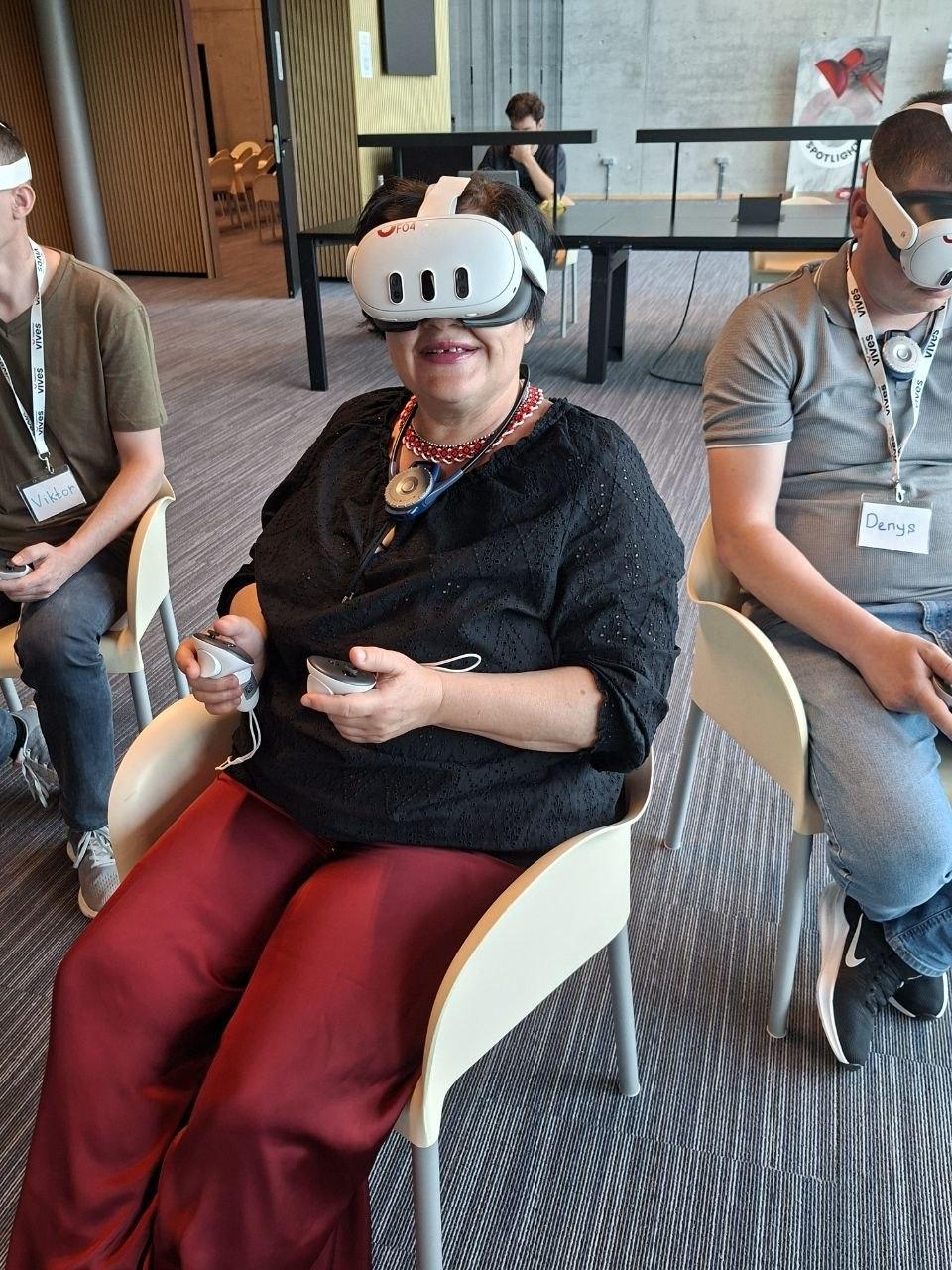
VTI Brugge stands out for the scale of integration between vocational education and industry. Modern workshops and industry-grade equipment create an environment where students gain not only knowledge, but hands-on experience with real technologies.Another highlight was the VIVES Gaming Lab and MultimediaHUB – innovative spaces where digital tools, VR/AR solutions, podcasting, and multimedia technologies are fully embedded into the learning process. This is not the “future of education” – it is already the present in many European institutions.
Nadiia Radchenko
Tulchyn Higher Vocational School
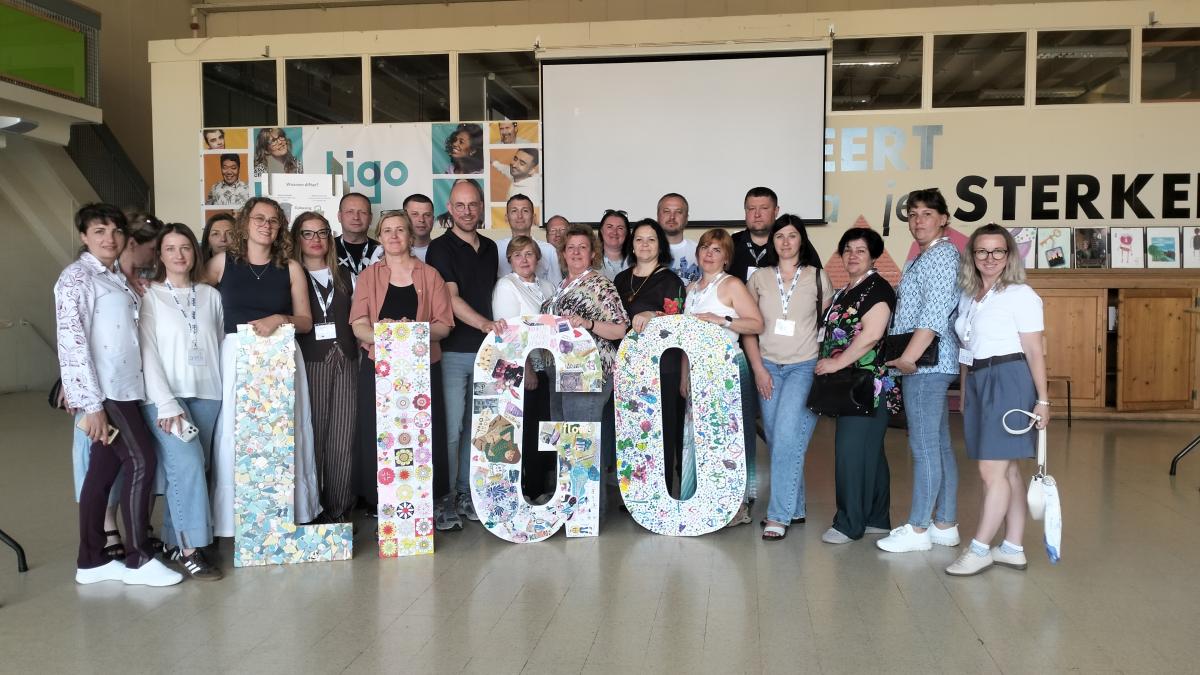
The LIGO centre demonstrated a key principle of andragogy: adults don’t come to learn “just because” – they come with a clear purpose. Whether it is adapting to change, gaining new skills, changing careers, or starting a business, the learning process must begin with this intrinsic motivation.
Olha Hreben
Kolky Center of Vocational Education
The ’tvier school in Kortrijk operates based on the pedagogical approach of Célestin Freinet. Learning here is built around independence, creativity, and student responsibility. The educational process is grounded in project-based work, inquiry, and real-life situations, where learners actively participate in decision-making and develop critical thinking skills.
Latest news from this project
No news