Community-based preparedness and resilience in action: the cases of Mossuril and Namacurra

What does it actually mean to build resilience with communities, rather than for them? In northern and central Mozambique, two districts are putting that question to work.
Community-based preparedness and resilience are one of those phrases repeated so often in the development sector that we rarely stop to think what it truly means. Simple in its formulation but pointing to something concrete: the idea that the people who live with risk every day are also the ones best placed to understand it, plan for it, and act on it.
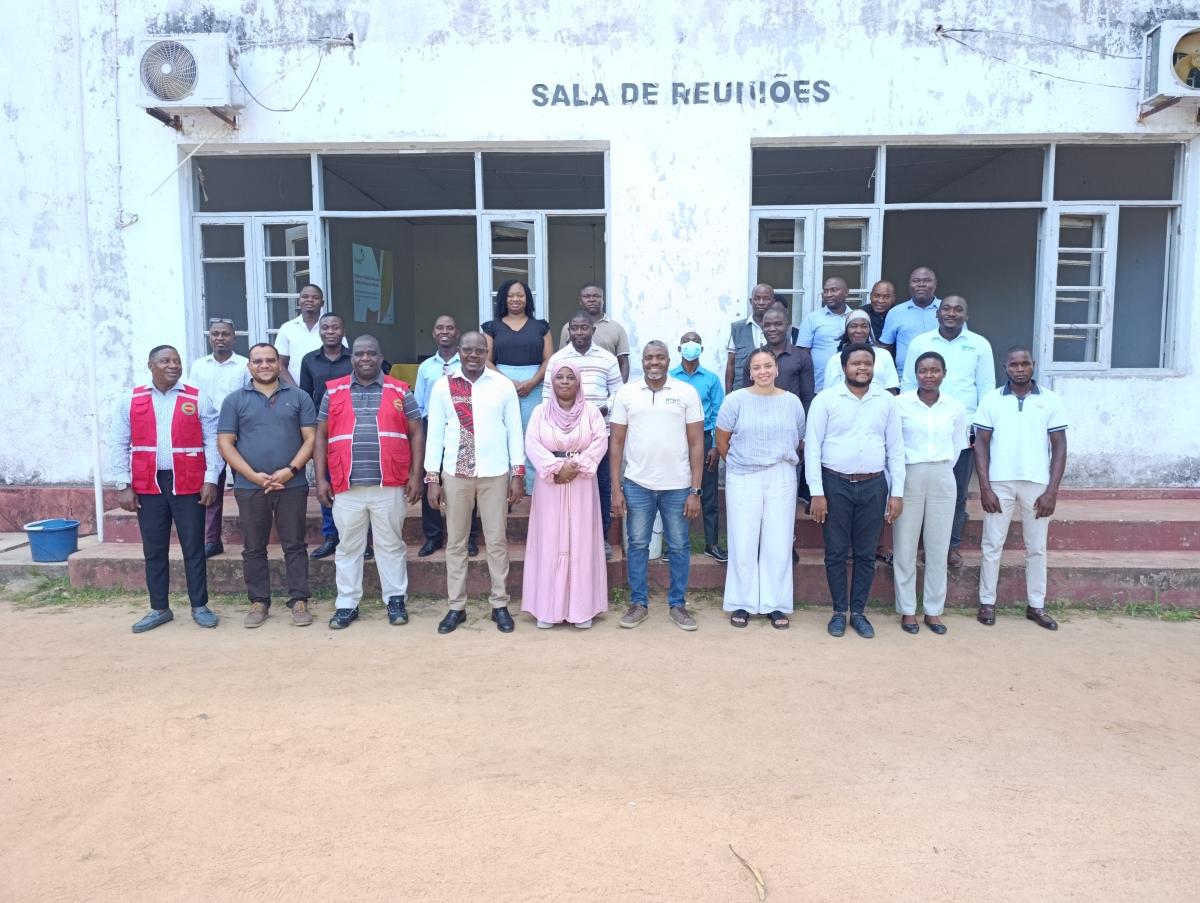
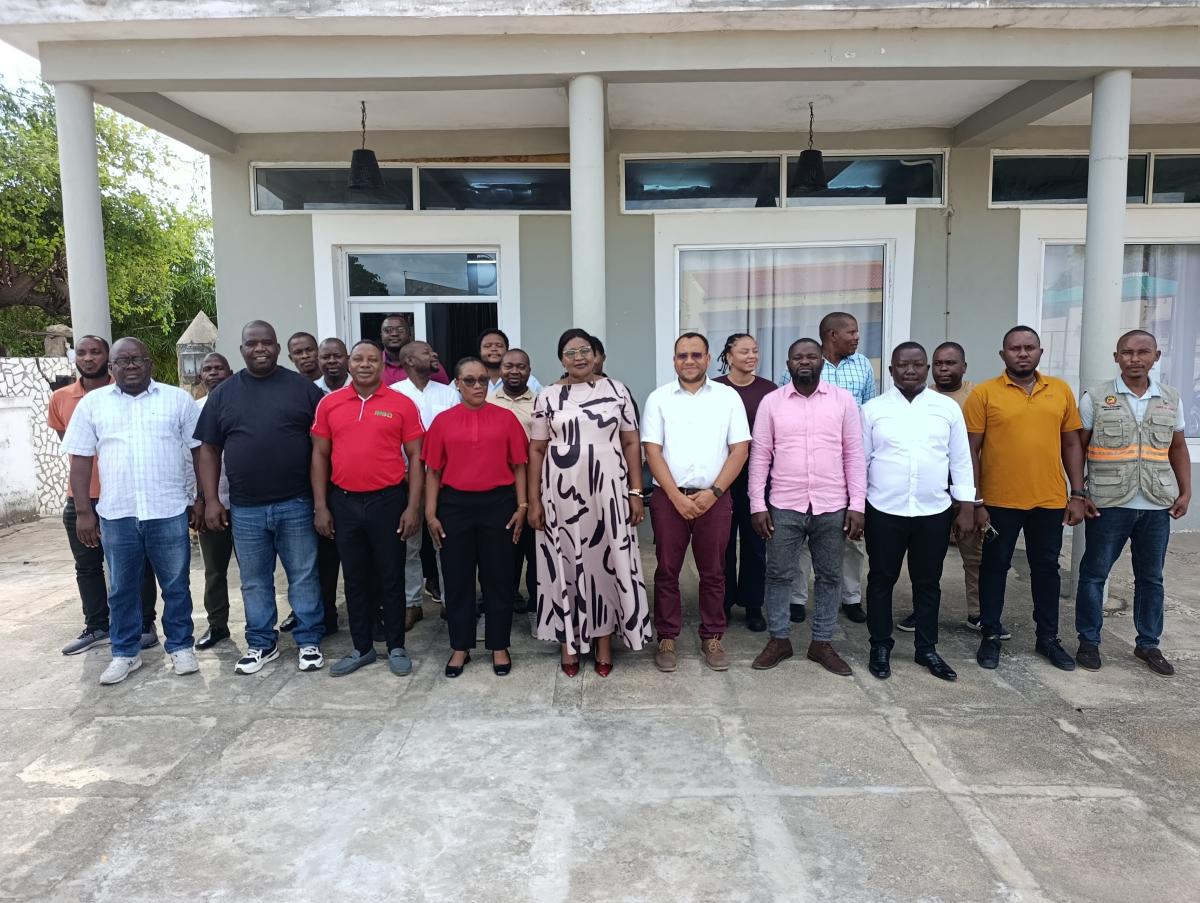
In April 2026, local government officials, sectoral technicians, and community representatives from different sectors: education, planning, health, agriculture, and finance convened in the Namacurra and Mossuril districts (Zambézia and Nampula provinces respectively) to validate their Disaster Risk Reduction Action Plans (DRRAP). This collaboration represents a pivotal step towards empowering local communities that face climate-related hazards in a country recognised as one of the most vulnerable.
Where the process started
The foundation of community-based preparedness is that before proposing solutions, the community must actively participate in defining the problems they face. In both districts, structured dialogues allowed community members to identify and map their risks, assess existing capacities, and outline their priorities for disaster risk reduction and resilience building. Those insights were integrated into district technical planning, cross-referenced with data, and refined through workshops facilitated in partnership with the National Institute for Disaster Risk Management (INGD). The validation workshops served as the final confirmation that the plans reflected community contributions and local realities. Three Pillars of Practice
Achieving meaningful resilience requires a multifaceted approach. In Mossuril and Namacurra, this effort is anchored on three interconnected pillars:Climate‑resilient multi‑purpose shelters
In many coastal and inland districts of Mozambique, schools frequently serve as evacuation centers. However, these structures often lack the necessary design and construction features to withstand high winds or flooding. To address these challenges, the first pillar focuses on transforming schools into multi-use resilient shelters. This transformation includes upgrading facilities to ensure safe sleeping arrangements, privacy, and functional sex-segregated WASH facilities. It also involves integrating menstrual hygiene provisions, proper lighting, and accessibility features such as ramps, adapted toilets, and handrails. By reinforcing and enhancing these facilities, they can function both as centers of learning and emergency shelters, without compromising either role. Alongside the physical work, this initiative empowers the school-based local risk management committees. These committees will be trained to activate, manage, and deactivate shelter spaces, following a well-defined protocol. Each shelter is equipped with an emergency kit, and a management model is established, led by the public sector and supported by community contributions wherever feasible. Readiness is tested through shelter activation simulations, ensuring practical preparedness.Community‑based early warning system and livelihoods protection
Local farmers and fishers possess invaluable environmental knowledge that can save lives. However, existing early warning and response structures, including the Local Committee for Disaster Risk Management (CLGRD), the community fishing council, and extension services, are often under-resourced and poorly integrated. This limitation hinders effective disaster risk management, particularly for vulnerable groups. Additionally, insufficient protection of livelihood assets, such as farm fields, small livestock, fishing boats, and gear, is a significant issue, as these are often not covered by practical preparedness and response protocols. This disproportionately affects women and female-headed households, who frequently have fewer resources, limited access to recovery support, and greater responsibility for household food security and care work.
To address these challenges, the second pillar enhances community knowledge by introducing structured hydrometeorological information tailored to local needs. Improving local monitoring networks and linking them with official hydrometeorological data enables communities to better prepare and respond to emergencies.
Resilient housing
Many community houses are not designed or reinforced to withstand cyclones or floods, leaving vulnerable households highly exposed to extreme weather events. The third pillar aims to promote the development of housing models that can endure severe weather conditions. By utilising local skills and materials, the objective is to create adaptable solutions that communities can scale according to their unique contexts and financial capacities.Enhancing the technical skills of local artisans and engaging local authorities and influential figures is crucial. Building this capacity can foster a supportive environment for the widespread adoption of these resilient housing models, ensuring that communities are better equipped to face climate-related challenges and effectively safeguard their homes.
Inclusion beyond a checkbox
People do not experience disasters in the same way. Women and girls, persons with disabilities, older persons, and youth each face specific barriers – not only during a crisis, but in the systems meant to support them. A woman who does not own a phone, who carries the household’s care responsibilities, or who is less likely to attend a community meeting may never receive a warning in time.These realities shaped the questions asked at every stage of the process: How do we ensure women and young people are active members of risk management committees, not just present in the room? How does early warning information reach people who face barriers to accessing or acting on it? How are schools, when used as temporary shelters, designed to be safe, accessible, and dignified for everyone, with gender-segregated spaces, inclusive sanitation, and protection from violence and discrimination?
These are not easy questions. But the action plan names them explicitly, which means they will be part of the implementation, and part of the accountability.
What We Learned from the Process?
The process made one point very clear: budgets are not just technical tools. They are the bridge between DRR priorities on paper and real, tangible action in communities. Without dedicated planning and budgeting at district level, Disaster Risk Reduction (DRR) remains a set of good intentions rather than a concrete, operational commitment.The actions proposed in Mossuril and Namacurra are a practical pathway to strengthen and institutionalize DRR planning and budgeting within district governance. By integrating DRR into regular development and investment plans, districts can build continuity, local ownership, and long-term sustainability.
Another central lesson is that community resilience cannot be built by a single institution, actor or sector. Effective DRR is inherently collaborative. It depends on coordinated efforts by communities, local authorities, civil society organizations and development partners, bringing together local knowledge, technical expertise and institutional support.
What comes next
With the plans validated and roles clearly defined, Enabel will launch a call for proposals to support the implementation of the agreed priorities. All activities are expected to be completed within 20 months from January 2026. The first communities to benefit will be Cabaceira Pequena in Mossuril, and Namatida-rio in Namacurra – localities selected by the districts themselves through a jointly agreed technical process.At its best, community-based preparedness and resilience is not a toolkit or a checklist. It is a stance: a decision to treat people who live with risk every day as experts in their own situation, and to design systems that amplify their knowledge and capacity, rather than replace them.
In Mossuril and Namacurra, that stance has produced two concrete district action plans. The real test begins now: turning those plans into action.
Dernières actualité de ce projet
Pas d'actualité