From Kigoma to the Nation: Enabel's Teacher Training Initiative Set to Benefit Thousands of Educators and Learners across Tanzania
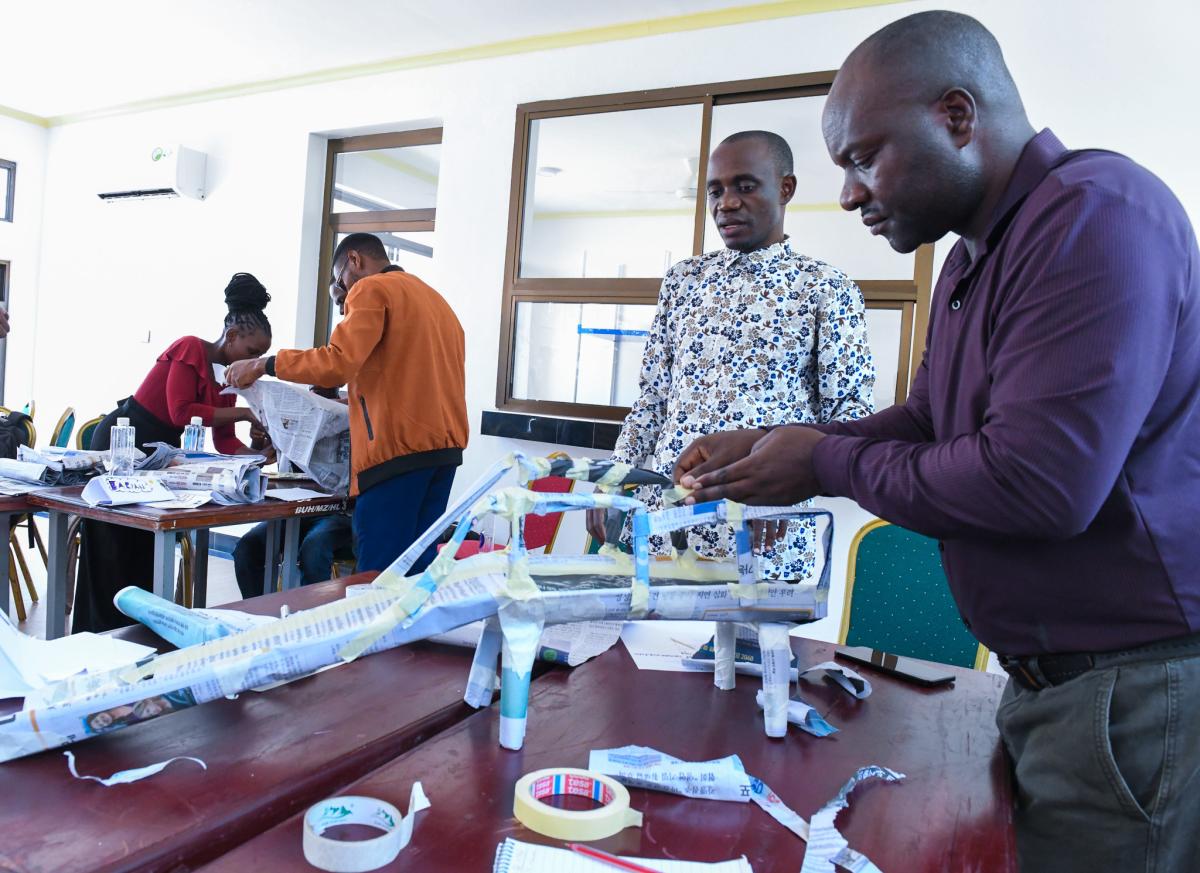
When Rozalia Alfred Mtawala from Mkongoro Secondary School
in Kigoma logged onto Tanzania's online teacher learning platform, MEWAKA, she
gained access to training materials that would soon reach far beyond her
classroom. More importantly, she became part of a chain of change that is
reshaping how teaching happens across the country.
"Now that I have learned and joined the MEWAKA
platform, I can continue updating myself and I will definitely share this
opportunity with teachers who have not been able to access the training,"
she says.
Rozalia is among more than 500 teachers from 25 secondary
schools in Kigoma Region who have benefited from pedagogical training supported
by Enabel Tanzania through the Wezesha Binti Project. What distinguishes this initiative
from typical one-off training programs is its design for scale and
sustainability. The lessons learned in Kigoma are now embedded in a national
system that is fundamentally changing how teachers teach across Tanzania.
How Change Spreads
Through a System
Kigoma has long faced educational challenges that reflect
broader systemic issues in the region. A shortage of teachers, limited capacity
in teaching methodologies, English language skills, and ICT proficiency have
contributed to low performance in national examinations. The shortage of
computers, electricity, and internet connectivity has further limited access to
modern teaching resources. For girls, these barriers are compounded by social
and cultural factors that disrupt their education. In some areas, one out of
every three students who begin lower secondary education does not complete it.
The Enabel addressed these challenges by
investing in teacher capacity building, but with a critical difference: the
training was designed to be shared. Teachers learned practical,
learner-centered teaching approaches that could be adapted to their contexts
and passed on to colleagues. This created the conditions for systemic change
rather than isolated improvement.
When teachers like Datius Rwehumbiza and Elifuraha Singo
completed the training, they didn't simply apply new methods in their own
classrooms. They became advocates for change within their schools and networks.
"I believe the methods we learned will be a catalyst for solving the
teaching challenges we have in schools," says Elifuraha. "Many
teachers still use teacher-centered methods. This training has enabled us to
understand how to use learner-centered approaches effectively."
This is how systemic change begins: through teachers who
experience better methods and actively share them with colleagues.
From Regional
Initiative to National Infrastructure
The real multiplication of impact came through institutional
partnership. Enabel Tanzania collaborated with the Tanzania Institute of
Education (TIE) and the School of Education Development at the University of
Dar es Salaam to formalize and scale the training modules. The pedagogical
approaches developed and tested in Kigoma were documented, refined, and
integrated into TIE's online library.
This transformation from a regional project to a national
resource marks a critical shift. Teachers across Tanzania now have access to
the same high-quality training materials that were piloted in Kigoma,
accessible through MEWAKA.
"This collaboration is evidence of the joint efforts by
TIE, the University of Dar es Salaam, and Enabel to contribute to improving the
quality of education in Tanzania," says Angela Kabatabaro, Deputy Director
General of TIE.
The infrastructure for access has been carefully designed to
reach teachers where they are. Through a partnership with Airtel, teachers can
access the platform and browse learning materials without consuming mobile data
via a zero-rating package. This removes a significant barrier for educators in
resource-constrained areas.
Systemic Change
Accelerated by Curriculum Reform
The timing of this initiative aligns with a critical moment
in Tanzania's education system. The launch of the new 2025 curriculum
represents a formal shift away from traditional lecture-based teaching toward
learner-centered approaches that emphasize active participation and critical
thinking.
The modules developed through the Wezesha Binti Project
directly support this transition. They cover Life Skills and Health Education
for Adolescents, Gender-Responsive Pedagogy, Environmental and Climate Change
Education, and learner-centered methodologies. Rather than teachers struggling
to implement a new curriculum without guidance, they now have access to proven
approaches and practical strategies.
Datius Rwehumbiza describes the platform's value: "I
will use MEWAKA to continue updating my knowledge. It is a useful platform for
a serious teacher to refresh skills and get new ideas that improve classroom
delivery."
The convergence of teacher training, institutional
infrastructure, and curriculum reform creates the conditions for systemic
change. Teachers are not being asked to change in isolation; they are being
equipped with tools, resources, and peer networks that make the change
sustainable.
Extending Change beyond
the Classroom
The project's impact extends beyond teachers. For the first
time, more than 70 non-teaching staff, including school nurses, counselors, and
security personnel, participated in training on values education and life
skills. This whole-school approach recognizes that systemic change requires all
school staff to understand and support learner-centered practices.
These staff members play a critical role in student
wellbeing and are often the first to identify vulnerable learners who need
support. By including them in the training, the project ensures that the shift
toward learner-centered approaches is embedded across the entire school system.
A Model for Scaling Educational Change
What began as an intervention to improve education outcomes
in Kigoma has evolved into a model for how systemic change can be achieved in
education systems. The key elements are clear: invest in teacher capacity
building, design for sharing and peer- learning, formalize successful approaches
through institutional partnerships, align with broader system reforms, and
remove barriers to access.
By supporting the development of professional learning
modules and making them freely accessible through TIE's online library, Enabel
and its partners have created infrastructure for change that extends far beyond
the initial 25 schools in Kigoma. The lessons learned in one region are now
shaping how thousands of teachers teach across Tanzania, with the potential to
reach millions of learners.
The ripple effect of this initiative will continue to expand
as more teachers access the platform, adapt the methods to their contexts, and
share them with colleagues. This is how systemic change takes hold: not through
mandates, but through teachers equipped with better tools, supported by
institutional infrastructure, and connected to a network of peers doing the
same work.
ends
Laatste nieuws van dit project
Geen nieuws