Mozambique Irrigation Platform: Building Solutions for More Resilient Agriculture
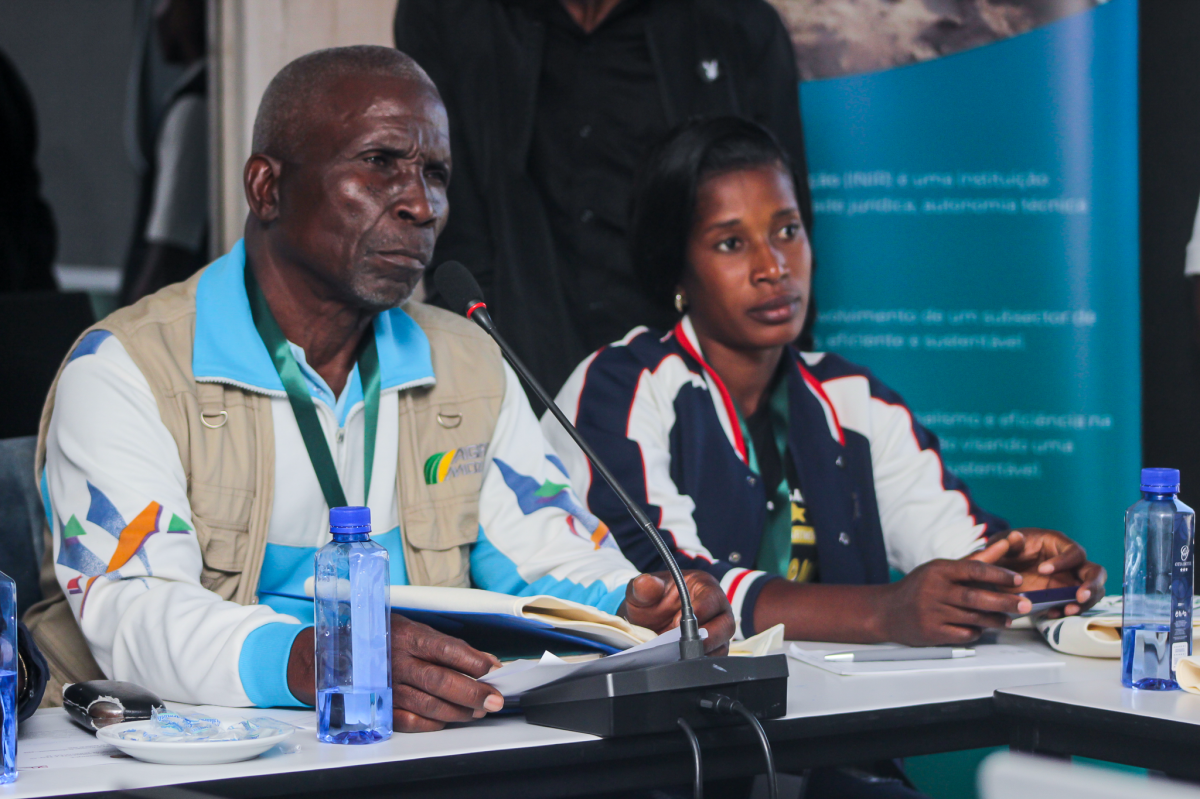
Mozambique has significant potential for the development of irrigated agriculture, yet much of this capacity remains untapped. Of the approximately three million hectares of irrigable potential in the country, around 181,000 hectares were equipped with irrigation infrastructure in 2017, yet only about 90,000 hectares were effectively irrigated. This situation reveals a structural challenge for the subsector: infrastructure alone does not guarantee the sustainable operation of irrigation systems. Many of them continue to face constraints related to the limited capacity of irrigators to operate and maintain the systems, the limited financial and operational capacity of institutions responsible for supervising and managing irrigation schemes, difficulties in accessing finance, and insufficient coordination among the different stakeholders in the subsector.
For irrigation systems to operate sustainably, they also require trained farmers, stronger irrigators’ organisations, appropriate technologies, access to finance, functioning markets, and institutions capable of working in a coordinated manner.
Against this backdrop, the Ministry of Agriculture, Environment and Fisheries, through the National Irrigation Institute (INIR, IP), launched the Mozambique Irrigation Platform (PIM) on 29 June 2026 in Maputo, with funding from the Government of the Kingdom of Belgium through the Belgian agency for international cooperation, Enabel.
The support is provided under the STEP Facility – Study, Expertise and Preparation Facility for Climate Resilience and Energy Transition, an Enabel mechanism designed to strengthen national capacities, provide technical assistance, and act as a catalyst for mobilising climate finance around Mozambique’s priorities.
Vicente Matsinhe, STEP Manager at Enabel, highlights the strategic importance of the Platform:
"By bringing together different stakeholders, the Platform creates a bridge between policy dialogue, the preparation of bankable projects and the mobilisation of finance. Enabled through STEP, PIM is well positioned to support the identification and consolidation of solutions such as public-private partnerships, solar-powered irrigation and risk-sharing mechanisms. In doing so, it can help attract private finance for climate action, strengthen the resilience of agriculture to climate change, promote food security and foster more inclusive and sustainable economic growth in Mozambique.”
A new space for the irrigation subsector
PIM was conceived as a permanent space for dialogue, coordination and innovation.
More than 85 participants from the agriculture, environment, energy, water and economic sectors took part in the launch, including representatives of financial institutions,, producers’ organisations, research institutions, development partners and experts with relevant experience in the subsector.
This diversity directly responds to one of the challenges that STEP seeks to address: transforming national priorities, often spread across different sectors and institutions, into coordinated and technically sound processes capable of mobilising partnerships and resources.
The event went beyond a launch ceremony. Through technical presentations, surveys, group work and plenary discussions, participants analysed the state of irrigated agriculture, identified barriers and defined priorities for the Platform’s operation.
For Miguel Tafula, who conceptualised the PIM proposal and currently leads the Platform’s operationalisation process, its establishment represents an important shift in how the irrigation subsector is understood and coordinated:
“PIM's creation stems from the need to move beyond an approach focused almost exclusively on infrastructure towards a more integrated vision that recognises irrigation systems as complex systems whose sustainability also depends on the capacity of different stakeholders to coordinate.
Enabel’s support through STEP was instrumental in transforming a strategic idea into a concrete process, with a methodology, participation, results and next steps. The key challenge now is to ensure that PIM becomes more than a dialogue platform and evolves into a mechanism capable of developing bankable projects, practical recommendations, operational partnerships and tangible results in irrigation schemes, contributing to food security, rural development and climate resilience in Mozambique.”
A common vision for 2030
The process enabled participants to build a collective vision for the next five years.Among the priorities identified by participants during the collective visioning exercise, capacity building for farmers and technicians ranked first. This was followed by the adoption of innovative technologies, access to finance, expansion of irrigated areas, sustainable management of water resources, public-private partnerships, and the operation and maintenance of irrigation systems.
This approach is aligned with the logic of STEP: rather than financing an isolated event, it supports the preparation of mechanisms, capacities, studies, partnerships and plans that can subsequently evolve into concrete initiatives and mobilise financing.
Building a foundation to turn commitments into results
The proposed structure envisages PIM operating through a General Assembly of Members, a Coordination Secretariat and several Thematic Committees, promoting regular participation, information exchange and the development of joint initiatives.
The next phase is expected to include confirmation of institutional membership, designation of focal points, establishment of the thematic committees, and the first operational meetings of the Platform.
By supporting the establishment of PIM, STEP has helped place institutional coordination at the heart of efforts to build a more productive irrigation sector that is better prepared to cope with climate variability. The Platform therefore opens a new chapter in which institutions move away from seeking solutions in isolation and towards jointly developing responses for rural development in Mozambique.
Latest news from this project
No news