Promoting maternity care in Uganda through saving for health and affordable transport
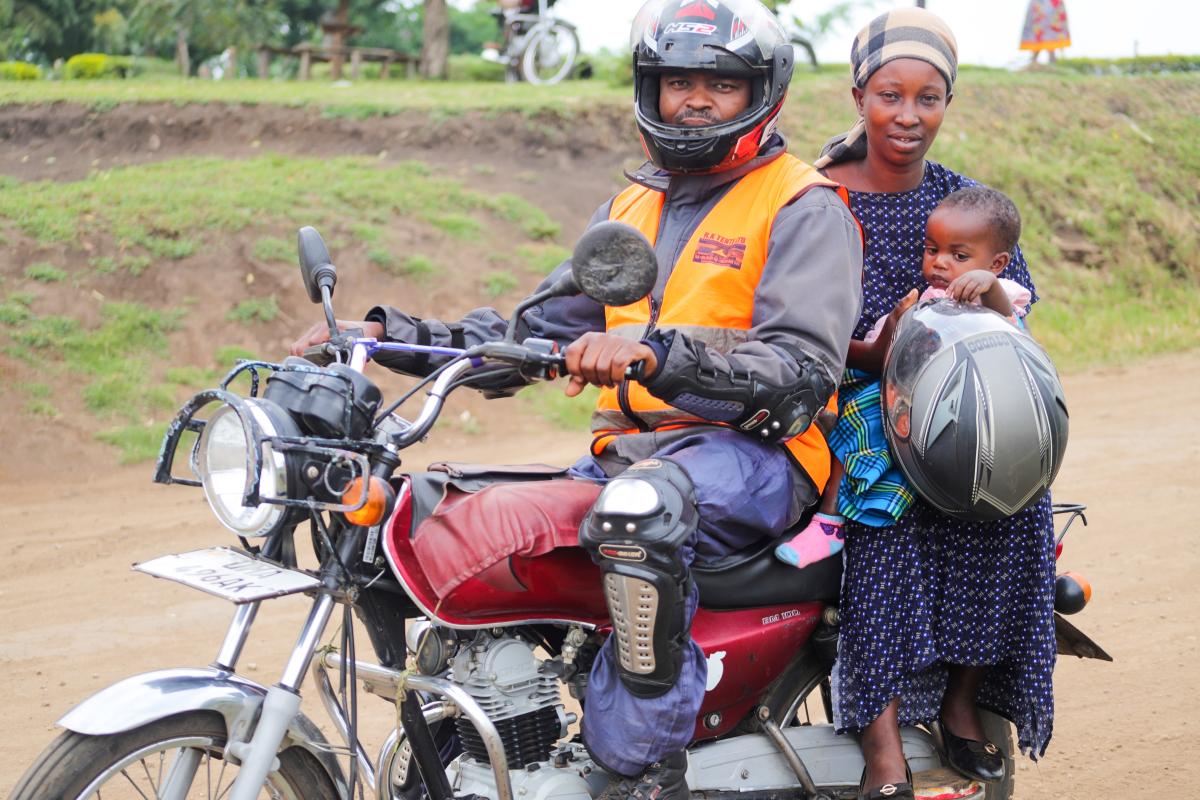
Moreen Kiiza, 38, found it easier to attend antenatal visits
and reach a health facility in time for childbirth. This was possible due to
affordable transport through a community motorcycle service and regular savings
for healthcare. As an expectant mother living far from a health facility, the journey to
receive maternity care can be as important as the care itself.
The cost of transport, the distance to a health
facility and the availability of a reliable means of travel can all influence
whether a mother receives medical attention when she needs it.
Moreen is a member of
Tweimukye Village Savings and Loans Association (VSLA) in Bunyangabu District,
Uganda’s Rwenzori region. Through the Decent Work and Social Protection project
funded by the Kingdom of Belgium, her VSLA group received a community-managed
motorcycle to transport members to health facilities, making it easier for
expectant mothers and other community members to access healthcare.
The motorcycle became an important part of Moreen’s
journey through pregnancy and childbirth, helping her travel to a health
facility for antenatal care and eventually for delivery. This is because, for
many expectant mothers in rural communities, accessing antenatal care requires
more than knowing when to visit a health facility. It also means finding
reliable transport and having enough money to pay for the journey.
Moreen was familiar with this challenge. Transport
costs to some health facilities can be high, making regular visits difficult
for households with limited financial resources.
According to Moreen, transport to facilities such as
Kibiito Health Centre can sometimes cost as much as UGX 20,000 for a return
journey. Having access to the motorcycle managed by her VSLA group offered a
more affordable alternative.
"I like using the
group motorcycle because it is readily available, and they usually charge a subsidised
fare compared to others," she explains.
During her pregnancy, Moreen used the motorcycle three
times to attend antenatal care visits at Kasunganyanja Health Centre. For each
return journey, she paid only UGX 6,000, significantly reducing the transport
expenses associated with seeking maternity care.
The importance of reliable transport became even
clearer when Moreen's pregnancy reached the advanced stage. When the time came
for her to give birth, she once again relied on the VSLA motorcycle to travel
to the health facility. It was the fourth time she had used the motorcycle
during her pregnancy.
This time, however, the journey was particularly
important. She needed to reach the facility in time to receive professional
maternity care. "The health workers were happy that I reported on
time," she recalls.
While regular antenatal care helps expectant mothers
monitor their pregnancies, reaching a health facility promptly for delivery is
equally important. In communities where transport can be expensive or difficult
to arrange, access to an affordable motorcycle can help address one of the
practical barriers to seeking timely maternal healthcare.
As a member of Tweimukye VSLA, she had also embraced
saving for health to help meet medical expenses whenever they arose. She
initially began contributing UGX 1,000 per week to the group's health savings
fund. Over time, recognising the importance of having sufficient financial
resources available during pregnancy and childbirth, she increased her weekly
contribution to UGX 10,000.
Her decision was motivated by the need to strengthen
her financial preparedness and ensure that she could access a sufficient loan
from the group if additional expenses arose during delivery. Through consistent
saving, Moreen accumulated UGX 300,000 in health savings.
Fortunately, Moreen gave birth normally and did not
have to use much of her accumulated savings. The money she had set aside,
however, remained valuable. Rather than withdrawing from the saving-for-health
initiative after childbirth, she decided to continue contributing to the group.
"These savings will support me and my baby in case illness
arises," she says.
Her decision reflects an important aspect of financial
preparedness: healthcare needs do not end with childbirth, as families continue
requiring medical assistance.
Moreen's experience is part of a broader community
transport initiative implemented under the Decent Work and Social Protection
project. Through the initiative, 15 motorcycles were provided to selected VSLA
groups to improve transport to health facilities, particularly in hard-to-reach
communities.
The motorcycles are managed by the groups and provide transport services to both
members and other community residents. Under the arrangement, group members
benefit from subsidised fares, paying half the prevailing market rate, while
non-members are charged the normal market rate.
This model seeks to address two important community
needs: improving access to healthcare and creating an income-generating
activity for the savings groups. At the same time, income generated from
transporting passengers provides an additional revenue stream for the groups
managing the motorcycles.
Approximately 5,057 patients have been transported to
health facilities using the 15 motorcycles provided to the selected VSLA
groups. The motorcycles have also generated approximately UGX 44.5 million (EUR
10,800) in income for the groups.
Latest news from this project
No news