Stakeholders call for standardised Workers’ Compensation in Uganda
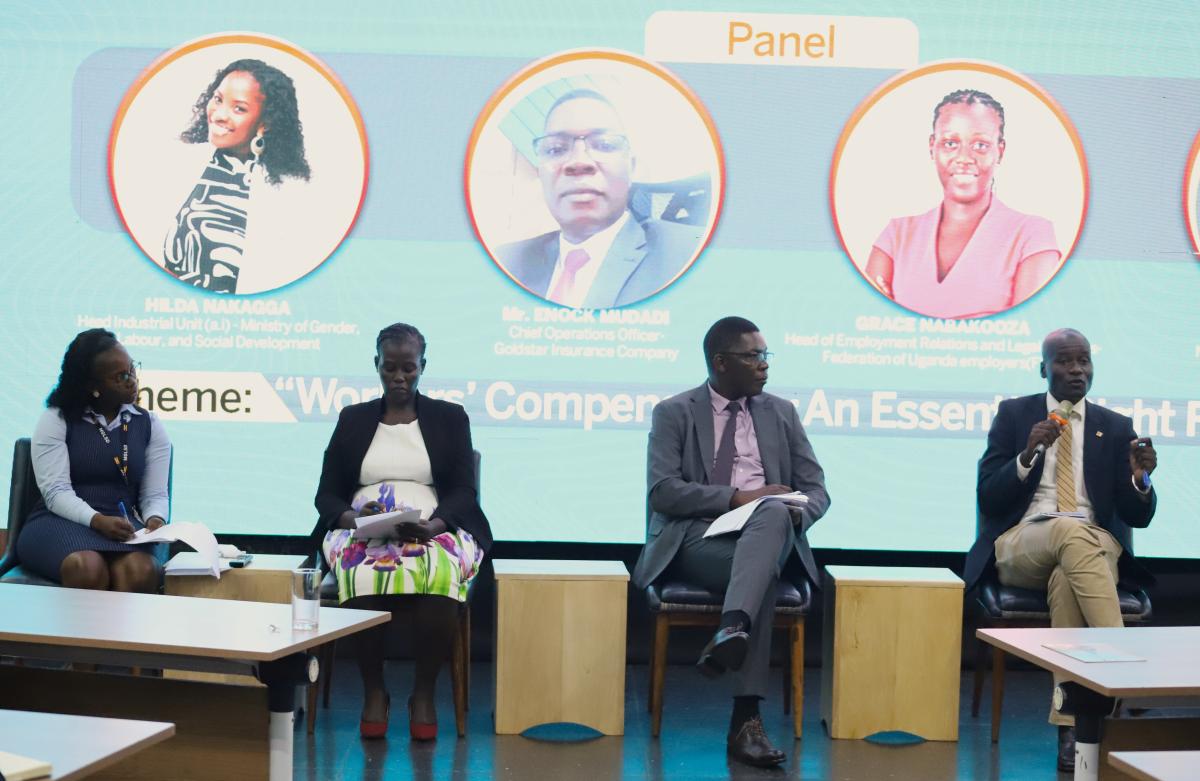
Uganda’s Ministry of Gender, Labour and Social Development, in partnership with Enabel in Uganda, convened the country’s first-ever Hybrid Workers’ Compensation Conference, an important step toward strengthening social protection and workplace safety.
The event brought together government officials, private sector leaders, and civil society actors to discuss how to build a more efficient, fair, and accessible workers’ compensation framework for all Ugandan workers.
Speaking at the conference held at Fairway Hotel, Mr. Alex Asiimwe, Commissioner for Labour, Industrial Relations and Productivity, noted that workplace accidents were once viewed as unavoidable.
“Today, we understand that such incidents are preventable through improved working conditions, effective compensation mechanisms, and adequate insurance coverage. As a Ministry, we greatly appreciate such dialogues,” he said.
Reinforcing this message, Mr. Onzoma Apollo, Assistant Commissioner for Industrial Relations, reminded employers of their legal duty to cover all costs related to treatment, upkeep, and disability resulting from workplace injuries.
He urged workers to report incidents promptly, explaining that timely reporting ensures proper medical attention and enables the Ministry to monitor safety trends and enforce workplace standards.
Delivering the keynote address, Mr. Simon Kintu Zirintusa, Registrar of the High Court Civil Division, called for more robust collaboration between the Judiciary and the Ministry to simplify Uganda’s compensation claims process. He highlighted that many workers remain unaware of their rights and are left vulnerable when accidents occur.
“Many workers don’t know they are actually entitled to compensation,” he said, stressing the need for more public awareness and a more user-friendly claims system.
Zirintusa also underscored the legal obligations placed on employers. Section 13 of the Occupational Safety and Health Act mandates employers to protect workers from preventable harm, while the Workers’ Compensation Act requires both government and private sector employers to compensate workers who suffer injury, illness, or death in the course of employment.
Under Section 18, employers are further required to insure themselves against liabilities arising from workplace accidents.
To strengthen the system, the keynote speaker proposed several reforms, including:
- Standardised, easy-to-use claim forms accessible at magistrates’ courts
- Specific court rules to streamline compensation case handling
- Training of magistrates through the Judicial Training Institute
- Increased use of mediation to resolve disputes efficiently and amicably
- Enhanced cooperation between the Judiciary and the Ministry of Gender, Labour and Social Development
Through the Decent Work and Social Protection Project, Enabel and the Ministry of Gender, Labour, and Social Development continue to champion reforms that strengthen workplace rights, improve access to justice, and enhance employer accountability.
Standardising the workers’ compensation process is not just a legal necessity; it is a vital part of building a labour market where every worker is valued, protected, and empowered. By improving the compensation framework, Uganda moves closer to realising the vision of decent work for all.
Latest news from this project
No news