Deborah turns wood and bamboo into opportunity in Uganda
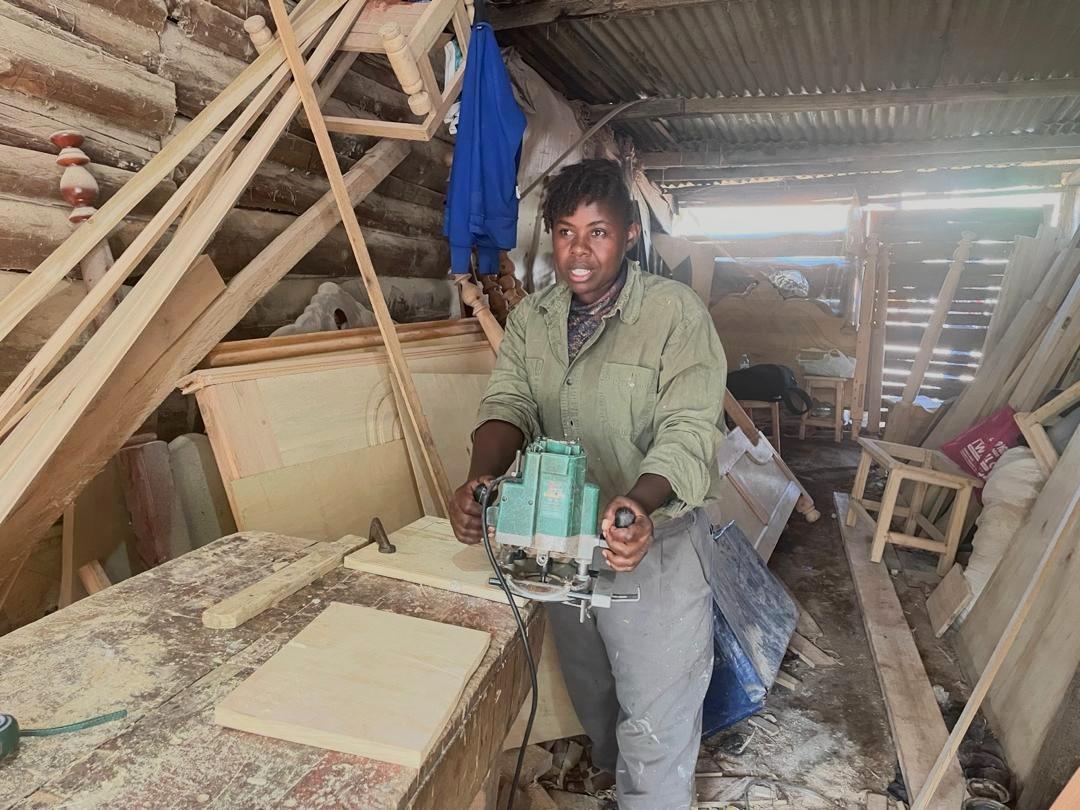
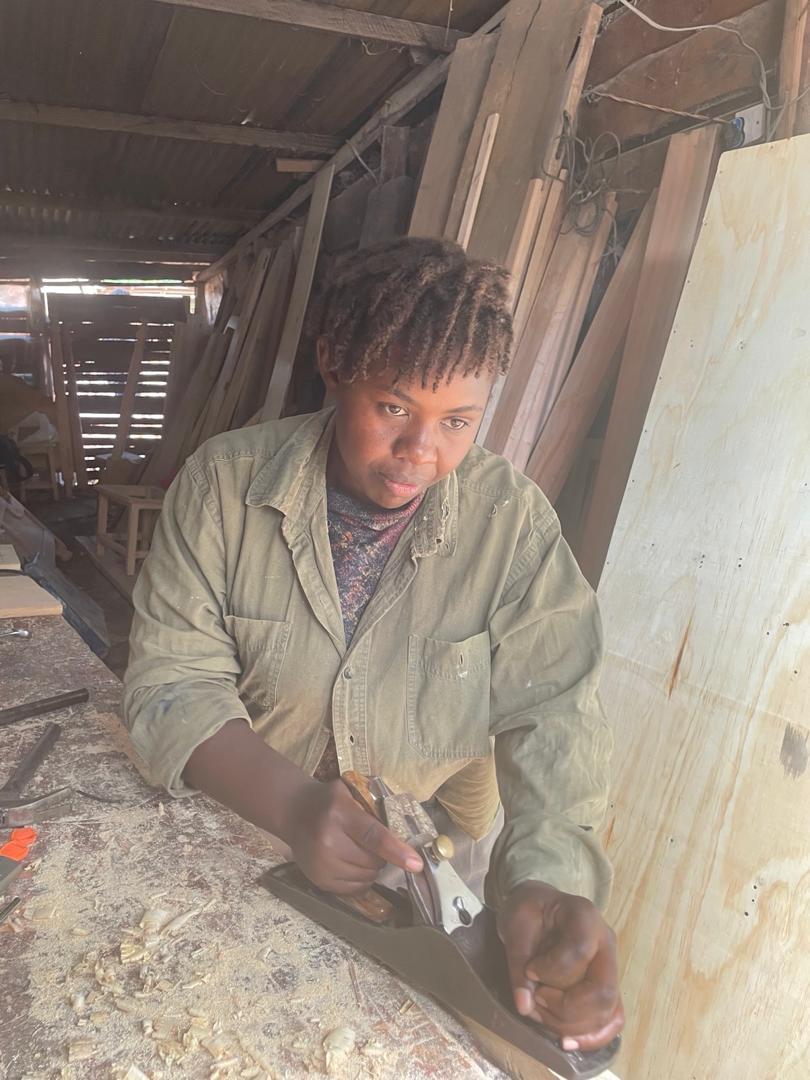
In a small carpentry workshop in Rwengoma A, Western division-Fort Portal, Deborah Tuhaise, a young woman works confidently, polishing furniture. Carpentry is more than just work for her because it is how she rebuilt her life and proved that women can succeed in any trade.
Deborah grew up watching her father make furniture. As a child, she loved spending time in his workshop, playing with small pieces of wood, and making simple items. During the school holidays, she helped with sanding and varnishing. Her father noticed her talent and began instructing and guiding her on how to get better.
Just after completing Senior Four, Deborah’s life took a painful turn. She became pregnant due to assault by someone she knew. “It was very hard,” she says. “I didn’t know how to tell my parents, but I knew I had to survive and care for my baby.”
To earn an income, Deborah started making small crafts from wood and banana fibres. Her father kept encouraging her, and slowly she regained confidence. One day, she met a Tanzanian carpenter who taught her advanced carving techniques. Deborah learned quickly and began making bigger furniture items like beds, chairs, and cupboards. Her skills became noticeable and earned her a place on a team that made the ‘Empaako’ monument in Fort Portal. Deborah explains that the 'empaako' is a symbol of Toro’s cultural pride.
Working in a male-dominated trade has not been easy for Deborah. She has dealt with some clients who doubted her abilities, while others refused to pay for finished products. “People used to ask me if I could really do the work,” she says with a smile. “But after seeing the results, they began respecting me.”
Her big break came when she received training through Enabel’s Support to Skilling Uganda project. Through the training, she earned a certificate in carpentry. “That certificate gave me confidence,” she says. “It helped me get more jobs and I even started training other people, which has helped increase my earnings.”
Today, Deborah is not just an artisan, but she is also a trainer and mentor. She teaches other young women, especially single mothers, how to sand, carve, and finish furniture. “Most of them come with no experience,” she says. “But after some months, they can make and sell their own products.”
Recently, Deborah started working with bamboo after learning about it at a crafts exhibition. She makes flower vases, lampshades, and mats by mixing bamboo with banana fibres. “Bamboo is easy to grow and very sustainable,” she explains. “It’s good for women who want to work from home.”
Her journey has not been without setbacks. Two fires destroyed her workshop and tools, but she was able to rebuild her business on both occasions. Deborah works independently alongside her father and brother in their shared workshop. She dreams of opening a women’s craft centre where single mothers can learn, make, and sell their products. “I was once a struggling mother,” she says. “Now I want to help others stand on their own.”
Enabel is currently implementing the WeWork-green and decent jobs for youth project, which was born after the success of the Support to Skilling Uganda project. Through the WeWork project, Enabel ‘s objective is to ensure that young people especially young women acquire skills and find decent jobs, or entrepreneurship opportunities in agriculture and the green and sustainable economy. The project is funded by the European Union and the Kingdom of Belgium.
Latest news from this project
No news