Faisal grows his samosa business in Uganda with confidence
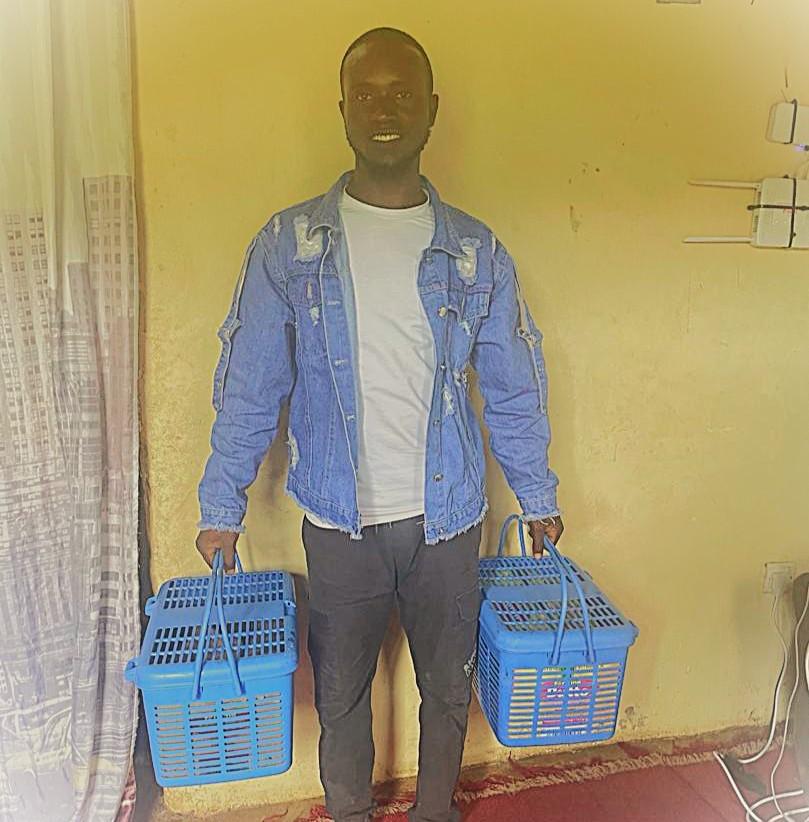
Faisal Nyakana, 31, grew up between Kampala and Fort Portal. After completing Senior Four, he returned to Kampala, but life was difficult. “I was just walking around looking for a job,” he recalls. “I didn’t even mind cleaning, but I couldn’t find anything.”
Eventually, he found work loading and offloading trucks, earning just UGX 5,000 (1.2 euros) per day. He did this for three years, but making ends meet remained a struggle. When his father sold land in Fort Portal and started a family samosa business in Bundibugyo, Faisal returned home to help drive the delivery vehicle. The family made 1,000 samosas a day, selling each at UGX 500 (0.12 euros), and every batch sold out.
When they were forced to close their business due to COVID-19 lockdown measures, the family settled back in Fort Portal. After some months had passed, Faisal heard a radio announcement inviting youth to apply for a hospitality training opportunity. He filled out the forms and joined hundreds of applicants, all competing for only 30 slots. “I was scared when I saw how educated some people were,” he says. “I didn’t think I had a chance.”
After passing the first interview, he faced a second one he believed he had failed. While waiting for results, Faisal encouraged the others: “This is not the end of life,” he told them. “If we don’t go through, let’s start our own businesses. We can do anything as long as we are committed.”
Unbeknown to him, some interviewers overheard his positivity and leadership. They were impressed and selected him among the final 30 trainees.
From that moment, his life changed.
The youth were checked into a guest house with meals catered for. “We ate good food sponsored by Enabel, and I started living a good life,” he says. They trained at Kayla Courts Hotel — one month of theory and three months of practical lessons. He earned a certificate and gained important professional skills, especially in customer care. Afterward, he was placed for an internship at Kayla Courts, rotating through different departments: housekeeping, reception, room service, and the bar.
His performance stood out. He was retained as a full-time waiter and eventually worked across several departments. “I wanted to excel so I could get tips. I even taught other trainees what I had learned,” he says.
While working at Kayla Courts, Faisal got married but soon realised his salary of UGX 300,000 (73 euro) a month was not enough. He decided to return to Kampala, got temporary work in a hotel, and began saving. With help from his mother, he restarted making samosas — but this time on his own terms.
The first week was tough. He hawked 100 samosas on the streets of Fort Portal and sold almost nothing. “We ate most of the samosas we made,” he laughs. But he refused to give up. One day, everything changed — he sold out all 100 samosas. The next day, he made 200, and again, they all got sold.
He quickly became known for his product. “Whoever tastes my samosas has to buy them,” he says proudly. People admired his cleanliness, packaging, and the smile he served them with. Soon, he was selling 400 samosas a day, including regular orders to businesses like Infectious Disease Institute and Centenary Bank. He now runs a WhatsApp group for his customers where he shares daily updates and takes orders.
Faisal says everything goes back to the skills and confidence he gained through the Enabel training.
“I learnt how to treat customers and respect them because they are my bosses,” he explains. “I was taught to be confident, honest, and to set high standards — and keep them.”
He pays his mother UGX 10,000 (2.4 euro) a day to wrap samosas. He now earns what he once did in a month at the hotel in just two weeks, and he is able to take good care of his 2 children.
“Right now, no one can hire me,” he says with a smile. “Hospitality is a big thing. When you have class, class attracts class.”
Faisal dreams of opening his own restaurant — Faisal One Restaurant — with his mother as the chef. Until he can afford rent, he is already marketing the brand. “My plan is excellent customer care because that is key,” he says. He refuses to sell food he is not proud of: “If we make a mistake in the samosas, we would rather eat them ourselves than disappoint a customer.”
His advice to young people is simple: “As you support those rich footballers, do it while you are working and earning. The more you watch football while doing nothing, the poorer you become.”
Today, Faisal continues to share his knowledge freely with others in Fort Portal because of what he received through Enabel. “I got information for free, so I am ready to give it out freely and inspire others,” he says.
Faisal was skilled under the Support to Skilling Uganda Programme, which led to the WeWork – green and decent jobs for youth project, implemented by Enabel and funded by the European Union and Belgium.
Latest news from this project
No news